

The Best New and Continuing Manga of 2025
by The ANN Editorial Team,
Manga is booming, and the editorial team has reviewed over 400 series this year, between our long-form reviews and the quarterly Manga Guides (The Fall Manga Guide alone covered 172 different series). Among the myriad titles, they were given the near-impossible task of choosing their favorite series, from stories that debuted (digitally or in print) this year to continuing comics.
Below are the series nominated and voted on by the ANN Editorial Team to rise above the rest.
THE BEST NEW MANGA OF 2025
10. A Star Brighter Than the Sun by Kazune Kawahara (Viz Media)
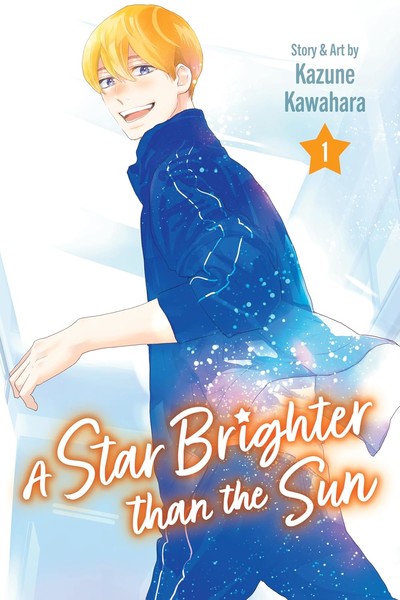
The classics are classic for a reason. Sure, sometimes that's because no one's dared to point out that they're ancient and tired, but with a story like A Star Brighter Than the Sun, the comfortable tropes of shoujo romance are all accounted for because they're pleasant to read. Sae's insecurities about her body aren't new, but they're incredibly relatable, because most of us have felt uncomfortable or awkward in our skin at some point. As readers, we can see beyond her concerns, and that's an important part of the formula, too: we can both empathize with Sae and recognize that she's not giving herself enough grace, which in turn perhaps suggests that readers should give themselves the same. That goes for whether you're Sae's age (and the intended audience of the series) or a full-grown adult – high school romances are evergreen because they tap into both nostalgia and wish fulfillment.
Kawahara's tale of young love stumbling towards its fulfillment competently touches on many of the genre's hits and, in some cases, surpasses them. Sae's two female friends, Mio and Sui, are among the best characters in the series, both playing their prescribed roles while also rising above them. There's none of that silly rivalry stuff; once both girls learn about Sae's feelings for Koki, they're all-in on helping her to date him, with Sui remarking that her crush on him was just superficial, so she'd rather be a good friend and support Sae, whose feelings run deeper. Guy friend and male love rival Ayukawa would be the love interest in almost any other shoujo romance, and here, instead of being Mr. Perfect, he's shown to be just another teenage boy trying to figure things out and get Sae to like him back. He's much more open with his insecurities than Koki, which makes for a good contrast between them – and goes a long way towards making Koki more human, because he's not the idealized boy most of the class thinks he is. Sae worries that he might be, and that's part of the problem keeping them apart.
If you're looking for something new and innovative, you won't find it here. But you will find a comfort food shoujo romance, a rosy picture of what high school was never like, but with enough thorns to make it interesting. A Star Brighter Than the Sun doesn't have to be different to be good.
—Rebecca Silverman
9. Kindergarten WARS by Yū Chiba (Yen Press)
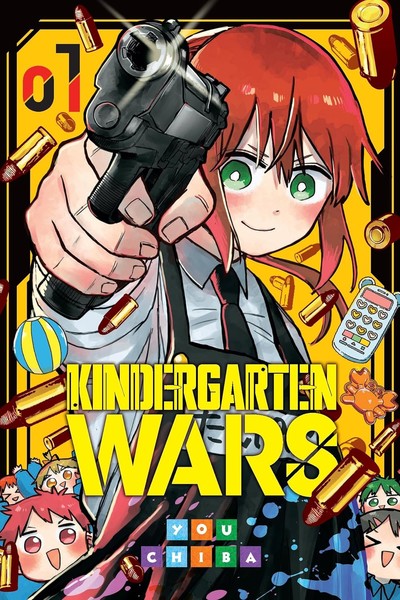
Kids can be absolute monsters. I have been working in education for the past couple of years, and whether they're kindergartners, middle schoolers, or high schoolers, taking care of them can feel like a nightmare. Because of that, I have a lot of respect for people who choose careers in childcare. It's absolutely not for everybody, and a lot of people struggle with all of the difficult variables that go into it. Still, I understand how some people can find it fulfilling. You are protecting and nurturing lives in their very early infancy. So what happens when a series takes that idea and amplifies it with the usual bombastic assassin theme energy we've been seeing a lot lately? Well, that's where you get Kindergarten WARS, which was one of the few new manga this year that hooked me right away from its first volume.
Kindergarten WARS tells the story of a group of assassins, con artists, and other shady characters who are employed as staff at a kindergarten that looks after children who could be targets of financial extortion. It's almost like what would happen if you mixed SPY×FAMILY with the Suicide Squad, actually. I remember the character dynamics and all the humor being reminiscent of how some of the characters played off of each other in those comics. Everyone is rude and abrasive to each other, but there is an endearing charm to how dedicated everybody is. You don't really get the sense that anyone in the main cast is bad for the wrong reasons. This feels like a classic story of learning to make the most of the second chance you have by working in an unconventional environment. So there is an overall sense of heart and camaraderie to the story, but it's mixed in a very bloody, fast-paced, comedic way. The war in the title doesn't lie; this can be a very violent and bloody series, but not in a grotesque, hyper-realistic kind of way. Everything feels at least a little bit cartoony, but it all blends together into a surprisingly solid mix.
I want to learn more about the staff, I want to see these blossoming character interactions, and I want to see who else will be sent to kindergarten, either as a new assassin or a new staff member. This is the kind of series that has a lot of potential to tell a bunch of really fun one-off stories or potentially grow into a larger ongoing narrative. Regardless of which direction it'll take, I think the early chapters set an excellent foundation that most people should be able to enjoy. It definitely scratches an itch that I think is only growing stronger as I see more mainstream shounen series come to an end, so check it out if you haven't already.
—Bolts
8. Tamaki & Amane by Fumi Yoshinaga (Yen Press)
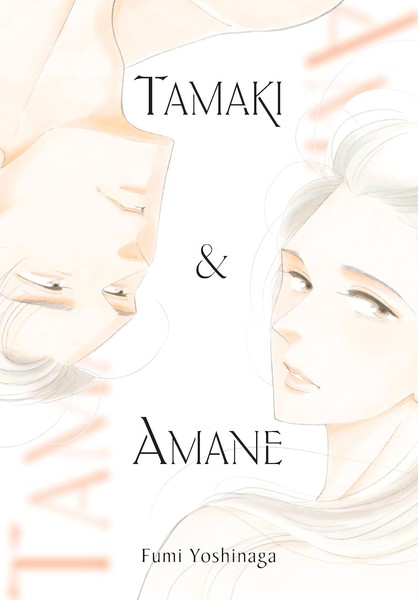
It may be hard to outdo Fumi Yoshinaga, but I think that with Tamaki & Amane, she may have outdone herself. A single-volume story with an epic feel, this April 2025 release spans lifetimes as it explores the relationships between two people named Tamaki and Amane. Sometimes they're both women, sometimes they're both men. They might be married, in love, or estranged. The one thing that's constant in their interactions across the centuries is that the emotions are always heightened, and that hate and love, anger and joy are always just a step away from each other.
Yoshinaga's decision to bookend the volume with the modern-day incarnations of Tamaki and Amane is important. Today, they're a married opposite-gender couple raising their daughter, who is queer or at least exploring that identity. In some ways, it's the perfect distillation of all of the other interactions between the pair through time – post-war, when both were men, nothing solid really comes of their relationship; in the Taisho era, when both were women, nothing was allowed to. These failed or thwarted queer narratives are given another chance in the couple's relationship and in their reaction to their daughter, clearly symbolizing how times have changed. Equally important is how the happily married couple fulfills lost chances to be together; murder, death, and illness have robbed them of that chance before. It's not even necessarily “together” in a romantic sense, although their modern incarnations certainly are; in the 1970s, the pair was an adult woman and a small child, so their bond was hardly romantic. But it was a touching bond nonetheless, and arguably one of the most emotional in the volume. (That and the Taisho era story are the strongest.)
Tamaki & Amane is, at its heart, an exploration of what love between two people is. It's not always warm, and it's not always pretty, but it is always distinctly human. There's both beauty and pain in that, and Yoshinaga captures it beautifully.
—Rebecca Silverman
7. Spacewalking With You by Inuhiko Doronoda (Kodansha Comics)
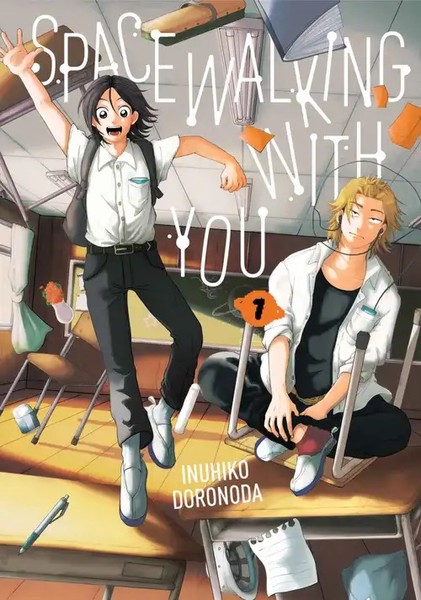
Regardless of your own high school experience, it's probably safe to say that we all remember the kid who fell asleep in class every day. The one who'd make teachers upset, but end up unintentionally defusing the situation because their startled reaction made everyone laugh. Well, I was that kid...and a pretty decent student, actually! However, I regularly struggled to rein in my focus and occasionally burned myself out in the process. I didn't know back then, but I learned later in life that I'm neurodivergent.
A decade and a change after my graduation, a colleague introduced me to Spacewalking With You through a powerful series of panels. Within this handful of frames, I'd witnessed a boy take a moment to sob deeply after arriving home, to the profound shock of a new friend. It hit close to home immediately. I reviewed the first volume soon after, and couldn't stop seeing myself within Kobayashi and Uno. Kobayashi for his struggles to stay awake in class and grasp new concepts, then Uno for his loud enthusiasm about his interests and challenges with emotional regulation. Years of painful memories rushed back, but that came with a sense of relief.
Spacewalking With You wasn't around for me back in my school days, but I'm overjoyed that it's here for the teens of today—putting images to the hard-to-describe emotions that come with growing up. And even if you're simply a student of life these days, there's nothing more cathartic than opening up a book and realizing that there are people out there who've felt the same way for a long time.
—Coop Bicknell
6. Ichi the Witch by Osamu Nishi and Shiro Usazaki (Viz Media)
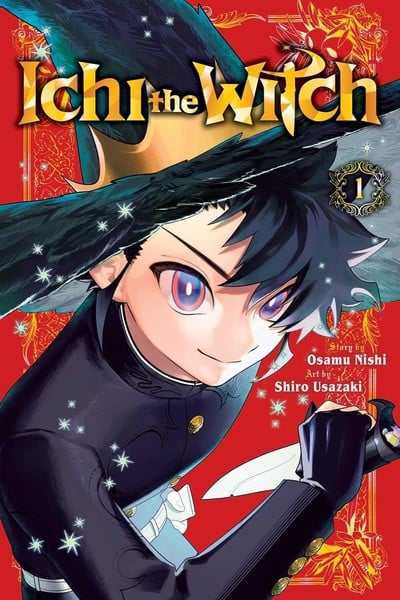
I've kept up with Shonen Jump week-to-week for over a decade at this point, and while the magazine's lineup has included a lot of series I like, few have won me over as immediately as Ichi the Witch. The manga follows the adventures of a young hunter named Ichi, who has lived in the mountains all his life, until he encounters the great witch, Desscaras. She's in the middle of hunting down a Majik, beings that have the power to grant magic to others. When Ichi attempts to hunt the Majik himself, he accidentally becomes the world's first male witch, with Desscaras begrudgingly recruiting him to assist her in acquiring other Majiks. It's a solid setup for a fantasy series, and the art by Shiro Usazaki does an excellent job of selling the fantastical nature of the manga's setting through some expertly crafted page layouts that make every new spell or Majik encounter look as majestic as possible.
Strong as those fantasy elements are, though, the real appeal of the manga is in its character writing, as series writer Osamu Nishi has taken all the skills she's built over the years she's worked on Welcome to Demon School! Iruma-kun, and has used them to put together a cast of delightful and instantly charming weirdos. Ichi's former lifestyle as a wild boy in the mountains has made him generally clueless when it comes to social norms, but also makes him downright terrifying as a hunter, and Nishi's writing does a great job of playing up both sides of his character by using his abnormal behavior for both comedy and horror. This ability to effortlessly shift between tones is balanced on top of some equally strong storytelling, as Ichi's encounters with various Majiks and seeing how some of them look down on human nature have allowed the series to explore themes regarding escapism, grief, and the value of love, with all of them being handled as gracefully as the manga's comedy. Between its great characters, excellent sense of humor, and surprising level of heart, this series has made for one of the most consistently enjoyable experiences I've had reading a manga every week in quite a while, and has easily made for the most fun I've had reading a manga all year.
—Jairus Taylor
5. NANA [25th Anniversary Edition] by Ai Yazawa (Viz Media)
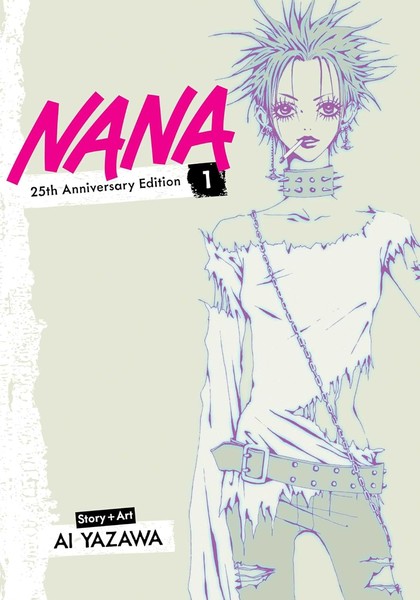
This recommendation comes with a warning: NANA made me poor. Well, not just NANA, but Last Quarter too, also by revered author Ai Yazawa. Yazawa had always been an author I'd been aware of, but never had the opportunity to read any of her work. Even my teenage daughter read NANA years before I did. I should have listened to her earlier about how good it was.
As a writer for ANN, I'm privileged to be given access to all manner of printed material, especially during the intense, insane mega-binge that is the seasonal manga guide. Last year, for the guide, I read the first volume of Aizawa's Last Quarter and immediately ran out to grab the second volume as soon as it was published. With the 25th Anniversary edition of NANA rewiring my brain this year, I've since acquired my own copies of the first two volumes and all four volumes of Neighborhood Story. It's only now, because of the fear of my wife's justified retribution for spending all of our money on shojo/josei comics, that I've held back on hunting down a copy of Paradise Kiss 20th Anniversary Edition. Hey, it's an unusual reason for marital discord, at least?
NANA is the story of two young women, both named Nana, who move to Tokyo to pursue their dreams. By sheer chance, they end up meeting and becoming housemates, their personal lives and friendships intertwining. The first of these new collections comprises the original volumes one and two, which act as a leisurely yet compelling introduction to the dual protagonists. Both receive long solo chapters that contextualise their paths long before they meet.
Nana Komatsu and Nana Osaki couldn't be more different from one another. Komatsu is an emotionally immature girl who latches onto inappropriate men, resulting in disastrous relationships. Osaki is a more guarded, intense musician, and initially, they're like chalk and cheese. Not a huge amount of “plot” occurs in the first volume; it's mostly scene-setting and slice-of-life character drama, but what wonderful characters they are. I've studiously avoided spoilers for future volumes. Still, I am very excited to finally read them, even though I know the series was sadly never completed after Yazawa's illness in 2009. Sometimes the journey can be just as valid as the destination, though.
—Kevin Cormack
4. Boys Run the Riot -In Transition- by Keito Gaku (Young Magazine US/Omoi)
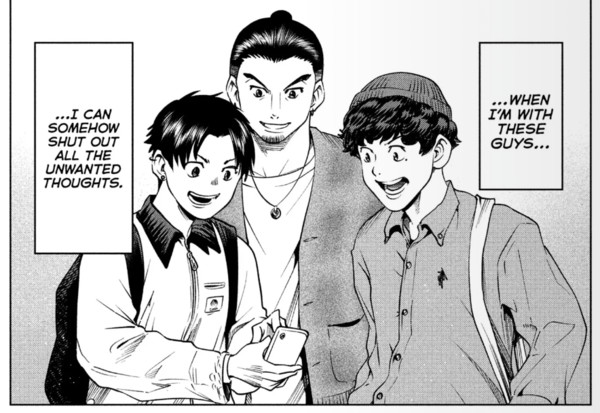
Boys Run the Riot blew me away when it began publishing the first of its four volumes in 2021. And I'm not alone; the story of a transgender boy who expresses his true self through street fashion especially resonated with North American readers. Author Keito Gaku, a transgender man living in Japan, said that support from overseas fans enabled him to publish a 60-page sequel to his moving debut series, Boys Run the Riot -In Transition-.
Boys Run the Riot -In Transition- takes place 10 years after the events of the first story. We learn that Ryo has taken significant steps toward presenting as his true self in public and toward pursuing a creative career. Now a student at a vocational design school, it's time for 21-year-old Ryo to choose a post-college job—a task made much trickier when your gender doesn't match the sex listed on your government ID. Ryo has an ally in his FTM classmate, but his mother, whom he had always been close to before he came out, is anything but supportive. There's an especially emotional scene when Ryo and his mother share a drink. Everything is congenial right up until Mom has to confront the truth she has been trying to avoid for ten long years. Meanwhile, Ryo states that he'd “never gone through a rebellious phase” and has always tried to be a good son. When his mom treats an undeniable truth about Ryo's identity as a child's misbehavior, it's deeply frustrating to Ryo. “Why is this me? Why am I like this?” he thinks through angry tears. It's all the more painful to see the way Ryo's mom really believes she loves him—just not this part of him as if it's possible only to love some of the parts of your child.
It's at this low point in Ryo's life that he reunites with a familiar face from Boys Run The Riot—his street fashion label partner, Jin, who has never seen Ryo as anything other than the man he is on the inside. As a transgender person facing a big decision: whether or not to pursue hormone replacement therapy, Ryo finds strength in his community even when his family is not supportive of him. The way this sequel builds (or rebuilds) its characters and their connections to Ryo in 60 short pages is its greatest strength. Every day, at school and at his part-time job, Ryo faces constant unintentional misgendering—a running commentary of invalidation that makes up the background noise of his life. The art realistically accentuates Ryo's feminine features (since he has not undergone a medical transition), so he's always bracing for the next “she/her” flub. This makes it all the more gratifying when his friends effortlessly support him like it's nothing. If the first story began as a tale of isolation and rage, this sequel is the softer side of Boys Run the Riot. Ryo is no longer fighting his battles alone.
The one downside to Boys Run the Riot -In Transition-? There's no fashion design! Ryo is in school for fashion, he enters fashion contests, he has a part-time job selling clothes, and he reunites with Jin, who also works in fashion—but the reader does not get to see any of Ryo's alluded-to work. I think Gaku made this choice to give breathing room to the central narrative of Ryo's decision whether or not to get HRT, especially since this sequel was presented as a potentially first chapter to a longer story. This manga was part of a Young Magazine contest for readers to choose which comics would receive new English serialization, and unfortunately, it didn't win. Though Gaku left the door open on Ryo's story, concluding with an ambiguously hopeful ending, I'll have to treat this as its final installment. I'm just grateful to have gotten to spend a little more time in Ryo's world.
—Lauren Orsini
3. RuriDragon by Masaoki Shindō (Viz Media)
It was a coin flip whether to put RuriDragon on the “new manga” or “returning manga” lists — Viz has been simulpubbing chapters since the series first launched in Weekly Shonen Jump in 2022 (argument for returning), but only started releasing print volumes in 2025 (argument for new). I voted “new” largely because this was the year I finally started reading the series, so it was new to me.
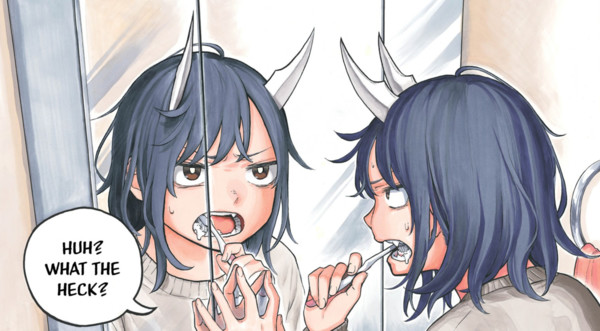
RuriDragon does not feel like your typical Shonen Jump manga. It has fantasy elements, but they're not used for the sake of action; it has moments of comedy, but they're too dry and subdued to fit the “gag manga” niche. Ruri doesn't have any “become the best ________ in the world” ambitions that even more offbeat Jump protagonists tend to have. It's a true slice-of-life series that just so happens to have one thing out of the ordinary: Ruri is half-dragon, coming into her dragon traits and abilities in ways that force her to stand out despite preferring to blend in.
The quiet brilliance of RuriDragon lies in its premise: it connects to many different situations, offering metaphorical freedom without being pinned down to a single obvious idea. I think of what J.R.R. Tolkien said about the difference between “allegory” and “applicability”—the latter isn't one thing but can be many things. Different parts of Ruri's story could be viewed as about going through puberty, or about being biracial, queer, disabled, or neurodivergent. Anyone within sort of experience being perceived as “different” growing up can see part of themselves in Ruri. Something is relaxing and refreshing about the manga's general atmosphere of acceptance. Yes, some students are jerks about the half-dragon thing, and others can get on Ruri's nerves with problematic attempts at being supportive. Still, the overwhelming attitude is one of friendliness and positivity.
Masaoki Shindō's art is adorable, and he writes dialogue for teenage characters in a way that feels fittingly realistic. The series is well-paced, with new dragon abilities or bits of backstory being introduced at just the right points to create fresh challenges, humorous situations, and even a hint of higher-stakes drama (though so far, mostly hypotheticals). We should all be thankful that Jump has allowed Shindo to take off as much time as he needs for his health while still allowing him to continue writing the series.
—Reuben Baron
2. JoJo's Bizarre Adventure Part 7: Steel Ball Run by Hirohiko Araki (Viz Media)
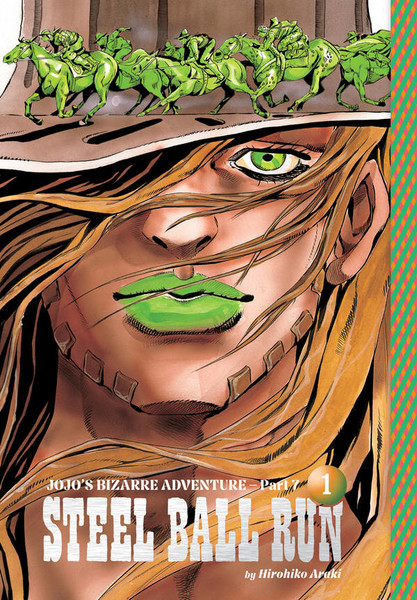
America, here we go. As the first universe outside of the previous continuity, Steel Ball Run is both familiar yet new to the world of JoJo's Bizarre Adventure. There are still references to characters and elements from the franchise's prior six parts, but overall, it's completely different. Although the series originally ran nearly twenty-one years ago, Steel Ball Run has rejuvenated interest among longtime JoJo fans after a mixed reception to Stone Ocean. It's no surprise that SBR is considered a fan favorite. Notably, after ten months of publishing the series in Weekly Shonen Jump, Part 7 would move to the monthly seinen magazine Ultra Jump. Minor spoiler warning for the discussion below.
If you don't know anything about JoJo and think it's too late to ask, SBR is a fantastic and interesting place to dive in without any prior knowledge. The plot of SBR follows a race from one end of the United States to another using any mode of transportation, from horses to your own legs. Protagonists Johnny Joestar, a disabled ex-jockey, and Gyro Zeppeli, an executioner and a wielder of Steel Balls, join the race to win the prize money. However, the competition is a ploy by the President of the United States, Funny Valentine, to collect the pieces of the Holy Corpse and gain power for the good of the nation. Stands still exist in Part 7; however, there's the addition of a new ability called Spin.
Even as the tone shifted from an easily digestible shonen manga to a built-up seinen series, there's plenty of JJBA-level absurdity in Steel Ball Run. I had to stop myself from dramatically reading the words “steel balls” every chapter, and those aren't even the intentionally funny parts. Sixteen years after he started JJBA, Hirohiko Araki seamlessly weaves in callbacks to Parts 1 to 6. Johnny and Gyro's friendship is also legendary in both a heartwarming and hilarious way, but they aren't anything like their earlier counterparts. What makes the JoJo series timeless and unaging is Araki's ability to adapt his storytelling and develop his characters.
From Gyro's “pizza mozzarella” to the usual pop culture references, the ageless author never loses his sense of humor or his penchant for draping his characters in high fashion. And many detailed and anatomically correct horses. Lots and lots of horses.
—Kalai Chik
1. They Were Eleven by Moto Hagio (Denpa)
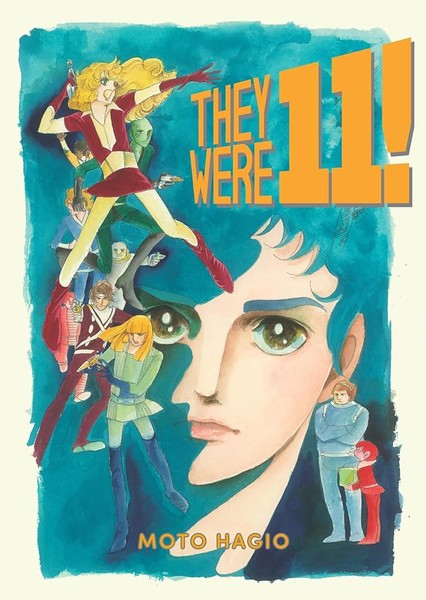
Have you ever played Among Us, Raging Loop, or Gnosia and thought, “Well, golly. This is great, but I sure do wish this were a 1970s sci-fi manga written and illustrated by shojo manga legend Moto Hagio.” Well, you're in luck. Against all odds, I have the solution to your weirdly specific problem: The fashionably late English release of Hagio's 1975 They Were Eleven, as well as its follow-up story, Horizon of the East, Eternity of the West. And it is, to be clear, very fashionable—Hagio's luscious art style looks great in the larger pages of this book, which also has some beautiful color pages.
Well, I guess I should put a pretty heavy asterisk on the whole “fashionably late” thing. After all, They Were Eleven was published in English previously in 1995 by Viz. In addition to being in book form (rather than paper comics), this edition includes the aforementioned follow-up in the same book and a brand-new translation. I don't think it's at all unfair to classify this as a new release of a classic despite the asterisks that come with calling it that.
But anyway, if I'm doing my job right, you'll at least be able to get a faint idea of what this manga is about: 11 people, trapped on a spaceship as part of a test, but there's only supposed to be ten present. There is, one could say, an imposter who is indeed among us. The group has to survive fifty-three days together, but with a cloud of suspicion looming over everyone's head, that's easier said than done. It's thrilling, mysterious, and also very gender.
It's also a perfect encapsulation of just how strong Hagio's character writing and pacing is, as she somehow found the time to make each character feel unique and to put enough meat on their circumstances and backstory, all despite this manga's relatively short length. Among other things, this includes elements of worldbuilding, political intrigue, and exploration into gender. It's nothing short of incredible, both as a release and as a story itself. Especially given that the whole thing fits in one book, which makes it really easy to recommend to fans of sci-fi or the classic shojo aesthetic.
—Kennedy
THE BEST CONTINUING MANGA OF 2025
10. #DRCL midnight children by Shin'ichi Sakamoto (Viz Media)
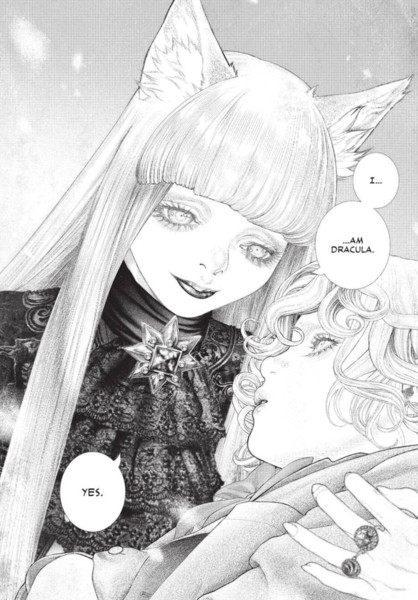
#DRCL midnight children, Shin'ichi Sakamoto's surreal high school AU of Bram Stoker's Dracula, has made Anime News Network's best manga of the year lists for the past two years. It still warrants this spotlight in 2025, even if the two volumes translated and released by Viz Media this past year are slightly harder to love than the first three.
This year, #DRCL finally went back in time to adapt Dracula's opening section. Jonathan Harker's imprisonment at Castle Dracula is one of the scariest parts of any Dracula adaptation. Sakamoto making Harker a 13-year-old boy (they do, in fact, give a reason why a kid is doing real estate lawyer work) makes it even scarier — and one chapter was simply so disturbing I almost quit reading the series entirely. I kept going anyway, and I'm glad I did, because the story as a whole is just so compelling. Please heed the content warnings on this one.
Volume 5 returned to the main story, which arrives at some major turning points. Luke/Lucy's story ends in a way that's messy yet powerful, and we finally get an explanation of what the hell is up with Renfield in a shocking reveal sure to provoke more questions. There's also a side quest into the Extended 1890s London Public Domain Universe, where Joe Suwa basically becomes Sherlock Holmes and confronts Jack the Ripper. As usual, Sakamoto gets credit for making well-worn material feel fresh with both striking horror imagery and critical social commentary (the correction of sexist assumptions about the Ripper's victims is much appreciated).
The number one thing that makes #DRCL worth including on this list is that it's simply the most beautifully drawn comic I've read in a long time. Its vivid dreamscapes work a dark spell on the reader, its beauty only making the terror stranger. And it's already very strange! Much of the fun of #DRCL is in embracing Sakamoto's wild imagination. There's been a million Count Draculas in fiction before — why shouldn't there exist a version who is at once Vlad the Impaler, Michael Jackson, and a kawaii catboy eating pomegranates?
—Reuben Baron
9. Vinland Saga by Makoto Yukimura (Kodansha Comics)
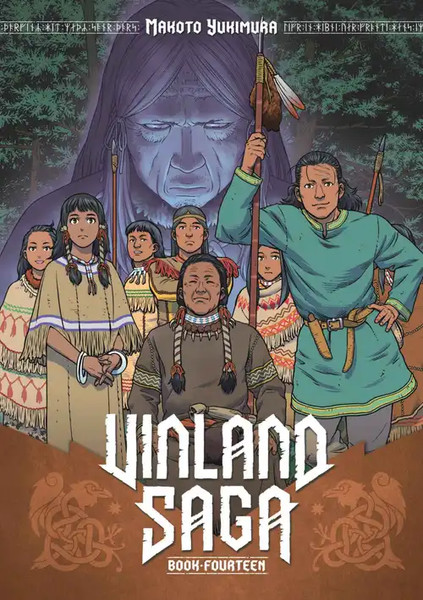
As Vinland Saga nears closer and ever closer to its conclusion (which it reached over the summer in Japan), this volume sets the stage for its imminent finale: Thorfinn has, to the best of his ability, managed to maintain peace between the Lnu and Arnheid. But cracks in the foundation are becoming harder and harder to ignore, and it's becoming increasingly apparent that despite Thorfinn's efforts, conflict and war might break out anyway. And even if they manage to avoid a visit from one horseman, another of the four could just as easily be on the way.
Makoto Yukimura has never had any issue in taking Thorfinn to task when it comes to his pacifistic ideals—Thorfinn's had to put his metaphorical money where his mouth is time and time and time again. By this point in the series, we've seen him undergo more than a few massive hardships—to say nothing of physical injuries—all because he refused to give in to violence. And yet, this might honestly be among the toughest struggles with violence Thorfinn's had to deal with. Not necessarily because he feels temptation, but because so many of the people around him do—including people he didn't think he'd need to worry about. It's one thing for Thorfinn to resist violence—by this point in the series, we know it's something he's strong enough to do when he's left to his own devices. But the question of whether or not Thorfinn can maintain his ideals in the face of so much direct conflict, and whether or not the people around him truly trust in Thorfinn's ideas—Yukimura is, once again, putting his characters to the test. Just that now, he's expanded his scope well beyond the usual Thorfinn and Einar.
Yukimura obviously knows that plenty of readers are entering this arc of Vinland Saga with already some idea of how it's going to end—or more specifically, knowing that readers can, if they want, easily read the Icelandic sagas that this manga is based on, learn about the historical Thorfinn Karlsefni, or learn about what would happen when Europeans stumbled their way to North America several centuries after this. Very smartly, he's not trying to create a conflict or mystery out of what's going to happen to Arnheid, or more broadly to Vinland itself—because there's a good chance you already know what's going to happen. Instead, while he's letting all that play out, he's making sure to use it as a frame to keep the drama centered on the characters, and their internal conflicts about war—and in some ways, the fact that many readers know what's going to happen to Vinland, but don't know the specific details of how things get to that point (and especially what it means for particular characters) only adds to the rising drama. It's a brilliant way to keep the tension rising and to handle a character-driven story in a historical setting where, inevitably, many people will know its ultimate outcome.
—Kennedy
8. Land of the Lustrous by Haruko Ichikawa (Kodansha Comics)
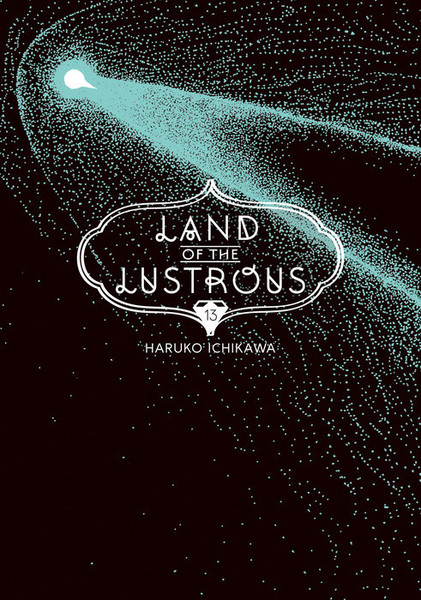
Agony, thy name is Phos. Twelve years and thirteen volumes later, Haruko Ichikawa closes the book on her post-apocalyptic series. It's rare to feel a sense of content at the end of a grand series about existentialism, but I was completely satisfied when I arrived at the last page. As this is the final volume, I will be discussing spoilers for moments from the entire series.
Lustrous starts out in a world that used to be inhabited by humans, but now all that's left are sentient humanoid gemstones. As the beginning of the series transitions from the Gems (or Lustrous) fighting Lunarians, the mystery behind the Lunarians' motivations quickly unravels the true reason as to why they continually attack Kongo and the Gems. What kept me hooked was Ichikawa's plot development and interpersonal relationships between the Lustrous and the Lunarians.
Rereading Land of the Lustrous from start to finish always gives me a new perspective, while I still feel the same appreciation I had for the series when I first read it a decade ago. Before reaching for this last volume, I reread the series from the first chapter, which led me to start crying all over again. I was emotionally distraught halfway into volume thirteen as my only desire became to end Phos' suffering.
By chapter 108, she brings the series to a satisfying, full-circle ending. Finally realizing that they just wanted love and acceptance, Phos finds peace among the rock formations that had provided them with the support they lacked before. After an emotionally heavy volume, the second-to-last panel expresses a dreamy wish for the pieces of Phos scattered across this universe and others: “I hope they can help someone feel brighter.” Here, I think Ishikawa is hoping her own work—in a sea of many others—can be its own self-contained universe, where readers can explore a better, happier life.
In my eyes, the series gave me a space to explore the complexities of my personal relationships and my own worldview through the lens of an inhuman humanoid. As a species, what will be the legacy of humans on beings that will exist far after we are gone? Maybe we're all just rocks traversing the universe until our star dies. I've stared blankly at the final chapter of Lustrous many times before finding myself in a trance state, letting my imagination run wild, enamoured and humbled by Ichikawa's detailed art and storytelling.
—Kalai Chik
7. Akane-banashi by Yūki Suenaga and Takamasa Moue (Viz Media)

Next to the eternal monolith that is One Piece, Akane-banashi has been one of the MVPs of the current Shonen Jump lineup, and has been one of the best manga the magazine has ever provided. At first glance, a story starring a female protagonist and centered on a cultural art form unique to Japan doesn't seem like the sort of series that would survive in Shonen Jump, let alone be successful. But it's managed to pull off that hat trick by taking the shonen sports manga formula and using the ultra-competitive spirit that usually comes with it to instead focus on how well each performer communicates their art to the audience. The results have so far been pretty spectacular thanks to how well Takamasa Moue's art has managed to convey both the ideas behind every rakugo story that the manga presents, as well as the emotions of the performers on stage, making every rakugo show feel as mesmerizing as if you were directly watching them on stage.
The fourth year of the manga's run has focused on the beginning of a three-year timeskip, as Akane has become the newest apprentice of her archnemesis, Issho. While timeskips in Shonen Jump manga can be something of a mixed bag, this one has managed to land pretty well so far. Much of the focus has been on how Akane and her rivals have evolved as performers, and it's been interesting to see how the manga has built on each of their individual styles. Hikaru has continued to take her experience as a voice actor and use it to provide a level of vocal range to the characters in her stories that makes her performances feel more immersive, while Karashi's desire to help modernize rakugo as an artform has led to him creating his own stories, and attempting strike a balance between his want to make something new, against his growing level of respect for the traditions the artform is known for.
The biggest transformation, of course, has been with Akane herself during her time overseas. Her need to prove that she's capable of meeting Issho's strict standards of what rakugo is has pushed her into learning how to better detach herself from the idea of performing on a stage, and into letting herself get immersed in the stories she's telling and inviting the audience to get sucked into them alongside her. The sequence that follows features some of the best artwork I've seen in a manga all year and does a great job of conveying Akane losing herself in her art, even if we can't actually hear her act. With an anime adaptation set to come out next spring, I'm really eager to see how Akane-banashi's execution of rakugo translates to having actual vocal performances to go along each of the rakugo stories, but there's really something to how well this manga can visually convey the strengths of a completely verbal artform, and it easily stands as one of the of the best manga of the 2020s.
—Jairus Taylor
6. Witch Hat Atelier by Kamome Shirahama (Kodansha Comics)
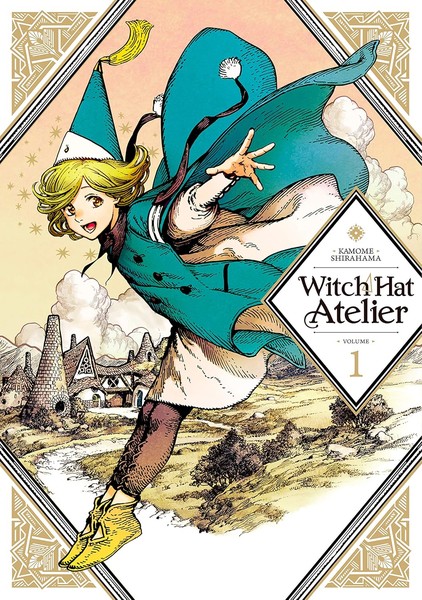
In its thirteenth volume, Witch Hat Atelier continues its march toward the climax of the longest, most action-packed arc so far. Things are looking up: the vorpal leech's rampage continues, but Engendale is captured, most of the town has been evacuated, and Coco and Qifrey are in a safe place with Beldaruit. While the previous volumes explored the many excellent reasons why magic and medicine should be kept separate, including only slightly nightmarish body horror, this one searches for the compromise.
As usual, Coco's big-heartedness and outside-of-the-box thinking are the key to finding a solution. She doesn't see it as common sense that magic should never be used to save a person from death. Her experience with her mother makes her sympathetic to Custas' grief and anger at being told it's wrong to try to save his adoptive father, Dagda, instead of merely casting him as a wrongdoer for breaking the taboo. This, combined with her usual creativity, makes it possible for her to fight through witch society's almost dogmatic insistence on maintaining the separate and help Beldaruitt invent a solution that allows them to work through the carnage created by the leech terrorizing the town.
And of course, there are all the same things we love about Witch Hat Atelier. Kamome Shirahama's breathtaking pen and ink art continues to be among the best in the business, rendering every locale and member of the effortlessly diverse cast with character and delicacy. Even in this more battle-oriented arc, the story's emphasis is always on empathy, kindness, and creativity. In this world, magic is always about making people's lives better, even in simple ways, and caring for their feelings is just as important as fighting off the bad guys.
The dialogue in the series has never been naturalistic, and this volume is no exception. Everyone is too reflective, too capable of eloquently expressing their emotions and complex ideas. Instead, much of it functions like a series of meditations on what it means to be committed to helping others, to grow as a person, and to finding solutions instead of perpetuating conflict. In the hands of a lesser artist and writer, it could come across as preachy, but it doesn't here. Maybe that's the true magic of Witch Hat Atelier.
—Caitlin Moore
5. The Guy She Was Interested In Wasn't a Guy at All by Sumiko Arai (Yen Press)
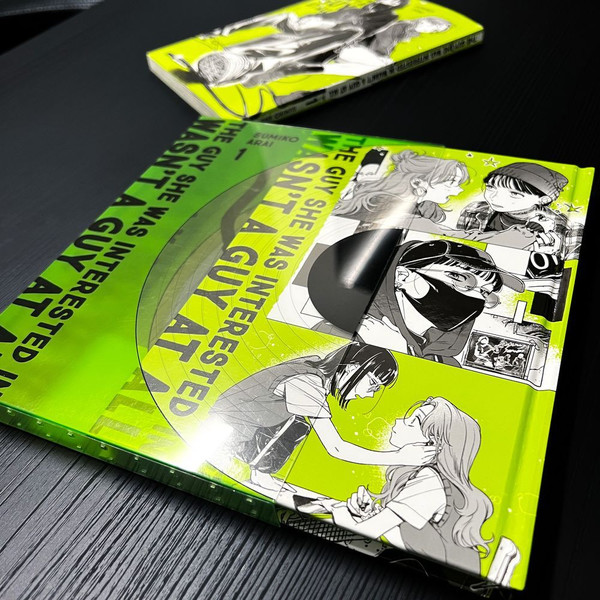
Do you remember the first time you fell in love? Can you recall the awkward glances, the disjointed text conversations, and all the excuses you made to hang out... Through the decidedly green lens of Aya and Mitsuki's burgeoning relationship, The Guy She Was Interested In Wasn't a Guy at All masterfully portrays all the feelings that accompany young love or any blooming romance.
While the first volume excels at capturing the heartbeat-skipping sparks of a relationship's start, the green yuri's second outing takes a sobering step back to reflect on the emotions that arise when things get serious. Mitsuki constantly worries that she's dragging Aya down and ends up isolating herself within her music. Meanwhile, Aya's trying her best to include Mitsuki in everything while realizing that her girlfriend doesn't have a huge social battery. It feels as if their conflicts fully come to a head when Mitsuki's uncle encounters his ex for the first time in years.
Like Mitsuki, he wanted to pursue a music career in the States with his girlfriend at his side—it just didn't work out. When they reunite years later, they're refreshingly frank about everything that happened. What's done is done, but they've both learned a few things about themselves from the experience—which might help them steer the girls in the right direction in the future.
Most relationships never see this level of closure once the dust has settled, but I'm glad to see a series that openly says, “This didn't work out, but you've learned a lot about yourself in the process. So much so that maybe you'll be a better person for the next one that comes along.” I love feeling the butterflies in my stomach, but I appreciate a series that gives equal care to the ups and downs of any relationship.
Speaking of care, the team over at Yen Press deserves praise for their excellent hardcover release of volume one. Sumiko Arai's gregarious greens looked great in paperback, but her wonderful illustrations, Ajani Oloey's pitch-perfect translation, and personal Beyblade buddy Brandon Bovia's lettering absolutely shine in this special edition. Seriously, I think this release is already up there as an early contender for next year's American Manga Awards. Now, to wait until just before Christmas so I can check out volume three...
—Coop Bicknell
4. Kowloon Generic Romance by Jun Mayuzuki (Yen Press)
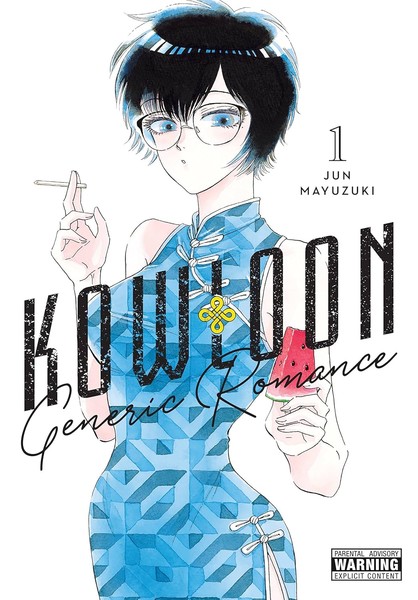
Kowloon Walled City was destroyed in 1994, but in Jun Mayuzuki's Kowloon Generic Romance, it still exists, possibly in 2019. The bustling metropolis-within-a-metropolis is home to thousands of people, and among them is a woman named Reiko Kujirai. Reiko seems to be living her normal life as a real estate agent alongside her odd and awkward coworker Hajime Kudo, but there's more going on than just a Kowloon Walled City that still stands…or seems to, at any rate.
Long before hybrid genres were a publishing staple, Mayuzuki began this series that blends science fiction and mystery. With ten volumes currently available in English (volume eleven comes out in May of 2026), it has quietly become one of the most intriguing series I'm reading. Mayuzuki's previous work, After the Rain, in some ways set up this one by using societal expectations and emotional yearning to craft a story about people finding their way, and Kowloon Generic Romance adds an almost ghostly patina to that carefully honed craft. Reiko is haunted by a past she can't remember and no knowledge about why she's suddenly back in Kowloon, living with what appears to be the ghost of a life she can't recall. Or rather, pieces of that life; until she begins to question things, it looks an awful lot like she's just going about her business like normal. So why, then, are people claiming she's engaged to Kudo? Why does he resist any changes to her routine and appearance? The answer is staring us in the face, but the world is so ordinary within Kowloon's walls that it's easy to ignore it, like most denizens ignore the floating geometric object hanging in the sky.
Mayuzuki's series is a masterclass in seeding clues and carefully guiding readers to understand what's going on. The way she writes characters as layered individuals with their own relationships to the past and to Kowloon Walled City encourages active reader participation in the unfolding story in a way that all of those multi-modal children's books with the QR codes wish they could. Even a seemingly throwaway line or character could be important, and part of the experience of reading this series is not just figuring out which and how, but also thinking about the characters' motivations. Why did Reiko come back? How is the city standing? Why are there multiples of some people? There's no one right answer at this point, and that's what makes reading each volume both an imperative and a joy. If you haven't picked this up yet, please do. Even if you've seen the anime, I promise that the manga holds many more mysteries for you to uncover.
—Rebecca Silverman
3. The Summer Hikaru Died by Mokumokuren (Yen Press)
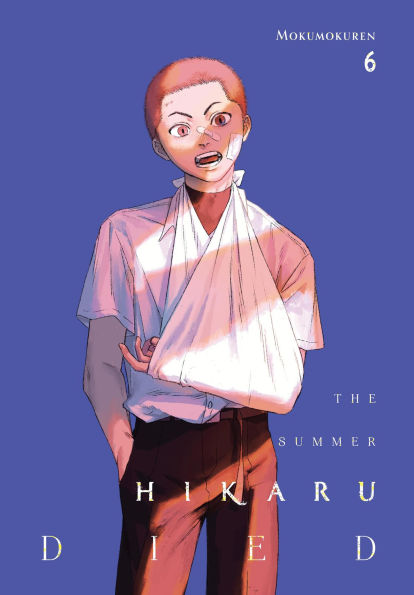
“Came back wrong” never felt so right. Since The Summer Hikaru Died came out in 2021, we've now had four summers to get to know melancholy Yoshiki and his best friend-turned-monster Hikaru. Mokumokuren's debut work began as a couple of Twitter posts before it made the extraordinary leap to a bestselling, award-winning manga, which was then adapted into a light novel and an anime that was one of our top picks of Summer 2025. With more than 4 million copies in circulation, it's safe to say this tale of small-town horror resonated deeply with readers. Its combination of classic horror tropes and queer self-discovery makes for a moving tale that only gets better as it continues. October 2025 saw the English release of the manga's 6th volume, which delivered some critical answers about Hikaru's identity.
Because the anime rearranged the events of the manga to speed up the introduction of spirit-hunter Tanaka (a good choice in my opinion), the latest volume of The Summer Hikaru Died was perfect to read immediately after finishing the summer anime because it picked up right at the beach scene where the anime concluded. As Hikaru learns some hard truths about his possible origins, Yoshiki struggles with an identity crisis of his own. When Lynzee Loveridge interviewed Mokumokuren in 2024, the author said, “[W]hen Yoshiki faces the monster called 'Hikaru,' he must also face himself.” That is the central idea of this latest arc of the manga. “I'm a ‘monster’ too,” Yoshiki thinks, imagining the suffocating family dinners he must endure in his small town life, having to pretend to be somebody he isn't, because the truth of his queerness would get him ostracized. “I've been hiding who I am this whole time,” Yoshiki thinks. “That's why I want [Hikaru] to be saved.” The manga continues to tell this story atmospherically. Sound effects like the buzzing of insects or the ticking of a clock in a silent room magnify feelings of tension and dread. What's more, the mysterious goings-on in Yoshiki's mind and his town are beginning to impact his friends. Now the cheerful Maki is dealing with a subplot of his own involving ghostly legs appearing around his room. It's an echo of the series' gruesome focus on separated body parts and how they tie into the village's ghastly history.
By this point in the story, Yoshiki isn't such a loner anymore. He's got Hikaru, of course, but now there's also Tanaka and Ms. Kurebayashi, a refreshingly rare middle-aged mom character, joining the pair on their supernatural detective work excursions. But even as their circle expands, the focus is still on the boy and his monster at the center of the plot. It's their strange mutual understanding and all the messy feelings it entails that remain the beating heart of this story. “I want people's feelings toward the ‘unknown’ to be not only ‘scary’ but also sometimes sexual, sometimes unpleasant, and very complex,” Mokumokuren said in the interview. At this point in the story, even more than before, mission accomplished.
—Lauren Orsini
2. Frieren: Beyond Journey's End by Kanehito Yamada and Tsukasa Abe (Viz Media)
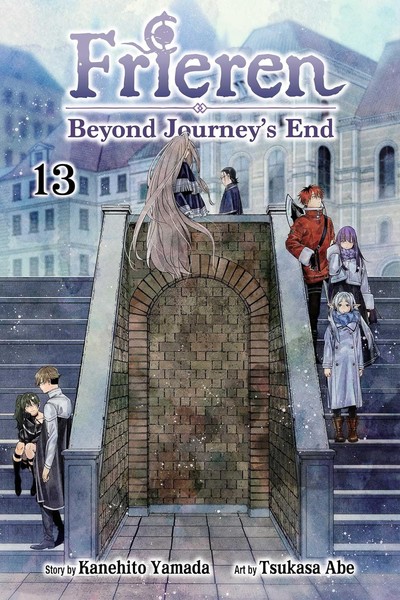
Due to the creators' health issues, the premier fantasy manga Frieren has recently been beset with delays in publishing new chapters. Its Japanese serialization is currently on indefinite hiatus, and this isn't the first time – there were hiatuses in 2023, 2024, and earlier in 2025. Perhaps this is due to the creative and physical strain of producing such a high-quality, immaculately written and drawn manga on a brutal schedule. I worry that creatives in both the manga and anime industries don't always receive the support they need to protect their health. Anyway, this means that in 2025, we only received two printed Frieren volumes (twelve and thirteen) in English translation. This isn't a complaint – Frieren is as good as it has always been, and I'd much rather the authors take all the time they need if it means the story can continue all the way to its eventual planned conclusion without compromising quality or health.
Volume thirteen concludes the beautiful time travel arc that comprises the entirety of volume twelve, where immortal elf protagonist Frieren is accidentally transported back to the time she spent with Himmel the Hero and his travelling companions. Although returning to the past to meet dead characters could be a potentially disastrous plotline for a series about mourning for lost friends, accepting regrets for the path not taken, and moving on with life, Frieren isn't the kind of manga to make cheap, sensationalist decisions. Frieren is disturbed by this turn of events and does her best not to wreck history completely. Her friends do notice that something is up with her, though, noticing even little things like when she says “thank you,” apparently not something that old Frieren ever did.
Frieren uses this story arc to examine how the titular character has grown and changed in the decades since she last travelled with Himmel, whom she is at least beginning to understand loved her. Although she could be tempted to stay behind and relive the parts of her life she is only now beginning to miss, that would be a backward step that would invalidate her personal growth and her relationships with her new companions, Fern and Stark. In fact, hanging around in the past could prevent either of them from being born.
There's little in the way of existential hand-wringing or overly complex timey-wimey complications. Frieren knows she needs to get back to her real time without dwelling on or reliving the past. It's another way the story reinforces its themes, using a plot device available only in fantasy and science fiction.
We then start a new arc with a fascinating setup, where Frieren and her present-day friends visit a village that isn't quite as it seems, and a new, unsettling threat is reawakened. I'm really excited to see where the story goes next, with the fourteenth English-language volume due for physical publication in February 2026. Once volume fifteen reaches us, we'll be fully caught up with the current Japanese serialization. At least we'll also have the upcoming second season of Madhouse's wonderful anime adaptation to keep us sated for now.
—Kevin Cormack
1. Chainsaw Man by Tatsuki Fujimoto (Viz Media)
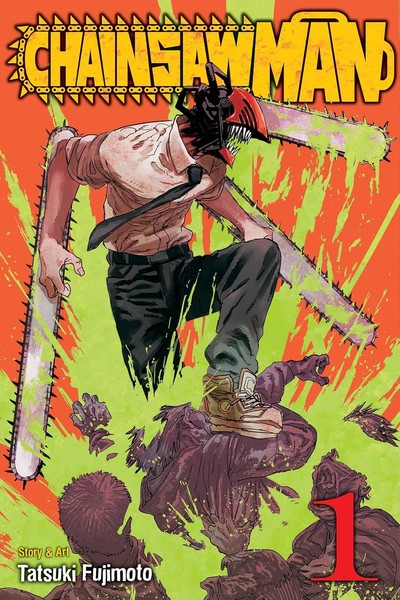
This has been a heck of a year in the Chainsaw Man manga. As the second main arc of the story nears its conclusion, the world teeters on the edge of a fate far worse than simple annihilation. But as the success of Chainsaw Man – The Movie: Reze Arc this year proved, it's not just the bloody action and black comedy that really make the series stand out; it's also the characters and their personal drama.
From the start, Denji's been fighting to live an ordinary life. Yet, the question arises, what is an ordinary life in this world filled with demons? Was it working in the Public Safety Bureau? Was it living with Nayuta and going to school? And, now, as the literal apocalypse happens around him, Denji's faced with a new question: if he's attained his “normal life”, what is his next big dream to strive for? And what exactly does being Chainsaw Man mean to him?
On the other side of things, we have Asa. She isn't Denji's first love interest, but she is the one most similar to him, as she comes from a traumatic background and shares a body with a devil; however, unlike Denji and Pochita's symbiotic relationship, Asa and Yoru battle for control of their shared body as often as they work together. They also fight over Denji, one appealing to his human side and the other to his devilish powers and odd way of thinking. And while Denji has made his choice about which of the two he wants to be with, as Yoru gets ever closer to her ultimate goal, there may be no happy ending for any of the three involved.
—Richard Eisenbeis
- The Top 10 Anime of 2025
- The Best Anime Characters of 2025
- The Best Anime Moments of 2025
- The Best Anime Songs of 2025
- The Best Anime Movies of 2025
- The Best Manga of 2025
- The Best Video Games of 2025
- The Worst Anime of 2025
Disclosure: Kadokawa World Entertainment (KWE), a wholly owned subsidiary of Kadokawa Corporation, is the majority owner of Anime News Network, LLC. Yen Press, BookWalker Global, and J-Novel Club are subsidiaries of KWE.
The views and opinions expressed in this article are solely those of the author(s) and do not necessarily represent the views of Anime News Network, its employees, owners, or sponsors.
discuss this in the forum (52 posts) |

back to The Best Anime of 2025
Seasonal homepage / archives