

The Best Video Games of 2025
by Jean-Karlo Lemus, Richard Eisenbeis, & Kennedy,
It feels like every year, we have to make room for how bad the gaming industry is getting. And make no mistake — developers are suffering plenty; the executives ruling these companies continue to make terrible decisions that inhibit our beloved creatives, and more and more rent-seekers poison the well by shoving generative AI where it's absolutely not wanted or needed. What a cosmic perversity that, at the same time, this has been one of the most fruitful years in gaming, loaded to the gills with wonderful titles across so many genres. Nothing unites us quite like huddling around someone who wants to spin us a yarn, that most ancient desire from the dawn of our past. It just so happens that these days, the people spinning the yarns sit on office chairs instead of rocks and include lots of frame-parries, and the people listening follow the trail of breadcrumbs to the treasure chest that's always hidden behind a waterfall. These are some of the top ten(ish) games that kept us glued to our screens in 2025.
Donkey Kong Bananza
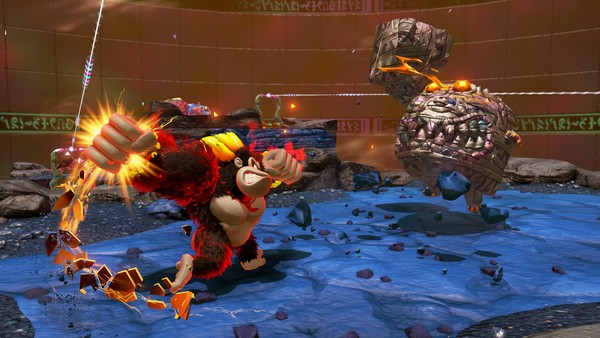
Nintendo's First Ape made a splash this year with a tremendous return to adventure/platforming, and the result was dedicated to not just making you feel as powerful as Donkey Kong at his best--but also fleshing out the big lug's heart. Because not only is Donkey Kong Bananza the climactic return of the first member of the DK Crew, it's also a game about Pauline, the oft-forgotten diva of the Mario world. Sure, a story about the future mayor of New Donk City gaining her confidence in her singing could've done a bit more to actually explore her inner world, but more than anything else, it's fun to see Pauline actually involved in stuff. And the friendship between her and Donkey Kong is the stuff prime family entertainment is made of.
Also, it's just fun to return to monkey; the sheer extent and scale of destruction possible throughout all of Bananza makes it one of the most fun ways to scratch your id, and that's before you get into the sheer number of collectables at hand. Folks who've missed the glory days of Donkey Kong Banana Slammin' his way through the world can breathe easy with Donkey Kong Bananza--and folks who've missed other stuff pertaining to the big ape were also satisfied to see a certain old "friend" make their triumphant return. Whether you're young or young-at-heart, Donkey Kong Bananza brought our favorite barrel-buster back in style.
—Jean-Karlo Lemus
Elden Ring Nightreign
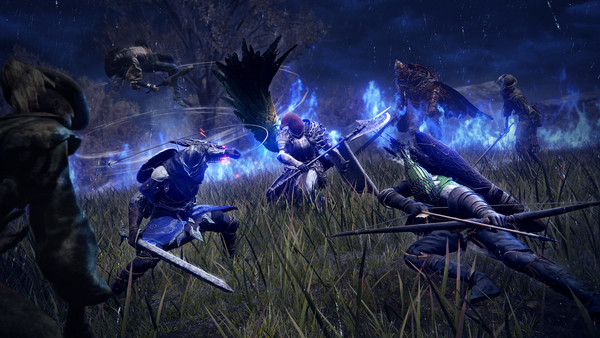
You're dropped into the middle of a giant map filled with random locations, and a few minutes after, the playable area begins to shrink. A few more minutes later, it does so again, and you end up fighting a boss from Elden Ring or the Dark Souls trilogy. You're then expected to repeat the cycle once more before facing off against an original super-boss to finish the run. Even with three players, it's more than a little overwhelming.
But as you fail again and again, you start to make a general plan—what places to go and when, along with what kinds of weapons you need and which characters are best to utilize them. Each success or failure grants you a few equippable relics to tweak how the characters play. Eventually, thanks to game knowledge as much as player skill, you triumph.
This journey is what makes Nightreign so fun and so addictive. You can feel yourself getting better with each run—better at managing your limited time and getting more familiar with what to expect. However, even then, the game keeps surprising you and upping the difficulty. From previously defeated main bosses showing up in the middle of a run and “Shifting Earth” events that change a quarter of the map into a new area, to the new ultra-difficult “Everdark” versions of the main bosses and the Deep of Night mode that makes all the enemies in the game progressively stronger, Nightreign has endless ways to play. And then there's the recently-released The Forsaken Hollows DLC, which adds two new main bosses, two new characters, a completely new map, and remixes the old maps with brand new locations for anyone who wants even more.
If you've got two friends and are up for an equally challenging and rewarding experience, Elden Ring Nightreign is the game for you.
—Richard Eisenbeis
Daemon X Machina: Titanic Scion / Xenoblade Chronicles X: Definitive Edition
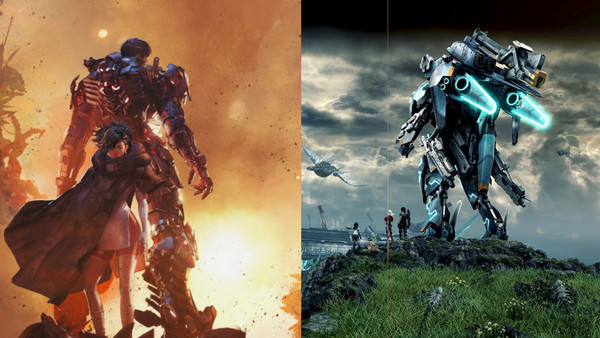
It's difficult to choose between Xenoblade Chronicles X: Definitive Edition and Daemon X Machina: Titanic Scion. Both games do a lot, and much of what they do overlaps. In many ways, they represent two sides of the same coin. With Xenoblade Chronicles X, you have a far-reaching science-fiction epic of people coming together to build a new life for themselves on an alien planet, while bringing all of their old problems with them. The sheer scope of the world is far beyond what most would expect on a Nintendo console: seamless open-worlds, the ability to pilot giant robot suits (Skells) to fight even bigger monsters, flying through this world--and, of course, the far-reaching questions usually posited by the Xenoblade series. Where does humanity belong? What happens when we leave Earth? These questions only hit harder courtesy of the new story additions added to the Definitive Version, along with Kill la Kill composer Hiroyuki Sawano's contributions to the soundtrack.
But then there's Daemon X Machina: Titanic Scion. It also features a science-fiction world where you reclaim a wild planet from within an armored suit. It too features expansive locales and seamless flight. And it, too, emphasizes customization, from the color palette of your suit to your loadout to even the extent to which your character is mutated by their experiences battling enemies. Caught in the middle of a war between the haves and have-nots, you set out into a lethal wasteland filled with giant monsters and caches of desperately-needed supplies--and you even have the option of asking for help from friends online. It's a wide-open world, but one you can survive together.
Are there fans who prefer one over the other exclusively? Sure. But much of what makes Xenoblade Chronicles X: Definitive Edition a great game is also in Daemon X Machina: Titanic Scion. And if there's something in one of those titles you miss, you'll definitely find it in the other.
—Jean-Karlo Lemus
Silent Hill f
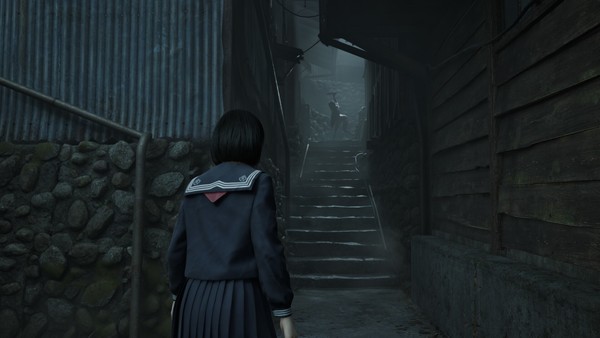
Rather than the titular American town of Silent Hill, this entry in the horror series is set in a rural town in 1960s Japan. The story follows Hinako, a girl from an abusive home, and her friends as they attempt to survive when the town is shrouded in a mysterious fog, with twisted dolls and monsters hunting them through the streets. What follows is a game filled with as much psychological horror as jump scares as the player explores the town and learns more about Hinako and her friends.
While the game can be beaten in a dozen hours, each subsequent playthrough (and unlocked ending) reveals new layers to what's going on in the story—giving the game more than a bit of replay value for those deeply invested in the tale being told. If a new twist on classic video game horror sounds like something you'd enjoy, do not skip over Silent Hill f.
—Richard Eisenbeis
Luminies Arise
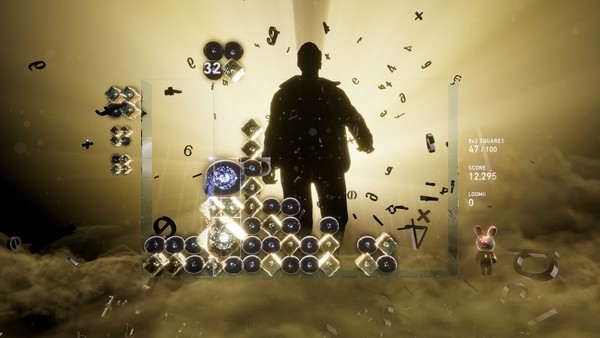
Pure phantasmagoria. It's not enough for Luminies Arise to be such an addicting puzzle game with such an addicting hook--forming cubes of like colors to the beat of a wave continuously moving from left to right. This alone would've made it an incredibly engaging puzzle game. No, the real magic was Enhance Experience's deft skill in melding the timing-based puzzle game with music and visuals. A good puzzle game sends you into a flow state, one where you can see your little blocks or what-have-yous even after you tear your attention away from the screen and shut your eyes. An Enhance Experience game puts you into a flow state while putting you into the middle of a beautiful soundscape and visual splendor, where the syncopated sound effects of blocks dropping or shifting position become beats in the background music, where your intelligent combos cause flourishes.
And then, just when you get used to the visuals and music--it changes, and you've moved from one part of the dream to the next.
It's one thing for a puzzle game to be addictive or to encourage you to beat your own personal high score. It's another for a game to lead you into newer and stranger soundscapes and visuals at every turn, and to compare notes with other people who've played it. Even if you "master" Luminies Arise, you'll want to keep coming back. Come in, press start, start stacking—and enjoy the show.
—Jean-Karlo Lemus
The Hundred Line
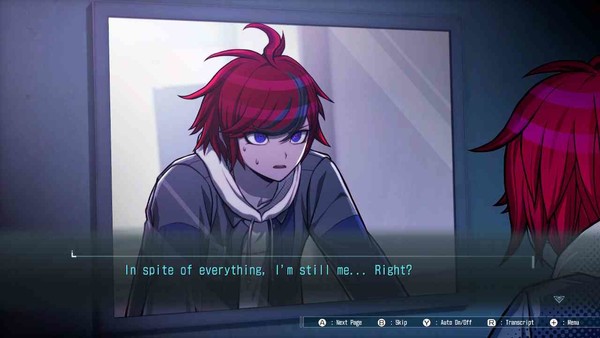
Some people prefer shorter video games, and that's perfectly fine and understandable. But for us sickos who like our games narratively focused, and with enough content to easily zoom into a triple-digit number of hours, there's The Hundred Line -Last Defense Academy-. The creative baby of Danganronpa's Kazutaka Kodaka and Zero Escape's Kōtarō Uchikoshi, Hundred Line follows a group of students who've been whisked away to a school located in an area that can only be generously described as post-apocalyptic: Last Defense Academy. It's here that our group is told that they're told that they're, well, humanity's last defense. Playing as one such student, Takumi, you try to survive for 100 days alongside your new allies. It's part visual novel, part turn-based strategy game, and all masterpiece. That said, when you talk about this game, the main thing you talk about is the sheer girth of it—and for good reason.
Hundred Line is a monstrous, magnificent, and truly unparalleled experience, unlike anything else fiction, as a whole, has to offer. I realize that's a bold statement, but hear me out: This game has 100 unique endings. And yes, that means story routes—complete with a flowchart—for every one of them. The idea of creating so many corresponding, fleshed-out routes and writing each of these individual endings is outrageous, complementary. That's dedication to your craft in its purest, most time-consuming form. And I loved every single one of the many, Many, MANY seconds—nay, hours—of it. This game was made with much love for storytelling, and it shows. I know it's easy to feel intimidated by the buckets of time you'll inevitably need to sink into it, but trust me: Once you've really sunk your teeth into the story, you won't mind.
—Kennedy
Death Stranding 2: On The Beach
"The more we seek to unite the people with metaphorical ropes, the more essential sticks become."
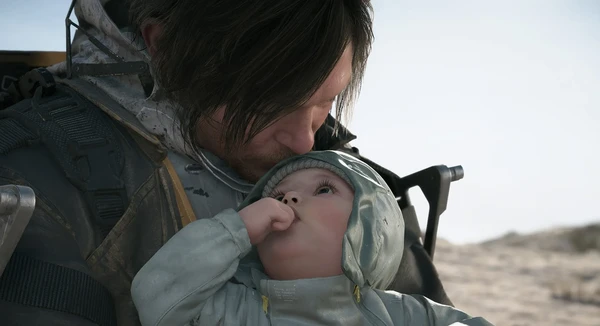
Death Stranding 2 might disappoint some with its decidedly "gamier" execution from its predecessor; it's following up to a game that challenged players with re-evaluating how they interacted with the world, be it in terms of locomotion--or violence. And even superstar creator Hideo Kojima must've decided that more gunplay might've been for the best. And who knows, maybe you're still scratching your head at the Death Stranding series' story about mass extinctions, people's souls prevented from moving on after death, and bizarre chiral creatures made from anti-matter. (For what it's worth: "chiral" doesn't trip the auto-speller, but "Hideo Kojima" does.) But for all the cracks levied towards Kojima being a "frustrated filmmaker," playing Death Stranding 2 reveals why it is he has the reputation he has: nobody does it like him, man. Anyone else can bring in a bunch of celebrity talent to mo-cap in your game (from Mad Max creator George Miller to director Fatih Akin). Anyone else can hire a superstar artist like Yoji Shinkawa to design some starfish-faced robots with swords. Anyone else can try to tell you a story about the End of the World. But Kojima's the madman who does it all and makes it stick with you, man.
Who knows, maybe we shouldn't have connected. Maybe the use of rope is just cowardice in the face of our need for sticks to protect ourselves. But I'm chewing on those ideas because Kojima put those into my head. And for what it's worth, it feels good to ruminate on that.
—Jean-Karlo Lemus
The First Berserker Khazan
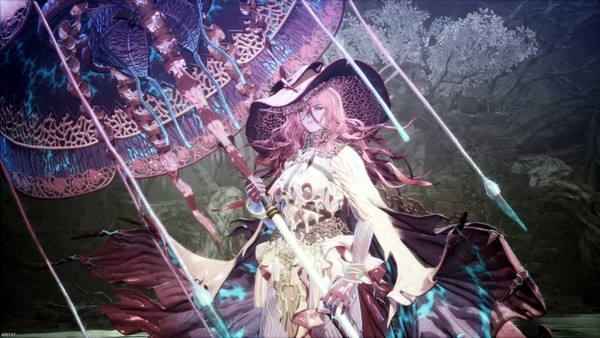
The First Berserker: Khazan is a Soulslike (more specifically a Nioh-like) set in the world of Dungeon Fighter Online (though set a millennium before that game). It follows Khazan, a general in a fantasy world, who was betrayed by his king and left both crippled and imprisoned. Making a deal to share his body with a demon, he is healed and sets off on a mission of bloody revenge—soon discovering that what he experienced was only part of a much greater plan that threatens not only the kingdom but the afterlife itself.
Despite being Neople's first attempt at a game of this type, The First Berserker plays incredibly smoothly. The gameplay itself is built around parrying enemy attacks as much as it is about hitting them. This also turns defense into a rhythm game of sorts, learning the enemies' attack patterns and tapping block in time with the beat. It makes the game incredibly engaging when fighting. The game's three ways of playing—dual wielding, spears, or massive swords—are quite different, with no one style feeling superior to the others. There is also a ton of customization in each, which also adds to the game's strategy.
And to top things off are the visuals. The cell-shaded, anime-like aesthetic looks great on both the characters and the environments. Likewise, the character designs, both allies and bosses, are top-notch and highly memorable. In this year with several great Soulslike games, The First Berserker: Khazan still stands out as a must-play.
—Richard Eisenbeis
Fantasy Life i: The Girl who Steals Time
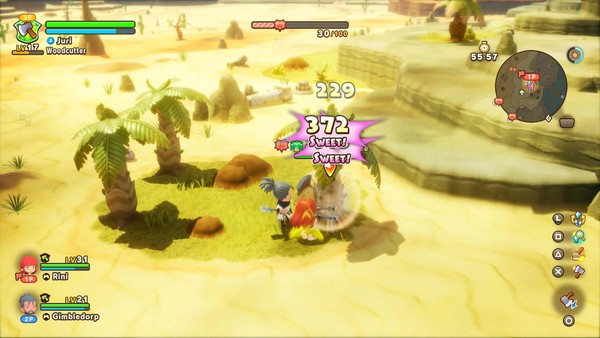
Level-5 sure took their time with Fantasy Life i. Any game with a gestation period as long or as tumultuous would almost show it, to say nothing of how much it would suffer for it. But for as much as Level-5 struggles to keep their projects properly managed, Fantasy Life i reminds us why they became so beloved in the first place: they know how to make a good RPG. Hell, they know how to make great RPGs.
Playing an adventurer who explores an island through three different eras (which correspond to different styles of gameplay--be it open-world or village simulation), you travel around and allow your various Lives (read: jobs) to grant you the resources you need to progress. Of course, you've got your many combat Lives to fight monsters, but when you need furniture, you've got your many crafting Lives like the Carpenter or the new Artist. As it turns out, the secret to a happy, fruitful life in general is to be multifaceted. Who'da thunk it?
For all of the systems in place, Fantasy Life i never overwhelms the player. In fact, its myriad systems mesh with one another, contributing to a larger experience. And the DLC has only improved the game, adding in a whole new mode (an open-world Rogue-like), just in case you didn't have quite enough to do. One of the most feature-rich and diverse games from the past year, brimming with charm and great ideas.
—Jean-Karlo Lemus
LUNAR Remastered Collection
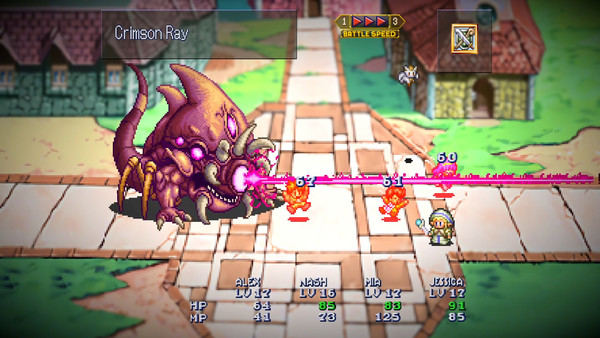
1999's Lunar: Silver Star Story (a remake of 1992's Lunar: The Silver Star) is the definitive archetype of old school JRPGa. A normal young boy sets out on an adventure to save the world and the girl he loves. He meets new friends, fights dragons and evil warlords, and uncovers lost secrets about the very nature of the world they inhabit. Lunar 2: Eternal Blue picks up the story 1000 years later and deals with the long-lasting repercussions of the first game—showing how even things done with the best of intentions can have unintended consequences.
This remastered collection contains both games and tons of quality-of-life upgrades to make it more playable in 2025, like improved party member AI, a battle speed selector, and a merged party inventory. On top of that are a ton of aesthetic additions, from remastered anime cutscenes and both English and Japanese voice acting to filters that mimic playing on a CRT TV and widescreen support—not to mention the ability to toggle between the 1999 visuals and the 2025 remastered ones. If you've never played either of these classic JRPGs, you're missing ou,t and this remastered collection is your perfect chance to rectify that.
—Richard Eisenbeis
- The Top 10 Anime of 2025
- The Best Anime Characters of 2025
- The Best Anime Moments of 2025
- The Best Anime Songs of 2025
- The Best Anime Movies of 2025
- The Best Manga of 2025
- The Best Video Games of 2025
- The Worst Anime of 2025
Disclosure: Kadokawa World Entertainment (KWE), a wholly owned subsidiary of Kadokawa Corporation, is the majority owner of Anime News Network, LLC. One or more of the companies mentioned in this article are part of the Kadokawa Group of Companies.
The views and opinions expressed in this article are solely those of the author(s) and do not necessarily represent the views of Anime News Network, its employees, owners, or sponsors.
discuss this in the forum (54 posts) |

back to The Best Anime of 2025
Seasonal homepage / archives