

The Best Anime Moments of 2025
by The ANN Editorial Team,
What anime moments kept viewers talking weeks after a reveal? Was it a convenient excuse after getting an unexpected handful? The culmination of a decade-long battle against one of shōnen anime's biggest villains? Or how about an instrumental rock band's flashy closing number?
These are the moments that stuck with us through 2025, whether contemplative and quiet or raucous and rowdy, or, in two cases, squishy.
Note: Entries below contain spoilers for series and plot developments!
The Frog or the Testicles? (The Apothecary Diaries Season 2)
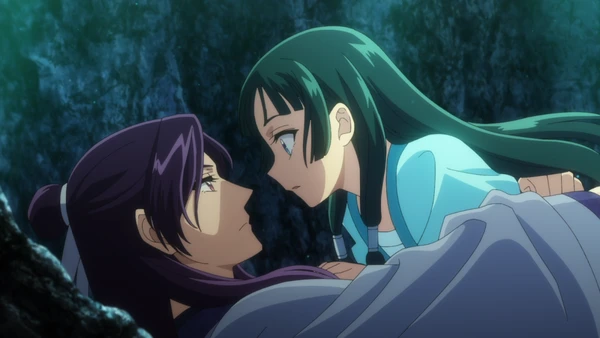
There are some things in life it's best not to know about, for example, the feel of your superior's balls. In one of The Apothecary Diaries' most striking scenes, protagonist Maomao is faced with exactly such a feeling and chooses outright denial. Squishy? Check. Palm-sized? Also check. No further inquiry necessary: this is surely the feeling of a conveniently placed frog.
When Jinshi and Maomao find themselves in an unexpected embrace in a dark cave, a different, more cowardly anime might have played this as a straight love scene. Here's a handsome man and a (despite her own protestations) beautiful girl in a risky situation, and there's some unintentional groping, so why not make out about it? Of course, that defies everything that Maomao represents. She's so immune to Jinshi's charms that it's no surprise many viewers interpret her as asexual, aromantic, or a combination of the two. Meanwhile, there's no way Jinshi is in the mood for some hanky panky when you consider what's going through his head in this scene. For ages, he's debated whether or not to confess his biggest secret to the shrewd apothecary: that he's not really a eunuch. He should have predicted that the detective who solved so many other palace mysteries would figure it out for herself. This is not a sexy moment for Jinshi; it's a terrifying one!
But by the time Maomao has quite literally fingered the evidence, Jinshi has girded his very-much-there loins and is all ready to come clean. It's then that he meets some unexpected opposition from the detective herself. “I might have crushed a frog,” Maomao blurts, cutting off Jinshi. She's ready to put this entire awkward scene behind her while she still has plausible deniability. For Maomao, sharing Jinshi's secret is a responsibility she doesn't want. It's total whiplash for Jinshi, who has gone from arousal to embarrassment to fear to finally acceptance that it's time to reveal his secret to Maomao, in just over a minute. Refusing to accept the astute apothecary's lie when she's been razor-sharp up to this point, he tries a different angle. “Who are you calling a frog?” he retorts, kicking off a debate about the size of frogs, the grossness of frogs, before Jinshi's playboy instincts take over. Now it really is a sexy moment for Jinshi as he manhandles Maomao and reacts to her feigned ignorance with a suggestive proposal: “Do you want to find out?” Whoops, here's another inconvenient truth about Jinshi that Maomao has been pretending not to know: this court official has been head over heels for her for some time.
This scene's combination of comedy, suggestiveness, and a deeply plot-relevant revelation has made it an instant classic rife for remixing. If you haven't yet, check out Rebecca Silverman's episode review, which retells the story of this ambiguous amphibian in Shakespeare's English. Truly, an anime scene we will remember long after 2025 is over.
--Lauren Orsini
Ruby's Death (Anne Shirley)
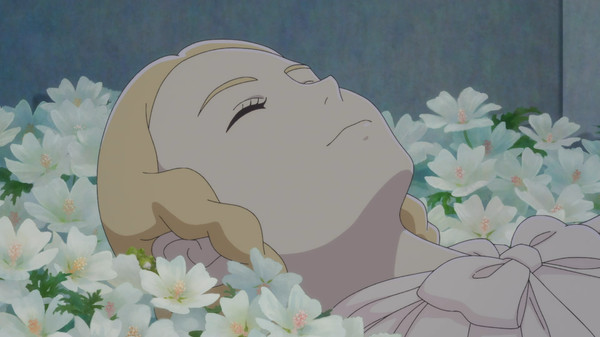
Death is not a stranger. They certainly weren't in the original Anne of Green Gables novel, but Matthew's passing at the end of that book often overshadows the other deaths Anne endures as the series goes on. In 1915's Anne of the Island, she's faced with another death of someone close to her, her childhood friend Ruby Gillis. Ruby's death is especially hard – she's Anne's age, and she's been there ever since Anne arrived at Green Gables. Matthew was hard, but Ruby is unexpected, and that makes it even worse.
Although Anne Shirley didn't always get things right, episode 19 is a case where the narrative emphatically did. Ruby's decline is both powerful and a searing condemnation of what was, at the time, considered “beautiful.” Consumption (or tuberculosis) was often described as a “romantic” death because of the pallor its victims had and their thin, frail bodies as the disease ravaged them from the inside out. Ruby, with her angelic blonde hair, is the very image of the Victorian heroine wasting away in beauty. Except…she's not. She's a young woman with her life ahead of her, desperately wanting to live, get married, and keep moving forward. Her increasingly manic actions as her mind tries to ignore the truth (or can't process it) are perfectly depicted on the screen as she writes illegible invitations to parties she can't hold and tries to dress up in clothing that hangs off her emaciated frame. There's nothing lovely about this. It's a waste. It shouldn't be happening. But it is.
In the end, Ruby does accept her death. Anne does, too, while keeping an image of their childhood selves tucked away in her heart. As Ruby lies in her coffin at the end of the episode, it's not painted as anything but a tragedy. But Anne still has to process it to move forward. And if that means seeing her friend smiling in a bed of flowers, that's how it needs to be. May Ruby's memory be a blessing.
—Rebecca Silverman
Deku Delivers the Final Blow (My Hero Academia FINAL SEASON)
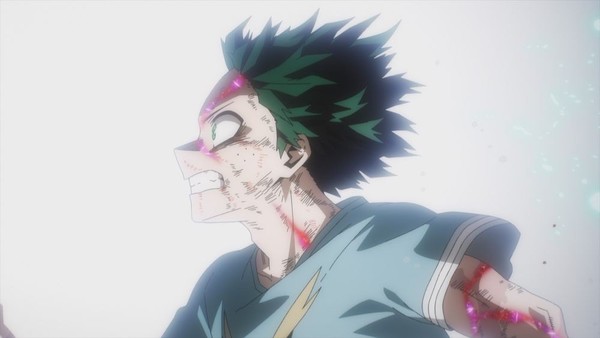
"You Say Run" is one of the main musical themes of My Hero Academia. It plays during some of the most influential climactic moments of the entire series, and I never understood why. However, when you consider that Deku, our main character, was originally defined as a hero for his ability to run to help someone without thinking, it makes much more sense. Deku always runs to help people, regardless of his state or what he stands to gain. Running to help somebody is what makes you a hero.
So, of course, the most climactic moment in the entire My Hero Academia franchise has to be Deku running to deliver the final blow on the main overarching villain. There are so many callbacks in this final season of My Hero that bring a lot of obvious and seemingly innocuous story beats full circle, but I think this scene is one of the most prominent. Deku has just given away most of his powers, he only has a small ember left, he's exhausted, beaten down and for a while he thinks that he's all alone after giving everything away for the sake of reaching out to a villain that was trying desperately to understand. All seems lost until almost every prominent character throughout the series shows up to clear the path for this boy to take one final run.
It is genuinely spectacular. Deku is wearing nothing but a simple T-shirt given to him by a civilian, while everybody else is doing everything they can to protect Deku as he runs up to deliver the final blow. You say run plays in the background, all of these flashy quirks are being used in the background, but the focus is always kept on Deku, the simple boy who wants to extend his hand forward both as a fist punch, All For One, and to hopefully reach out to Shigaraki just one last time. Ironically, what helps sell this scene is All For One's monologue, in which he notes that Deku represents everyone's weakness. Yet, his influence is so great that he's being overwhelmed by the very people he once looked down upon.
It makes sense that the last person who would help was Bakugo, the first person I ever saw Deku try to save, who clears the final obstacle so he can deliver the finishing blow. This is a perfect example of an extended cast being done right, but what finally puts a close pin in it is how the scene ends. The background fades away, and Deku is left alone in a white void with Shigaraki one last time. It's actually very interesting that this scene acts as a reflection of Deku running to help Bakugo against that slime monster all the way back at the beginning of the season, and that's what inspired All Might to give Deku One For All.
Yet this scene concludes with Deku ultimately failing to save somebody. Shigaraki's hatred was dispersed, and the two joined together to take care of All For One once and for all, but ultimately, the mission was a failure. Deku did all of that running and gave up so much just to be unable to save somebody. Not only does this revelation have an impact on later scenes in the show, but I would argue it's important to conceptualize the overall message of the series itself. Heroes aren't always going to be able to save people, but that's not what defines a hero. A hero is someone defined by whether or not you're willing to run and take all those risks in the first place.
—Bolts
Lin Ling Becomes a Hero (To Be Hero X)
In the world of To Be Hero X, just as public belief in a person grants them superpowers, it also dictates how they are allowed to act. In the climax of the first arc, Lin Ling, a once normal office worker who took up the role of “Nice” after that superhero's sudden suicide, discards his powers by going against public opinion and sets off to save the girl he loves. He is easily captured by the hero-turned-villain God Eye and unmasked as a fake on TV. Immobilized by the villain's army of drones, Lin Ling draws God Eye close by exposing his own deep belief about what it means to be a hero and headbutts him—breaking the villain's goggles and causing him to lose control over his drones.
What follows is a sloppy fight between two normal guys totally lacking in superpowers. However, when God Eye once again gains the upper hand and begins beating Lin Ling with a deactivated drone, Nice's most hardcore fans begin to root for him once more. As the belief of the first dozens, then hundreds, rushes into him, the art style of the episode switches from 3D animation to American comic book-inspired 2D animation, signifying the truth that Ling Lin has become a superhero.
But unlike with his time as Nice—a figure personified by balance, grace, and utter perfection in all things—Lin Ling has no belief-enforced restrictions acting upon him. Instead of dancing through combat, Lin Ling is still just a normal man—just with the raw, unbridled power of thousands coursing through him. This fight is no less sloppy than the previous one—but now, with each punch ripping up the ground and walls, more and more people begin to cheer his name.
Yet, in the closing moments of the fight, when Lin Ling has regained the full power of the world's 10th greatest hero, he pulls his final punch—though, even then, the shockwave is enough to rip God Eye's clothing and break a few teeth. Lin Ling could have easily killed the villain in his anger, but chose not to—and in the process proved to the world that anyone can become a hero.
Backed by not one but two different Hiroyuki Sawano songs, this scene is not only a triumphant end to Lin Ling's introduction arc but also a showcase of how good the series can look. It is a tour de force for Natsuki Hanae that rivals his previous roles in Tokyo Ghoul and Demon Slayer and sets the gold standard for what all subsequent arcs of the show are compared to.
—Richard Eisenbeis
Hatsune's Confession (Ave Mujica - The Die is Cast -)
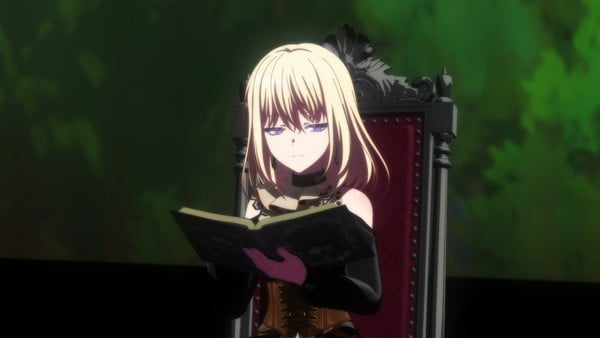
The curtain rises in an empty theater. A girl sits alone on stage, singing the folk song "Greensleeves," her voice infused with powerful, painful yearning. She says that she is going to tell all her secrets. The next half hour consists entirely of her doing just that.
Even if you hadn't suspected her from the beginning (though for the record, I totally called it), it had quickly become apparent that Uika might not be the normal, neutral member fronting Ave Mujica that she'd have audiences believe. She'd been battling an ongoing internal crashout that featured her fantasizing about throwing one of her bandmates down a flight of stairs! That's just the immediately alarming sort of thing, never mind her digging Sakiko's retired stage costume out of the trash and taking naps next to it. So it was more a confirmation than a shock when, following a last-ditch reunion for the band that seemed to leave everyone mostly satisfied, Sakiko's antagonistic grandfather rocked up, referred to Uika with the seeming misnomer of "Hatsune," and sent her on her way home.
It would only make sense to cut to the chase as far as teased twists go, and that's precisely what the next episode of Ave Mujica did. Misumi Hatsuni, nee Uika, lays everything out for those watching. She reveals her true identity, her relation to Sakiko (either sinking the ship for some or only making it better for those appreciably sick enough), and her status as the actual orchestrator—sometimes intentionally, sometimes unwittingly—of the whole journey that Sakiko and Ave Mujica had been taken on.
And plot twists are one thing. Any big reveal can hit hard in a pure infodump if it's appropriately shocking enough. But this series burns its own credits down at the end of every episode; they would never be satisfied with "enough." What director Hajime Yamanokuchi constructs in this eleventh episode is an arresting one-woman show that encases the Ave Mujica anime in a matryoshka of its defining artifice. Every reference to the other players in Hatsune's life is rendered as her projecting, literally, onto the backdrop of her mind palace behind her. Rico Sasaki revels in the opportunity to rule this setting as her own, as the animators render Hatsune's body language, in turns naturalistic and melodramatic, as her story spins. At one point, she ignobly crawls around on all fours. It's art.
This episode mirrors (both in placement and intent) It's MyGO!!!!!'s third episode, which portrayed Tomori's story through her own eyes. Hatsune's story is a similarly bold swing for a franchise that ostensibly thrives on base marketability, but that's always been why this side of the series was so special. There was no attempt to cushion or curtail these character details that had been baked into the scenario from the very start; she looked the audience straight in the eyes, told them everything, and let herself be judged accordingly.
—Christopher Farris
Suika Wakes Her Friends (Dr. Stone: Science Future)
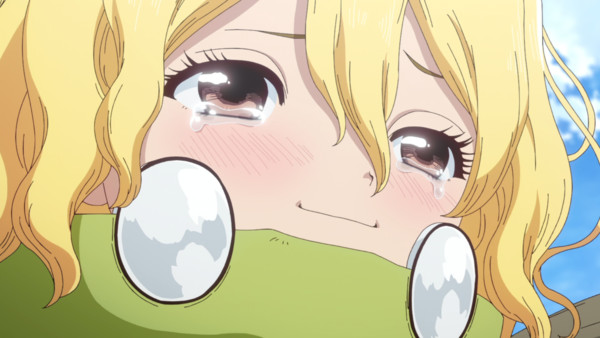
I never expected the daft shonen action serial Dr. Stone to make me well up with uncontrollable tears, but somehow the second cour of the final season, Science Future, succeeded with its sustained emotional terrorism. Little Suika has always been something of a comic-relief mascot. Much tinier (and younger) than the rest of the cast, she has terrible eyesight. Hence, the science-genius protagonist Senku fixes her up with prescription-strength lenses embedded in a hollowed-out watermelon that she wears on her head at all times. Anatomically improbable, she sometimes squeezes her entire body into the empty fruit to roll around like a pinball.
At the culmination of The Kingdom of Science's scouting party and trained killer Stanley's battle in the Amazon rainforest, it seems like all is lost as almost every one of Senku's allies is either overpowered or shot and killed in a remarkably brutal display of lethal violence. The only thing that can save them is the last-minute reactivation of the Medusa device that re-petrifies everyone on the planet once more. After a couple of years as a statue, the final bottle of revival fluid, agitated by the elements, falls from its raised perch onto the stone Suika's head, reviving her, alone, in the wilds of the jungle. She's the only living human being on the planet, surrounded by vicious animals, poisonous bugs, and dangerous terrain.
Faced with such loneliness and isolation, many people would likely fall to despair, yet Suika proves she's made of sterner stuff. Her steadfast love for and loyalty to her friends, along with her memories of Senku's teachings, guide her to create her own revival fluid from scratch. This process takes her years of trial and error and failure, the basic building blocks of the scientific process. Suika doesn't hail from modern civilization; she's essentially a neo-Stone Age resident, so the fact that she eventually succeeds is remarkable.
As a fully grown woman, after several years on her lonesome, she produces just barely enough revival fluid to return Senku to life. His first words to her? “Well done, Suika”. Cue hugs for them both, and great gushes of tears from the audience. With Senku's help, production of larger quantities of revival fluid flows quickly, and soon, Suika can revive everyone who has waited patiently for her to rescue. Now she's of a similar biological age to (or perhaps even older than) some of them. Her heartfelt reunion with big sister-like Kohaku is particularly potent (“you're never too old for hugs”). By giving Suika almost an entire episode by herself, detailing her frustrating, repeated struggles makes the delayed gratification of her eventual success in the next episode even more powerful. Hard work, perseverance, and love win the day, and I still choke up a bit remembering it now.
—Kevin Cormack
Yachiyo Takes a Quiet Stroll (Apocalypse Hotel)
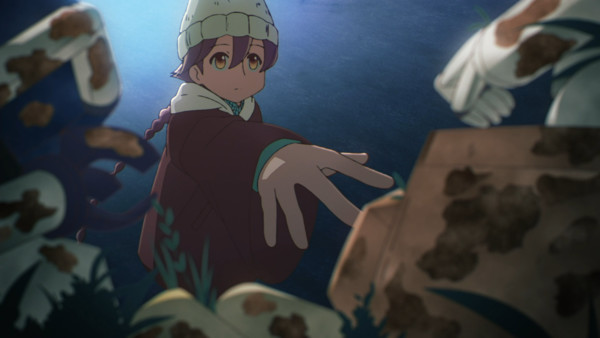
To say that Yachiyo has been overworked is the understatement of the century. A few centuries, actually. As the immortal and seemingly indefatigable robot manager of the last operating hotel on an Earth that has been left abandoned and ruined for hundreds of years, Yachiyo has made it her mission to ensure that the Gingarou Hotel is the best home away from home around, even if all of her guests are now the aliens and other robots who have come to wander the earth in the absence of humans. After a truly inhuman amount of time working around the clock, though, Yachiyo's faithful tanuki protege, Ponko, insists on some time off.
What follows is a gorgeously animated and lyrically directed sojourn into the wasteland of the world that mankind left behind. A melancholy piano soundtrack is Yachiyo's only accompaniment as she explores ruined factories, overgrown city-scapes, and the verdant fields of plant and animal life that have managed to flourish in the absence of the planet's former apex predator. The episode manages to walk the incredibly fraught border between moody, contemplative art and the indulgent and saccharine. There is a lonely air to this broken world, yes, but we also see that brokenness does not mean complete desolation. Yachiyo is, after all, a “living” reminder of the civilization that is slowly crumbling to dust. Apocalypse Hotel often wrestles with what humanity's legacy will be once we have faded away, and this penultimate episode is a prime example of what the show is capable of when it trusts its audience to follow it on a somewhat unconventional journey to explore such questions.
Thankfully, Yachiyo's long walk doesn't go out of its way to provide the easy reassurances and platitudes that come from obvious monologues. We don't need Yachiyo to spell out what she's thinking and feeling as she explores the world beyond. Yachiyo only has one thing to say when she gets back to the hotel and is asked what she made of her time off. “I felt alive,” she says. That is enough.
—James Beckett
Rock Lady Seduce Their Entire Audience (Rock is a Lady's Modesty)
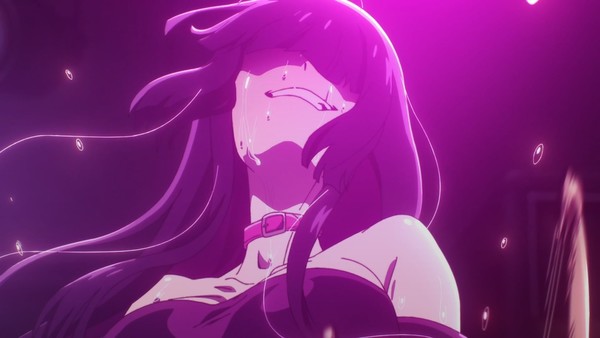
Rock is a Lady's Modesty stands out as one of 2025's most audacious series. It's a girl band anime that isn't afraid of letting its freak flag fly, flapping proudly as it embraces the sweat, vulgarity, and rebelliousness at the heart of rock music. If I had to choose one moment that best defines this spirit, it would be the climactic concert in the season finale. For context, the ladies of Rock Lady do not walk onto that stage triumphant. They've struggled during rehearsals, they've had philosophical differences that have threatened to disband their group, and they are now playing to a crowd of surly boy band stans who couldn't care less about this no-name instrumental group. Internally and externally, they are set up for failure.
One great thing about Rock is a Lady's Modesty is its ability to weave dramatic developments into its performances. It's an only slightly exaggerated spin on the very real nonverbal communication that is essential to musicians. The series wholeheartedly believes that you can solve your psychological and interpersonal problems by jamming together. Every crescendo holds space for catharsis. And this bears out in this concert, where each band member gets a little epiphany that boosts their confidence and kicks their performance into overdrive.
That development leads into what is arguably the series' finest quality: its unrepentant lesbianism. For Lilisa and Otoha in particular, music is sex, and they love to drown their doldrums in the perspiration of passion, replete with banging, fingering, and dirty talk. It's an act of liberation done in defiance of the boxes that society likes to squeeze women into. And once they find their voices on stage, Rock Lady broadcast their revolutionary manifesto to the entire audience, converting the strait-laced masses into a surge of sapphic adoration. The narrative proposes that being your unapologetically naked self is your best weapon in the face of overwhelming pressure to conform, and that art is the best way to spread your message far and wide. I can't think of many better lessons to take into the new year.
—Sylvia Jones
Marinated Chicken (The Summer Hikaru Died)

Let's pretend, for a minute, that there wasn't a picture with this entry. Testament to this scene's power is that if all I said was “marinated chicken,” you'd still know exactly what scene I was referring to. Be honest: How many of us have started thinking about marinated chicken differently after watching this moment in The Summer Hikaru Died? Yoshiki certainly has—hilariously, the series goes out of its way to tell us that a bit later.
But I digress: In only the second episode of The Summer Hikaru Died, Yoshiki sticks his hand into the chest cavity—which is more akin to a giant pocket that's somehow simultaneously empty, but also, full of meat and perhaps reminiscent of what happened Tetsuo at the end of Akira—of the being that's taken on the appearance of his recently deceased best friend, Hikaru. It's bizarre, it's the kind of experience that might traumatize some people, and there's some pretty overt sexual overtones to the whole thing. And on reflection, what does Yoshiki—whose hand, by the way, is still lodged within “Hikaru”—think about it? Well, it felt like raw, marinated chicken. Cue a realistic photograph of—you guessed it—raw, marinated chicken.
“Marinated chicken” is certainly an unexpected way to describe the feeling of what otherwise looks like it could be a portable door into hell itself, but it's visceral, instantly understandable, and dare I say has perhaps a touch of camp. Or perhaps more accurately, maybe it only has that campy feeling because of the subsequent photo used to illustrate it. If you weren't already going to remember this scene, well, this only-seconds-long marinated chicken jumpscare has ensured you will now.
And that's just the marinated chicken of it all—even without that, this scene still perfectly exemplifies this anime's knack for building atmosphere. The sun is starting to set, and warm, orange light drips down the walls of the empty gym storage area—well, empty save for Yoshiki and “Hikaru,” the latter of whom is unbuttoning his shirt. This whole thing very unambiguously and intentionally screams “SEX SCENE INCOMING”— "Hikaru" even says “This is starting to feel pervy” early on, just in case you somehow didn't pick up on that.
What we end up getting isn't literally a sex scene between the two, but it's obviously trying (and succeeding) to create that vibe and draw parallels to one. That's contrasted with the ever-present dread this series establishes pretty much immediately, wasting no time in telling us that the real Hikaru is dead, and that whatever took his place might be dangerous—even (if not especially) when it doesn't mean to be. Even this early on, you can't help but wonder if anything's going to happen to Yoshiki, and tense up every time he catches a glimpse—even if only within his mind—of what's underneath “Hikaru”'s skin. Not to mention, Yoshiki gradually brings his hand up further and further through “Hikaru,” until it almost looks like he's wearing him as a weird, large sock puppet—depending on your perspective, this might count as body horror. The phrase “tonal whiplash” isn't usually meant as a compliment, but this scene is a testament to how, sometimes, when the planets align, a series can make it work beautifully.
Oh! And in case you were wondering, by the way: The studio staff ended up frying and eating that chicken.
—Kennedy
"Black" (Star Wars: Visions Volume 3)
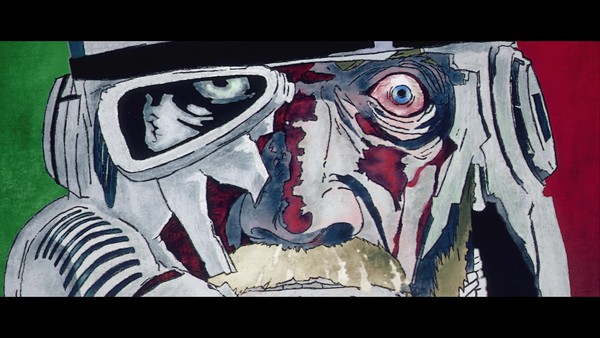
I maintain that the first two volumes of Star Wars: Visions should be mentioned in the same breath as Andor when discussing the best media to emerge out of Disney's reign over the galaxy far, far away. Volume 3 of Visions didn't impress me quite as much overall. It's still better-than-average Star Wars, but with all the sequel episodes, plucky orphan heroes, and repetitive Jedi vs. Sith battles, it felt like the show was getting a bit repetitive and losing the experimental edge that made the first two volumes exciting… except for one episode.
“Black” is the season finale of Visions Volume 3, and the show saved the best for last. Directed by Shinya Ōhira, the guy who animated the coolest-looking scenes of seemingly every major anime movie of the past four decades, this is Star Wars reconstructed as a jizz-fueled acid trip (that's “jizz” in the canonical Star Wars sense, not anything else!). In this 15-minute short, the franchise's most iconic images have been rendered as you've never seen them before, viewed from the perspective of a Stormtrooper's psychologically conflicted dying nightmare. I can't believe Disney let Ohira and his animation team at david production get this weird and psychedelic, but I'm super pleased they did. “Black” is one of the most thrilling episodes of television I've had the pleasure of watching in 2025, a perfect combination of two of the few things that let me feel unbridled joy these days: world-class animation and fascists dying.
—Reuben Baron
Attack of the Killer Hair! (The 100 Girlfriends Who Really, Really, Really, Really, Really Love You Season 2)
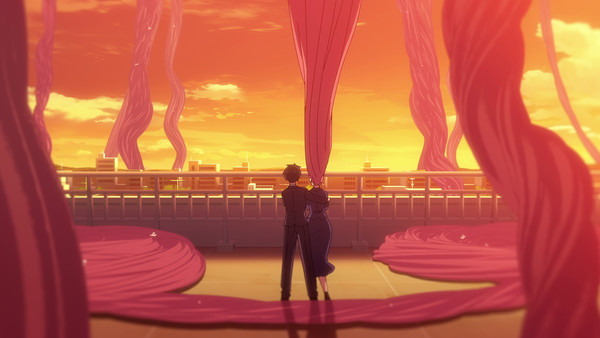
Leave it to an anime as zany and inventive as the second season of 100 Girlfriends to come out with an episode that is a non-stop banger from beginning to end. It is without a doubt the weirdest and most hilarious sci-fi B-movie to come out in a long while; a bad hair day that engulfs the entire freakin' world, going in as many insane directions as possible, becoming more and more of an avalanche of ridiculousness until it finally ends on a wholesome note that isn't even too far-fetched for this type of show. 100 Girlfriends's second season might not have been my favorite anime of the year (although it came close), but its ninth episode, with its tight script and hilarious gags, is as close to anime perfection as you can get, as well as the best damn episode of anime I've seen all year.
True to 100 Girlfriends, the episode has all of the hyperexaggerated zaniness and meta you've come to love. References to Ghibli movies and fourth-wall breaks are plentiful, as the show uses its own brand of self-awareness to kid itself. What was just the usual funny harem hijinks before was elevated to new levels of absurdity when Hahari's hair from Kusuri grows so long that Rapunzel seems bald by comparison.
Especially great here is how this episode gets away with breaking a rule of comedy: never reveal the punchline before you even begin the joke. Rentaro's harem tries to avoid getting wrapped up by Hahari's sticky hair tentacles lest they look like something out of cheap smut, only for that to happen anyway. Left in the hands of most anime, this type of comedy would have been forgotten about in a week. But 100 Girlfriends's pitch-perfect direction and amazing cast of characters know how to make every single punchline land by being as nonsensical as possible.
The hair fills the high school, then the city, and then the entire world. And yet, despite the intensity of what's essentially a twenty-minute-long comedy sketch in the guise of an episode of anime, somehow 100 Girlfriends knows how to drop a degree of sentimentality into the mix, as Hahari somehow becomes the mother of the world through her hairy experience. So much happens in the episode that practically when it's almost over, we've already forgotten that there was supposed to be an impending Ice Age, and we suddenly remember it when Hahari's weave can undo it all. The best part? Somehow, that's all plausible in the zany world of 100 Girlfriends, and leads to something heartwarming you wouldn't expect from a comedy like this. Really, it's an episode of anime that any mother would love. So long as she gets past the tentacles, of course.
—Jeremy Tauber
Inori's First Exam (Medalist)
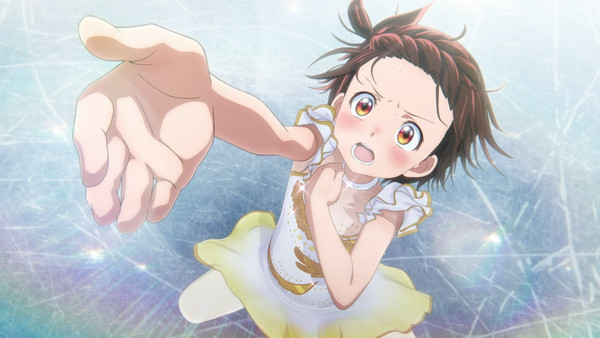
While this show largely flew under the radar thanks to a general lack of promotion from Disney or Hulu, Medalist was one of the best anime of 2025, and a lot of what makes it great comes down to its protagonist, Inori. When we first meet Inori, we see her struggling with a severe lack of self-confidence, stemming from her poor grades at school and her difficulty socializing. The only thing she's ever wanted for herself is to become a figure skater like her sister, and while she seems to find her chance when a young coach named Tsukasa decides to take her under his wing, the fact that she's started skating relatively late means that even after meeting the requirements to enter skating competitions, she still doesn't feel like a real athlete. All of these issues are compounded even further by Inori's relationship with her mother. Even though her mother wants what's best for her, she doesn't believe that Inori is capable of being a real skater and wants to keep her time on the ice as casual as possible out of fear of seeing Inori continue to fail at everything she tries.
This creates a lot of tension on the day of Inori's first competition. When she mistimes her jumps during practice, her mother tries to push Tsukasa to give her an easier skate program, and ends up reinforcing all of Inori's fears that she'll never be able to stop being a failure. What ends up saving Inori is when a little girl tells her how pretty she looks, and when Inori takes a good look at herself in the mirror, she realizes that just by putting in the effort to make it as far as she has, she's already started to change for the better. This drives Inori to stand up to her mother by telling her she doesn't mind failure as long as she can keep doing what she loves, and that she wants to keep pushing herself so she can become an Olympian someday. Even though Inori stumbles through the beginning of her performance, she's able to pull herself back up quickly. She lands a series of jumps that mesmerizes the entire audience, proving to both her mother and herself that she has what it takes to be a true athlete. It's a scene that beautifully culminates in Inori's character arc to this point, and it hits just as well visually as it does emotionally, thanks to excellent camerawork and well-choreographed 3DCG animation by the team at Studio ENGI. Medalist is a truly exceptional show in its emphasis on helping kids develop a sense of independence. If there's any scene that goes above and beyond in conveying that message, it's this one.
—Jairus Taylor
Split-Screen Madness (CITY The Animation)
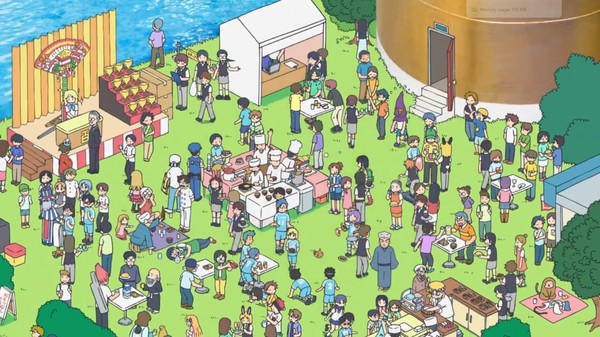
CITY The Animation is a high watermark for the entire medium of animation for a wealth of reasons. Still, the one I keep coming back to is how often and unexpectedly it goes unreasonably hard. At no point while I sat down to watch this show did I expect it to replace its end credits animation with a meme music video set to Dámaso Pérez Prado's “Mambo No. 5,” which feels like something a couple of college kids would make during their summer break. Similarly, I wasn't expecting one of the best sakuga sequences of the year to focus on a pair of baby queer middle schoolers winning a footrace largely because both the members and infrastructure of their community collapse around them. However, the best trick the show pulls, and one of the best moments in anime this year, comes in the fifth episode when the entire community within CITY The Animation comes together for the Tanabe Mansion cookout.
Beginning with a deceptively simple picture-in-picture sequence that showcases Niikura's efforts to get her yuri-revealing locket back while Nagumo and company's efforts to escape from Tanabe Towers are rendered in a charming approximation of early Dragon Quest games, the bit soon escalates dramatically. The divisions on the screen keep expanding until there are nine panels, each focusing on a different group of characters going about their lives. While some of these frames are largely animation loops, others contain full stories and set up further plot points in the episode or show more broadly, like Nagumo's landlady sneaking into the manor by hiding under the car delivering the Crow Trio or Officer Tanabe's crush on Tatsuta Adatara being established in a panel without audio. A wealth of great jokes also play out during this obviously laborious sequence, including Tatewaku's soccer team finding the mythical Tsuchinoko and Nagumo accidentally defeating the floor bosses of the Tanabe Family through circumstances entirely outside of her control.
This split-screen sequence then transitions into a collage of different animation bubbles that eventually coalesce into all of the characters in CITY The Animation, major and minor, having a cookout on the grounds of Tanabe Mansion. I cannot even begin to imagine how much work went into all of these sequences, especially given the attention to detail. The beginning of episode five establishes that Tanabe Mansion is a live-action model, and every instance the structure appears even partially on screen depicts it as such!
Beyond being a clear labor of love from the many talented folks at Kyoto Animation, this moment encapsulates the community element that makes CITY The Animation so special. There's probably an easier, more efficient way to show all the characters in this series independently navigating to the same event, but having it all happen on screen simultaneously really makes the community in CITY feel like a living, breathing space filled with independent actors. I wanted to live in the world of CITY The Animation since the very first episode, and this moment made me feel like I actually could, which easily makes it one of 2025's best moments in anime.
—Lucas DeRuyter
Itano Circus in Another World (ZENSHU.)
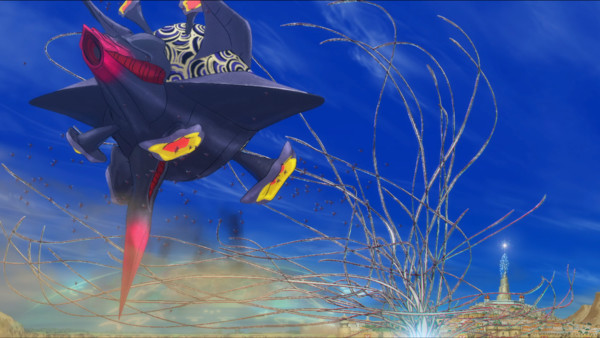
Despite kicking off in January, ZENSHU. left an impression that closely followed me throughout the whole year. Natsuko's adventure in the world of her favorite film is a superb character study that explores the inspirations and motivations behind every creative. And in the case of our genius director here, we're talking all about animation. Over the course of the series, Natsuko uses her illustrative talents to summon allies inspired by the characters and techniques of Anime's greatest creatives. For example, the first episode features a loving tribute to the Hideaki Anno-animated God Warrior from Nausicaä of the Valley of the Wind.
While that initial send-up was a pleasant surprise, the tribute that followed had me losing my mind. Just days before ZENSHU. started airing, I'd revisited an all-time classic and personal favorite—Macross Plus. Throughout the course of this four-episode OVA, viewers are treated to beautiful, colorful, and plentiful appearances of the Itano Circus. This visual flourish—developed by the legendary Ichirō Itano—demonstrates the exaggerated zigzagging of a missile salvo as it rips through the sky.
Fast forward to the climax of ZENSHU.'s second episode, and my jaw was on the floor as I watched Natsuko getting in touch with her inner Itano. After replaying the sequence a few more times and regaining the ability to form coherent sentences, I was excited to discover just how far Mitsue Yamazaki's team at MAPPA would go with these homages. However, I never expected to learn that the production had brought in Ichirō Itano himself to storyboard the sequence and supervise the accompanying CG work. Once I saw his name in the credits, I'd lost my ability to speak coherently again. Some fans have speculated that ZENSHU. was the first time he's storyboarded a circus by hand since Macross Plus, and while I doubt that... I can't help but think that ZENSHU.'s Itano Circus just might be his best execution of the concept since Plus. And I'll tell you this: I don't say that lightly.
—Coop Bicknell
“On the Movements of the Earth” (Orb: On the Movements of the Earth episode 25)
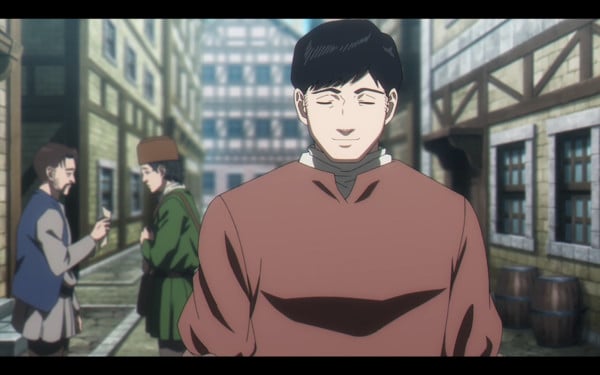
If the episode number doesn't make it clear, the next couple of paragraphs will spoil the entirety of Orb. Watch it in full so you can feel the same emotional destruction in its unspoiled form.
No meta-referential scene has ever made me punch air and scream silently in the middle of the night like this did. Orb held me in fear under the tight grip of a medieval inquisitor, wielding the pear of anguish for twenty-three episodes. Mirroring real-life suppression of scientific advancement despite its benefit for humanity, the series had me reflecting on the pessimistic emotional toll of current events. All of the main characters have perished in their efforts to advance the theory of heliocentrism, leaving no closure on whether their combined efforts have been in vain. The villain appropriately burns to death, seemingly achieving his life's work of snuffing out philosophies that conflict with his employer's perspective. Call me bitter, but I hope Nowak never sees heaven.
All that remains from decades of efforts to collect and publish a book on heliocentrism research is a single letter. From that letter, a sentence that continues to push the cycle of thought forward. A fictionalized Albert Brudzewski overhears the series title, which inspires him to rediscover his passion for astronomy. Draka's last efforts to send Jolenta's letter were not lost and became a catalyst, much like Rafal's sacrifice before her. As a butterfly flutters its wings—metaphorically through the believers of heliocentrism—in the Kingdom of P, a scientific revolution of astronomical scale will later consume all of Europe.
Although there were discussions of the heliocentric system outside the bubble of Orb's protagonists, the specific historical moments viewers witnessed were given legitimacy and vindication by overhearing a book title. This scene, a culmination of all the sacrifices that came before, is hauntingly devastating and appropriately understated. The tears I cried and the emotions I felt weren't for nothing. Even if none of the original characters survived to see their dreams come to fruition, I'm satisfied knowing their message eventually trickled down to an in-universe Copernicus. Unlike Nowak, who has no traceable mark on history as he spent his life violently maintaining a conservative view he didn't even truly believe in. They were at peace in their last moments, silently dying for what they believed in and content with their end.
Before I close out, 10% of this section's profits should go to Potocki.
—Kalai Chik
- The Top 10 Anime of 2025
- The Best Anime Characters of 2025
- The Best Anime Moments of 2025
- The Best Anime Songs of 2025
- The Best Anime Movies of 2025
- The Best Manga of 2025
- The Best Video Games of 2025
- The Worst Anime of 2025
Disclosure: Kadokawa World Entertainment (KWE), a wholly owned subsidiary of Kadokawa Corporation, is the majority owner of Anime News Network, LLC. One or more of the companies mentioned in this article are part of the Kadokawa Group of Companies.
The views and opinions expressed in this article are solely those of the author(s) and do not necessarily represent the views of Anime News Network, its employees, owners, or sponsors.
discuss this in the forum (54 posts) |

this article has been modified since it was originally posted; see change history
back to The Best Anime of 2025
Seasonal homepage / archives