

The Best Anime Characters of 2025
by The ANN Editorial Team,
One of the benefits of preparing the Best of the Year feature is that I know what the rest of the editorial team has picked and can, usually, see a throughline. This is most evident with Best Character, where, despite everyone choosing a protagonist or supporting character, our team was drawn to an obvious type: a strong lady who will fix this messed-up world we've found ourselves in. Listen, that's valid. Who doesn't wish they had someone to punch their way through the horrors of the world or use their superior intellect to unravel corruption? The other side of the badass coin is characters who use their optimism to bring light to the cast; these characters are self-assured, always doing their best, and bring a sense of cohesion to the story.
Or the characters are an absolute mess. Sometimes we need to know we're not the only ones struggling to make sense of life out here in the wild.
Mio (Betrothed to My Sister's Ex)
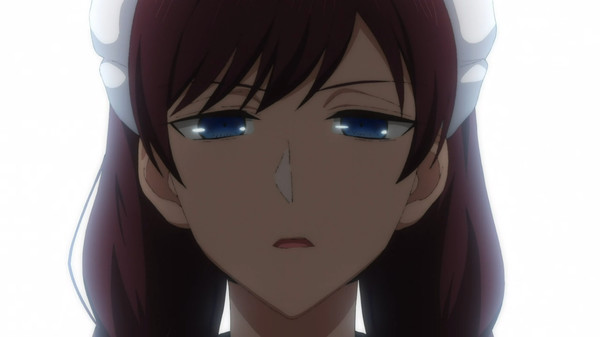
Do you like hypercompetent women? Then you need to meet Mio, the undisputed champion of Betrothed to My Sister's Ex. The whole series is good, but Mio manages to outshine the rest of the cast with her incredible ability to do basically anything and everything.
Raised alongside series hero Kyros, Mio doesn't appear to work hard because she feels indebted to him or his mother; she's just that good. When we first meet her, she's more or less disguised as a Victorian-style maid, but that costume belies the actual abilities contained within, to say nothing of her true role in the household. Mio is no mere maid; she runs the entire household as a combination housekeeper, butler, and steward. She's the castellan, an old term meaning “governor of the castle,” keeping absolutely everything running smoothly. But that's not all – she's also Marie's second greatest champion (Kyros is the first, obviously), working behind the scenes to ensure that everything works out for her lord and future lady.
And again, that's not because she feels beholden to either of them; it's because she genuinely cares and can't stand injustice or unfairness. Mio is a one-woman hero's party, fighting the good fight, whether that means setting up the doom of Marie's dreadful family, making sure Marie actually takes care of herself, or just getting the chef to put dinner on the table, and she's not above telling Kyros when he's being an idiot, either. There would be significantly less story to the series without Mio, and I celebrate her as the ultimate in competent badassery.
—Rebecca Silverman
Maomao (The Apothecary Diaries Season 2)
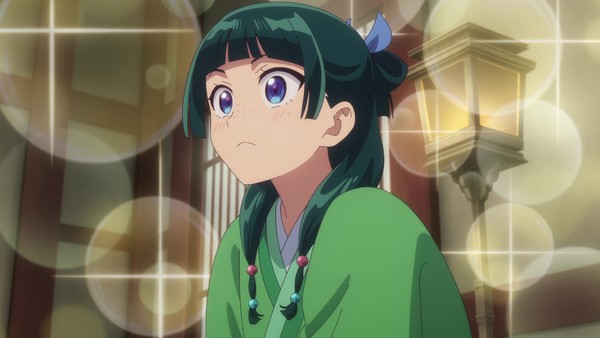
Mystery series live and die by the appeal of their detective characters, and The Apothecary Diaries wouldn't be nearly so beloved if not for its mystery-solving heroine, Maomao. As of this writing, Maomao is easily leading the ANN Reader's Poll for favorite female character, with no one else even coming close. Why does everyone love Maomao so much? The tl;dr version: we stan our poison-obsessed autistic gremlin cat ladies!
The slightly longer version: There's a certain pleasure in listening to someone really passionate about sharing their special interests. That's Maomao with poisons and medieval Chinese medicine. Aoi Yūki's vocal performance nails the sensation of a typically reserved character losing all inhibitions when it's time to geek out about their special interests. Maomao's fortunate that her particular source of geekery can save a lot of lives — even if some of her risky “experiments” could easily threaten her own. Maomao's internal monologue guides us through much of The Apothecary Diaries' complex world-building without ever feeling overburdened by exposition.
For all her brilliant deductions about both medical problems and the greater social intrigue around the palace, Maomao can also be quite oblivious on certain subjects — often willfully so, when it comes to issues such as “Was that a frog in Jinshi's pants or something else?” Her apparent disinterest in romance is an interesting source of friction in a show often categorized as part of the romance genre — by the end of Season 2, there are enough hints to say that she might have some sort of feelings about Jinshi, but she's still trying to figure out what those feelings are. That slow-burn storyline will continue to burn slow.
Season 2 of The Apothecary Diaries saw Maomao find a kindred spirit of sorts in “Shisui,” a maidservant who loves insects and has a significant secret identity. Tragically, this friendship couldn't last, but Maomao's most personal connection within the Inner Palace proved a major source of character development and drama. If the confirmed future seasons and movie can continue to challenge Maomao in new situations while maintaining the core of the character viewers have come to love, she could be topping favorite characters for some time.
—Reuben Baron
Wakana Gojo (My Dress-Up Darling Season 2)
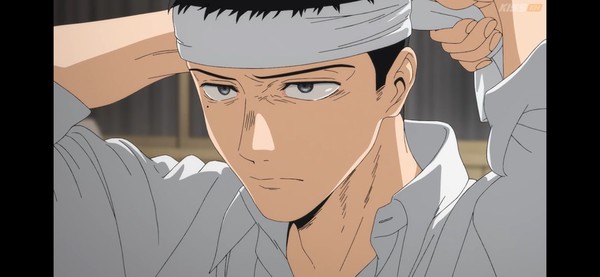
I have a soft spot for characters who wrestle with insecurities and imposter syndrome. Back during the first season, I immediately latched onto Gojo because I related to his personal struggle. This is a quiet, good boy who has a very unconventional hobby and has never recovered from the trauma of a friend shaming him for it when he was very young. He dug himself into a hole and kept his head down because he would just shatter if he were confronted with that kind of reaction again. That's why Marin was the perfect person for him to meet because she completely shook up his worldview, showcasing that not only is it OK to celebrate unconventional hobbies, but you can even find your own community through those hobbies that respect your hard work. Throughout season one, Gojo met other cosplayers who respected his artistic skills. Season two was smart for putting him in situations that forced him to showcase those skills to a broader audience.
Suddenly, the pressure is on because Gojo doesn't have the cosplay safety net, something that he also sees as an unconventional hobby, to potentially filter people's expectations of him. Season two sees him hanging out with a lot of the regular students in his class. He was initially so fearful in his class. Part of it is Marin's connection to them, but the other part is that Gojo has to interact with them if he's to participate in required school activities, like the school festival. There's nothing grand or crazy that's going on, and that's kind of the point. A lot of the fears and pressures that are being brought up are just coming from Gojo's preconceived expectations. He genuinely thinks that everyone he interacts with will react to him the same way his childhood friend did, but I love how season two shows that, while his fears are understandable, everyone is their own person. Seeing Gojo slowly come to terms with the fact that he not only deserves friends, but just deserves to have his skills recognized at all, was such a breath of fresh air.
I resonated a lot with what Gojo was going through, but seeing him not only recognize his own self-importance and grow confidence in his skills, but also receive very open support from those around him, was nothing short of inspiring. That scene where he locks in to do Marin's makeup in front of everybody, or when Marin calls out to him from the stage at the school festival, felt like a true conclusion to his character. Yes, he is still shy and yes, he is still very passive compared to everybody else, but what I was given was a very believable conclusion to his insecurities, which is what I wanted to happen before the show tried to move forward with any major romantic developments between him and Marin because there is no way that he gets with her while still harboring that insecurities. I'm very happy with where season two left Gojo, and I am very curious to see where it leaves him in a potential future season three.
—Bolts
Rentarō Aijō (The 100 Girlfriends Who Really, Really, Really, Really, Really Love You)
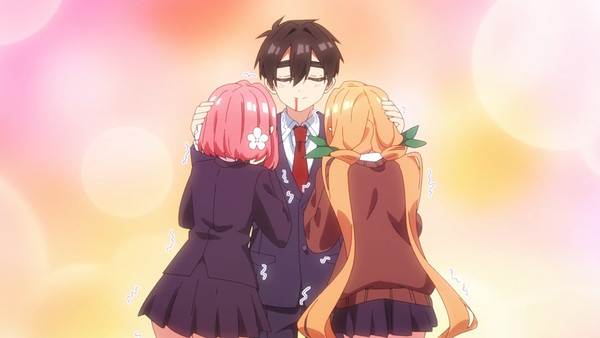
God, I love that Rentarō loves his partners as much as I love the people I date. This character's boundless enthusiasm for each of his ever-growing number of girlfriends is nothing short of aspirational and a breath of fresh air in the well-trodden harem anime genre. While I know that The 100 Girlfriends Who Really, Really, Really, Really, Really Love You is not the end all be all of polyamory representation in anime and that Rentarō is far too exaggerated to be role model for people who share this identity, I still can't help but find myself fawning over him and 100 GFs' second season as a result.
On a purely superficial level, 100 GFs seems like it should encapsulate everything that frustrates me about a lot of anime. Namely, that a good chunk of the works in this medium are overt male power fantasies written with the most generic idea of a typical cishet, male audience member in mind. Rentarō, and by extension 100 GFs, is a radical departure from these kinds of misogynistic works because, instead of being a same-face, banal, loser-coded protagonist-kun, Rentarō enthusiastically loves women and wants to be the best boyfriend he can be to them.
Rentarō actually liking women and going to extreme lengths to display his affection is a big part of the show's charm and humor. Anyone who's ever cared deeply about the person or people they're with will relate to the gag in the opening episode of season two, when Rentarō comes to appreciate all his new partners in a new light after a body-swap macguffin has each acting like the other. I also loved Rentarō's courtship with the maid Mei Meido in season two, and all the effort he puts into helping Mei internalize that she is an equal partner in their relationship and that she can't just show her affection through subservience. Of course, Rentarō's speech at the end of the second season, where he lists off all of the things he loves about each of his partners, is, if not the funniest gag in anime from 2025, assuredly the sweetest.
Especially in a day and age where it feels like we, as a society, spend way too much time focusing on dudes who suck and their invented problems, Rentarō leaping at every opportunity to be the best version of himself for the people he loves easily makes him one of the best fictional characters of 2025.
—Lucas DeRuyter
Misumi Uika (Ave Mujica - The Die is Cast -)
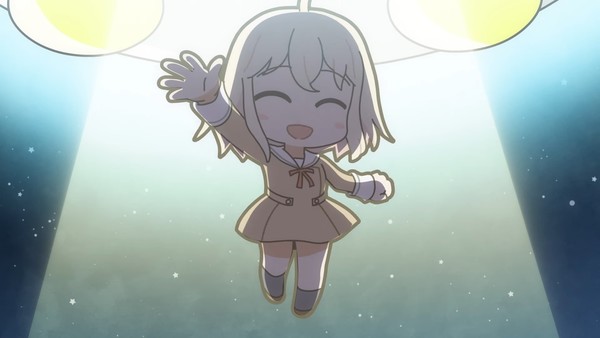
The MyGO!!!!!/Ave Mujica arm of the BanG Dream! cinematic universe has cultivated an impressive ability to create unhinged anime women. And with the theatrical dramatics led into for that most melodramatic latter band, scriptlord Yuniko Ayana knew she had to go big. Togawa Sakiko was a grand presence who deliberately drew several others into her orbit, each with their own pronounced issues. Umiri suffers from crippling self-doubt and insecurity masked beneath false confidence and professionalism. Mutusmi revealed a system of multiple personalities, including the unpredictable Mortis, the two of them grappling for recognition and the right to even exist. Nyamu is a YouTuber.
And then there's Uika. Among her wild bandmates, it would be easy to assume that Uika was "the normal one" caught in the maelstrom of these personalities. She's the frontwoman of the band, after all, as put forward by Bushiroad themselves, and her establishing appearances in It's MyGO!!!!! certainly hadn't given any direct indication that there was anything off-putting about her. She wasn't even framed in ominous directorial touches as Soyo had been when she obfuscated her true intentions. Uika came off as if she just wanted to help Sakiko, keep the discordant group Ave Mujica together as best she could, and maybe keep her idol career going at the same time. Normal things.
Of course, at this point, we should all know to watch out for the normal ones. Uika wasn't helpful, she wasn't invested in the group, and she didn't actually care about being an idol. She wasn't even Uika. The girl whose real identity was "Misumi Hatsune" had co-opted her sister's name and the memories Sakiko had with her to chase that bright star she had longingly gazed at. As a reiterative lover of toxic yuri, I can't deny the power of this kind of character who turns out to be The Worst (complimentary).
Ave Mujica was one hell of a ride. I knew it was going to be a ride. Others and I joked about some of the absurd stuff these girls might get up to. And as much as I respected the psychological wringers that Yuniko Ayana had conceived to run these characters through, I don't know that I ever could have genuinely guessed that the frontwoman of this band, the one promoting Ave Mujica in all their performances and mobile game appearances, would turn out like this. This is a marketable musical anime girl who committed identity theft so she could finesse a pining, power-imbalanced relationship with her biological niece. Then they had her doing silly chibi antics in Ganso! BanG Dream! Chan before the end of the year. For that, Ave Mujica absolutely lived up to my expectations as one of the best anime I watched all year, and "Uika," or whatever you choose to call her, deserved to stand as the sick representative of that accomplishment.
—Christopher Farris
Scarlet El Vandimion (May I Ask for One Final Thing?)
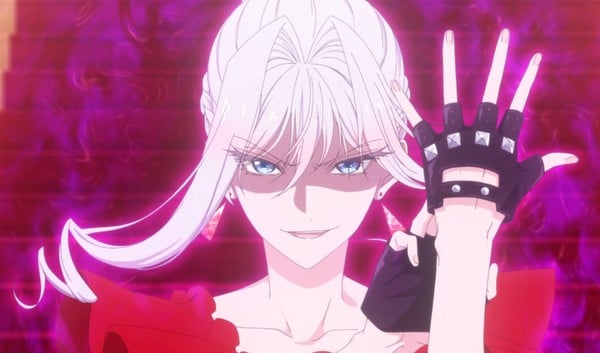
Anime is filled with male power fantasies. It was about time we got a female power fantasy in the form of Scarlet El Vandimion, the Mad Dog Noblewoman who has never met a problem she couldn't solve with a well-placed fist. In the otherwise standard fantasy plot of May I Ask for One Final Thing?, One Punch Ma'am was the central gem, and it was a pleasure to watch her biff and pow her way through so many smug and deserving faces. Scarlet doesn't always exercise the best judgment, but in a genre saturated with villainesses in name only, it's refreshing to meet one who really fits the label. It's her placid characterization, contrasted with her brute strength, that makes her such an appealing character.
To be a woman is to live a lifetime simmering with barely-contained rage. I'm sure men feel it too, but for me, it comes from the pent-up frustration of dealing with a lifetime of distinctly gendered microaggressions and assumptions based on my appearance. It took me years to realize how angry I have always been, and how powerless I am to do anything. Maybe it wouldn't solve my problems, but it sure would feel really, really good to punch someone about it. Scarlet's rage is relatable in that it too derives from an impressive depth: an entire childhood spent grinning and bearing abuse and indignity from her jerkface fiancé, Prince Kyle. Scarlet's short fuse and sheer bloodlust are not only understandable in this context, but commendable, especially considering that she uses her fists against people who consider themselves untouchable: the slave traders, the tyrants in the nobility and religious orders, and anyone else who has abused whatever scant authority they've managed to sink their claws into to make the lives of the powerless worse. She takes people who beat others down and beats them up.
Hell hath no fury like Scarlet, but what's particularly endearing about this unarmed lethal weapon is her immaculate composure. Even in the middle of delivering a beatdown, Scarlet never forgets her ladylike manners. She's out for blood, but she asks nicely first. It's this contrast between her appearance and her abilities that makes enemies underestimate her, and their rudeness makes their hand-delivered comeuppances all the more satisfying. It's fair to say that Scarlet alone is what makes May I Ask for One Final Thing? worth watching. It's a hodgepodge of common isekai fantasy tropes, including boilerplate supporting characters like a heroine-turned-villainess, a devoted, princely love interest with too much free time, and plot holes Scarlet could punch through—all tied together by Scarlet's gleeful beatings. Wouldn't it be nice if real problems could be solved with violence? Scarlet lets us fantasize about giving in.
—Lauren Orsini
Anko Uguisu (Call of the Night Season 2)
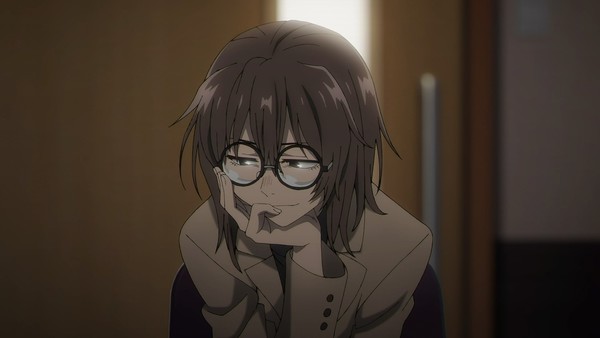
Anko debuted in the first season of Call of the Night, where she used Columbo-like precision to disarm Ko before opening his eyes to another, darker side of the vampire world. She became the series' first genuine antagonist, demarcating the boundary between the story's early slice-of-life focus and its later dramatic twists and turns. In fact, the second season is more or less about Anko. Even when she is not on screen, the other arcs and one-off episodes explore the various forms a relationship between a vampire and a human can take, which ultimately informs our understanding of Anko's motivations. Therefore, it's a simple calculation. Call of the Night's second season was one of my favorite anime of the year, and there wouldn't be a second season without Anko, so she has to be one of the best characters. Q.E.D.
Of course, my true assessment is not that impersonal or objective. I love Anko for a variety of reasons. For instance, she's a perfect example of Kotoyama's keen eye for character design. Nothing about her is flashy or in-your-face, yet nevertheless she stands out. There's a reason I've used her as my social media avatar for three years and counting. Her messy brown hair contrasts with her large and round glasses. Her wardrobe favors dull, unassuming colors, but she still makes an impact with her long camel raincoat, which instantly identifies her as a detective. She often wears artists' gloves, accentuating one of Kotoyama's favorite body parts to draw (the hands), and she draws attention to her fingers when she chain-smokes cigarettes. While her smoking habit is another accessory that distinguishes her from the rest of the cast, we also come to understand it as a defense mechanism, hypocritically projecting maturity while providing a release valve for her desire to destroy herself. I could go on, but you get my point.
As sophisticated as her character design may be, her arc in the second season is the true reason she deserves a spot here. The keyword for Anko is "regret." She regrets not being able to protect her family. She regrets how she handled her past romance with Nazuna. She regrets the decade she has spent cooped up in her own head with a plan for vengeance that she knows could never work. And she regrets not being able to extricate herself from her pain, one way or another. She is scary and pitiable, lashing out at Ko's vampire friends while stopping herself short of harming the people (and vampires) whom she still cares about. She's a set of contradictions caught in a dark spiral of anger, shame, and longing. And despite all that, she's a very fun villain. Anko hams it up with the best of them, gloating over her victims in one breath and skedaddling like a Looney Tunes character in the next. She may be smart, but she is not immune to getting owned.
In the end, though, Anko's story is one of healing and redemption. When the dust settles in the final episode, she looks back on her past ten years as if they're a dark abyss, feeling the vertigo and lamenting this huge chunk of her life spent going in circles. In her eyes, she has just wasted her entire adulthood. Regardless, Nazuna and Ko recognize the pain and kindness beneath her actions, and they both forgive her. Anko's journey speaks to me. The delusions. The cycles. The “what ifs.” I'm still processing the many ways I've subconsciously attenuated my own growth out of fear, spinning my proverbial wheels for an equivalent length of time. But Anko gives me hope that it is never too late to blossom.
—Sylvia Jones
Yaomay (Kowloon Generic Romance)
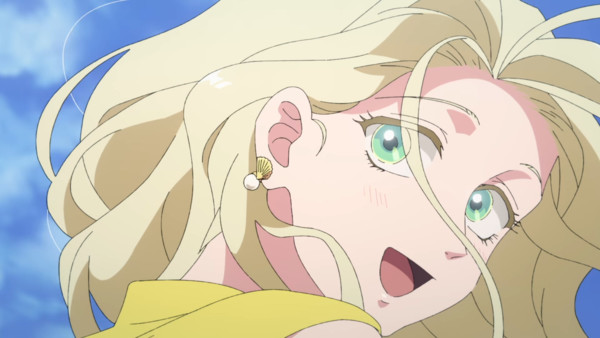
I won't countenance any disagreement on this: Yaomay is the best gal-pal in all of anime and manga. One of the strongest aspects of both manga and anime versions of Jun Mayuzuki's Kowloon Generic Romance is the quality of its supporting cast. Protagonist Reiko Kujirai is great, and all, with her quest to become her Absolute Self, but without Yaomay's unflinchingly loyal support, she would never have succeeded. Miyuki and Gwen are a fascinatingly complex couple, but the prize for not only Best Girl but Best Character must go to Yaomay.
Yaomay's like the poster child for the aphorism “fake it till you make it”. As a teenager, she lived in the shadow of her famous actress mother, groomed to become her seemingly identical younger replacement in the entertainment industry. Rebelling against her mother's stifling of her nascent individuality, Yaomay runs away from home and finds herself drawn to the mysterious recreated Kowloon Walled City. Once there, she reinvents her entire personality and appearance, undergoing repeated plastic surgery and dying her hair blonde, making her own mark on her body to reflect the individual essence of her soul.
In Reiko Kujirai, Yaomay finds a friend who accepts her completely for who she is, not for who society and her family dictate she should be. In return, Yaomay always fights in Kujirai's corner, recognising that on-again off-again love interest Hajime Kudo's attachment to an idealised version of Kujirai is desperately unhealthy, discouraging their relationship. Yaomay's always there to lend an ear to Kujirai's troubles, and even travels outside of the city to investigate the truth behind the mirage-like Kowloon on her behalf. Yaomay's influence on Kujirai's life likely empowers her to pursue her eventual self-actualization.
Yaomay's equally reliable and scatty, and in a way is like Kudo's polar opposite. Rather than wallowing in nostalgia for the past, she's desperate to leave hers behind. Yet both she and Kudo harbor deep regrets that inform their personalities. Yaomay isn't only defined by her supportive friendship with Kujirai – she also develops a desperately sweet relationship with the adult version of Xiaohei, the blossoming of which leads to unexpected (and emotionally devastating) consequences. When she thought she'd be separated from Kujirai forever, I couldn't keep the tears in.
A brilliant ray of sunshine shining bright within Kowloon's dark, claustrophobic streets and passageways, Yaomay's dazzling smile and effervescent personality are always a pleasure to experience, enhanced by a stunning array of wonderful reaction faces.
—Kevin Cormack
Yachiyo (Apocalypse Hotel)
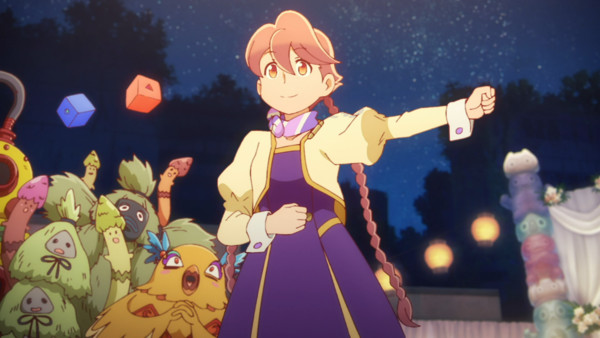
Anyone who has worked in the service industry can instinctively imagine the hell of running a hotel, which is essentially every service industry rolled into one building full of customers with an incalculable number of needs. Well, for Yachiyo, the problem of managing the Gingarou Hotel is actually sort of the opposite: She can absolutely calculate the hell out of all her guests' wants and needs, but all human life has abandoned the Earth for over a century, which has left Yachiyo and her crew bereft of a purpose. This is, of course, before the decades of time-skips that occur regularly throughout the series.
What makes Yachiyo such a perfectly endearing and inspiring heroine is that, despite the strange thought processes and peculiar perspectives that shape her robotic mind, she is ultimately an achingly human character. She wants to do well at her job and give her crew of robot dorks hope for a future that may already be long dead. She wants to do right by the new guests who arrive at the hotel after so many long years of waiting, even though the fact that they're all bizarre and often dangerous aliens makes her job even harder than it used to be. Yachiyo wants to know that her endless life's work has had meaning and left a lasting mark on the lives touched by the friendly service of the Gingarou Hotel, and you'd have to be a soulless machine yourself if you don't end up rooting for her every step of the way.
While Apocalypse Hotel has no shortage of loveable and memorable characters who all end up forming the a perfectly imperfect sort of found family, Yachiyo is the glue that holds them all together, even when her metal limbs and overclocked CPU are on the verge of falling apart Someday, the last remnants of human civilization will crumble to dust, and the sun itself will eventually burn out, but so long as Yachiyo is around, there will always be at least one place in this lonely galaxy where any weary traveler can rest their head (or tentacles, or tanuki “pouches”) and find a home away from home.
—James Beckett
"Hikaru" (The Summer Hikaru Died)
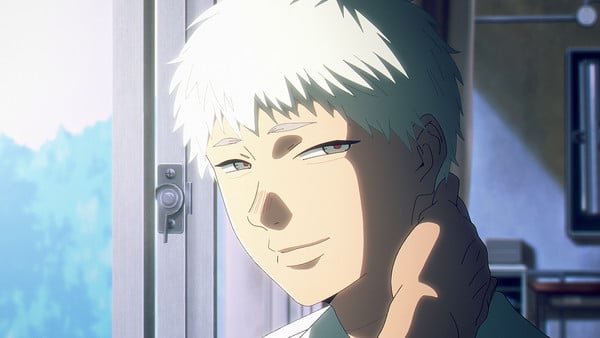
He looks like the real thing, he acts like the real thing, but this Hikaru isn't the real thing. Not that he's a total fake, either. Look past his horror movie tendencies and his monstrous otherworldliness, and you'll see someone with the very human desire to be loved and find acceptance. There's something Pinnochio-esque about this Hikaru's personality and his desire to feel real, something that makes this inhuman so incredibly human, and ultimately the heart of the story.
Perhaps this Hikaru's most likable quality is that, despite being an undead entity, this demonoid simulacra looks and feels more alive than the real Hikaru that preceded him. He's funny, he's energetic, he's delightfully immature enough to think that a cat taking a number two is funny. And he's emotive to boot, more than the real Hikaru was, and certainly way more than his friend and foil Yoshiki, who is always dragging around the same decrepit frown on his face. The rule of opposites attract applies here, that of the lively-but-undead Hikaru with the lethargic-yet-alive Yoshiki, and also helps this Hikaru illuminate every frame he occupies.
As likable as this Hikaru is, we can't forget that he's still an unholy abomination. His character resembles characters in The Thing, Invasion of the Body Snatchers, Twin Peaks, and other horror-movie monsters—his voice actor, Shūichirō Umeda, pointed to the Japanese horror movie Dark Water as an influence. This Hikaru still acts on his monstrous, violent impulses, seeing life and death with indifference. Realistically, everybody in this anime would have been better off had this fake Hikaru not emerged from the haunted mountain that looms over The Summer Hikaru Died's central village.
And yet, it's this existential loneliness and the relationship that he shares with Yoshiki that still makes him endearing despite everything. The script says that this Hikaru can't fully understand human emotion, and even Yoshiki says the real Hikaru was more grown-up and better at reading the room. Perhaps. But to understand human emotion is like drawing water from an infinite well. There is no end to it, no bottom you can reach, and you can never hope to fully understand its complexities. By the end of Hikaru's first season, we still don't understand every little thing there is to know about this fake Hikaru. Maybe that's because we don't know everything about ourselves. As Hikaru himself says, humans are complicated, huh?
—Jeremy Tauber
Challia Bull (Mobile Suit Gundam GQuuuuuuX)
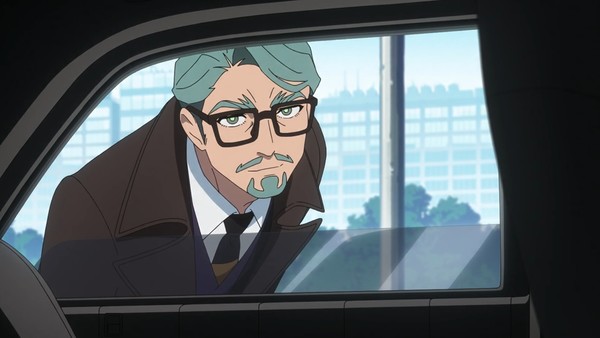
Imagine this: You're given the keys to the Gundam kingdom, and that fanfiction you've had sitting around for decades is about to become canon. While you and the writing team are fleshing out those old ideas, you suddenly remember this mustachioed fellow who only has a single episode to his name. It's in that very moment, you decide that he's going to be one of the pillars of this upcoming series. Oh, this fellow's name? Challia Bull.
He might've been a one-off jobber in the original Mobile Suit Gundam television series, but Challia Bull is far from a “blink, and you'll miss him” character in the world of Mobile Suit Gundam GQuuuuuuX. Entrapped in the Red Comet's thrall, this wine-loving silver fox is inseparable from the series' identity—a bespoke image that's almost always engaged in conflict with the Gundam legend. Essentially, Challia is a new character with deep ties to a mythology he's only tangentially connected with.
This concept is intricately woven into both the text and the metatext of the series, because Challia's aims are loftier than simply seeking out an old flame. As a soldier who abruptly and explosively rose through the Zeon ranks, it didn't take Challia long to realize that he's part of the problem—a piece of the Zeon-Zabi-Char puzzle that's holding back humanity from taking its next step forward. He believes that there's only one way to break through: wipe the entire slate clean, including himself. The only people who can challenge this fatalistic viewpoint are those charting their own legends, like Machu and Xavier.
Viewing Challia as a cipher for the Khara team, I can understand the desire to destroy the concept of Mobile Suit Gundam as a means to move forward—especially while standing within the series' long shadow. However, you don't always have to demo the whole house to do so. Keep the solid parts of the foundation and toss out what's rotted away. The performance of Shinji Kawada and Fajer Al-Kaisi perfectly conveys this tension within the character, while adding a little of the sultry rizz that made him a favorite among fans. I'm sure we'll be seeing Challia Bull in conversation with the many others who've fallen under the Red Comet's thrall for years to come. After all, it looks like Charma and Charmuro have some real stiff competition these days.
Ponko (Apocalypse Hotel)
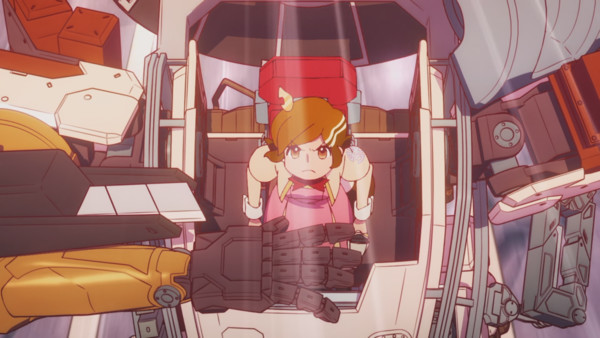
Apocalypse Hotel was one of the most charming series of 2025. It started with telling a story about a hotel run by a team of robots after humanity left Earth because of an apocalyptic epidemic. On the surface, it is a slice-of-life story depicting robots at work. Telling the difficulty and mundanity of running a hotel, the charm especially comes from the character and their interactions. And Ponko is one of the best parts of this series.
First introduced as part of a Tanuki alien family visiting Hotel Gingarou, which attempted to swindle Yachiyo and the crew, then wreaked havoc on the hotel itself. Yachiyo then employed Ponko afterward. Ponko turns out to be a kindhearted, smart, and diligent kid. She also plays well as Yachiyo's foil, often serving as the straight man to her antics. Sometimes too smart and too kind for her own good, sometimes a little bit airheaded, which grounded her character.
As Apocalypse Hotel is a comedy anime, her intelligence was played up to the extreme, revealing that she had a degree in Rocket Science and was a child prodigy. Throughout the series, she planned a space advertisement for Gingarou, designed a rocket that sent Yachiyo into space, turned part of Gingarou into a defense tower, built a battle-ready replacement body for Yachiyo, and battle-mech to fight Berserk Yachiyo. Sounds crazy enough? She even grew into an adult and built a small, happy family before the series ended.
Her kindness also led her to build a long-lasting friendship with Yachiyo and to earn the trust of the hotel staff. Her dedication towards realizing Yachiyo's dream for a prosperous Hotel Gingarou was one of the most touching aspects of the series. During the beginning of her employment, she diligently learn hospitality from Yachiyo. Sometimes risking life to help Yachiyo, as seen during their fight with a giant Earthworm alien and their face-off against Harmageddon, who aims to end Earth's civilization. Moreover, after the timeskip, Ponko managed to lead Gingarou to become the Gingarou of Yachiyo's dream. Lively, luxurious, and filled with visitors from planets around the galaxy. She even built a memorial statue of Yachiyo in the onsen during her time away from earth.
Ponko's charm doesn't come from her alone. She is a character built to enhance interactions and bring out the best in others. She is a great supporting character, but sometimes she outshines everyone else. One of the strengths of Apocalypse Hotel lies in its characters. Everyone has their quirks, though many are typical; the series uses them well enough that the atmosphere feels refreshing throughout. Ponko just happened to be the most interesting part of the equation.
And some of you might ask what Apocalypse Hotel is about and be confused by the plot point I mentioned above. It is everything, everywhere, all at once. Hotel Apocalypse serves comedy, action, drama, and mystery throughout its run, never out of breath, never once stale, and always unpredictable in its delivery. Just like Ponko.
—Gunawan
Anne Shirley (Anne Shirley)
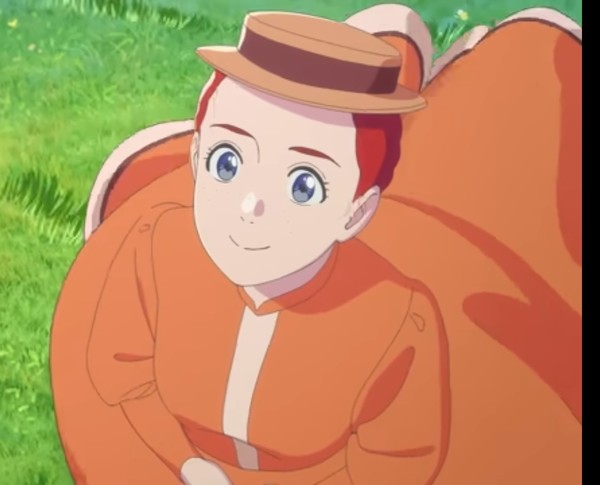
The original Anne of Green Gables novels completely passed me over as a kid. They never came up in any of the literature classes at school. I had literally never even heard of them until I learned that there was a period in the '70s where Japan was feverishly adapting a bunch of classic Western novels into anime, and Anne of Green Gables ended up being one of their most popular efforts. That was basically all the context I had going into this year's remake, so while I figured I would probably like the show, I wasn't prepared for just how much I'd get swept up in it, and a lot of that comes down to how charming Anne is as a protagonist. Anne starts the story as a precocious young orphan recently adopted by a pair of elderly siblings, armed with a vivid imagination. She's the kind of person who finds wonder in nearly everything around her and approaches life with a sense of romanticism that's downright infectious, gradually winning over the people around her. This positive attitude is matched only by how stubborn she is when she thinks there's anyone out there trying to look down on her (I can't think of a more memorable way of dealing with bullying than breaking a chalk slate over someone's head), and this combination of traits makes her a delight to watch as she lives out a quiet life on a Canadian island.
Had this been the entire show, I would have still clocked her as a good character, but what really endeared me to her is how we get to watch her grow up and change from an overly imaginative little girl to a young woman chasing after her dreams in a time when higher education wasn't seen as necessary for the average woman. As she begins to navigate life as a young adult, we see her dealing with her share of struggles, whether it be enduring personal tragedies or watching some of her friends settle into adulthood faster than she does, and while her romanticized view of the world is generally a strength rather a weakness, we also get to see some of the ways it sometimes ends up blinding her to what she wants, especially in her love life. In a year where it's become easier than ever to view the world at large through a cynical lens, there's something really refreshing about watching a character who approaches life with a nearly unwavering sense of optimism, even when there's almost nothing but setbacks, and I think we all could probably stand to follow more of her example.
—Jairus Taylor
X (To Be Hero X)
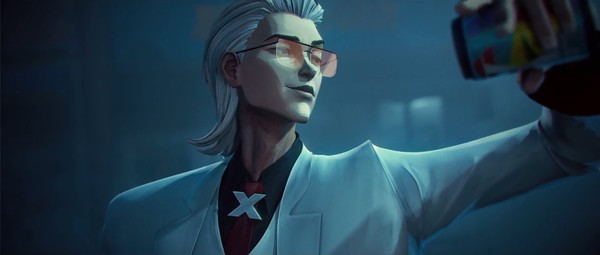
Despite being the titular character, X, the world's greatest hero, only appears in person in seven of the series' 24 episodes—with the first three appearances being cameos of only a few seconds total. Yet, despite this limited screentime, his presence looms tall over the entire series.
Part of this is due to a factor outside the series proper. Our first good look at To Be Hero X came way back in 2022 with a concept trailer/music video that features X fighting an endlessly multiplying villain. With each snap of X's fingers, reality changes. At one moment, the animation is 3D. The next it is 2D. Next, he and the villains are moving chalk drawings on the sidewalk. As the video progresses, everything becomes increasingly surreal until the villains suddenly fall from the sky like rain. The whole time, X is never anything less than in control—he spends most of the fight simply walking with a hand in his pocket. It's unbelievably creative and cool.
Yet, when the series proper starts, he's nowhere to be seen. As arc after arc comes with new heroes introduced in each one, X is either completely absent or his presence is only felt through billboards or passing comments. Each allusion to him builds anticipation. And right when we think we're going to get our long-awaited big payoff in Queen's battle with him, it's over in a literal snap—one moment she's about to attack, the next she's waking up flat on her back. With this tease, the anticipation continues to build.
Over half the series builds towards an epic battle between the majority of those who will eventually become top 10 heroes. When it unfolds, it seems like the perfect time for X to show up—to put all the heroes in their place and cement his place at the top. But instead, it's Queen, the number 2 hero, who does this. But in the aftermath, X stands on top of a building drinking a cola—literally and metaphorically above them and the mess they have caused.
While we see more of X in the series' final few episodes, he doesn't become the main character until the final episode. It's here that we finally get to see X in all his promised glory. We get a full episode of his surreal, reality-warping powers as dozens of heroes outside the top 10 attempt to kill him to prevent him from retaining the title of number one hero for yet another time. It's simply one of the most visually stunning episodes of anime ever produced, making X seem effortlessly cool, incredibly intelligent, and utterly unstoppable. It's impossible not to love him.
—Richard Eisenbeis
Oczy (Orb: On the Movements of the Earth)
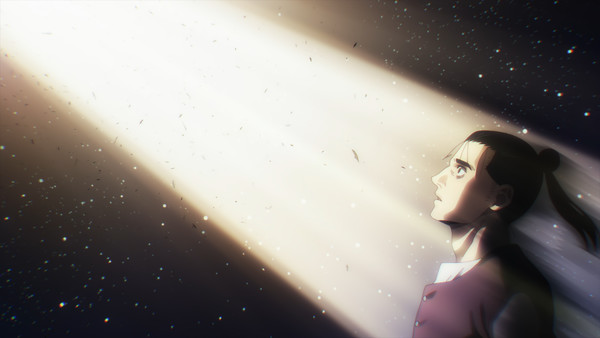
Shout this man's name from the rooftop because he is the best protagonist with an unforgettable character arc that altered my brain's chemical pathways. When the anime shifted from a young child like Rafal to a hardened, pessimistic adult like Oczy, it took me three episodes to adjust to the new characters. Because I'm reflecting on my thoughts around Oczy as a whole, the paragraphs below will contain spoilers for Orb.
His character, who feared the sky and was overall cowardly, had the most room for growth. But I wasn't drawn to him like I was with his companions until he was pushed to see the world differently after he lost his friend Graf. Later, when he overcomes his fear of the sky, I feel right at home with his newfound fascination for the cosmos. As a stargazer myself, I could relate to how awestruck he was by Venus's final phase.
Starting out as an illiterate mercenary who wants nothing more than to reach heaven, Oczy becomes a creative and noble man who dies believing in heliocentrism. Originally, he had no real motivation; he carried out his work aimlessly, with only disdain for the dirtiness of this world. Slowly, his worldview changes as his coworker guides him in observing the sky, a practice Oczy reluctantly takes up after his friend passes the baton forward. He could've abandoned his friend's last wishes, but his kindness and devotion to others surpass his hesitations, pushing him towards a future purpose greater than he could ever realize. As he is influenced by the philosophies of his companions, Badeni and Jolenta, he asks to be taught to read and write, with a dream of higher education.
Although he doesn't successfully go to university, he self-studies and builds on the education Jolenta provides him, eventually writing a fictional story based on their collective research. This is a far cry from the early mercenary who couldn't even look his target in the eye and always spent his conversations looking straight at the ground. His kind-heartedness even influences the stoic, cynical monk Badeni to flip his previous self-centered outlook. Oczy pushes Badeni—a monk who didn't believe poor people deserve anything—to rethink his worldview enough to swallow his pride and entrust a fellow monk to the future of their work.
There's a subtle change in his tone as he transforms from a depressive mouse of a man to a valiant duelist who looks a devil incarnate in the eye—all in the name of heliocentricism. Oczy is a fascinating case study on how an idea can give a man purpose, and how his kindness can further spur change and empathy in others.
—Kalai Chik
Natsuko Hirose (ZENSHU.)
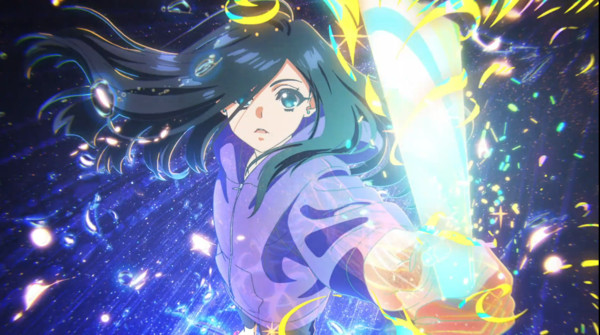
It takes some guts to make a show with an initially unlikable female lead, and Mitsue Yamazaki and Kimiko Ueno are no cowards. Natsuko, the protagonist of ZENSHU, kind of sucks at first. An acclaimed anime director struggling with a new project, her laser focus on her work has left her feeling unqualified to work on a grounded first-love story. In response, she's closed herself off from the world even further. In case you didn't get the obvious symbolism of her covering her face with an impenetrable curtain of hair, her behavior speaks of someone who has moved forward on sheer creative drive for her entire life, but has never learned how to act around others or collaborate. When she sends the animation cuts for the PV back, saying they all need to be redrawn, just as a stalling tactic because she has an art block, it's super rude and unprofessional! Even as we peel back the layers of why she's Like This – anxiety, perfectionism, internal and external pressures – the story never makes excuses for her. She may be sympathetic, but she needs to learn to be better.
And she does learn! ZENSHU is something like a delayed bildungsroman, exploring the rich psychological tapestry of a nerdy, socially stunted adult woman. ZENSHU could easily have leaned into the wish-fulfillment aspect of its premise, with Natsuko transported to the world of the tragic, confusing fantasy anime that changed the course of her life. She could have simply used her power to use animation to summon the appropriate classic anime reference to fend off the Void Beasts for that episode, and befriended the main party, eschewing friction like so many other fantasy anime these days. But as an abrasive person, it's natural that Natsuko not only encounters friction but also causes it herself. She can only do so much when she rubs everyone around her the wrong way, and must learn to work with others. I love an isekai that's about the protagonist growing as a person.
This all became as frustrating and unpleasant as Natsuko is as a human being; her core of passion makes her easy to connect with. ZENSHU is a love letter to anime as a medium, after all. I suspect that many of you reading this had your lives fundamentally altered when you saw an anime by chance, just as mine, Natsuko's was by Tale of Perishing, and mine was by Princess Mononoke. So many of our first loves were two-dimensional, just like hers for Luke Braveheart. Natsuko's obsession with animation made her a difficult person to be around, but it also gave her most of the tools she needed to survive the punishing world she's been transported to. Yamazaki and Ueno created ZENSHU with a deep love of animation and the people who admire it, without getting mired in otaku culture, and Natsuko is at its center.
—Caitlin Moore
Kenzaburō Tondabayashi/Grace Auvergne (From Bureaucrat to Villainess: Dad's Been Reincarnated!)
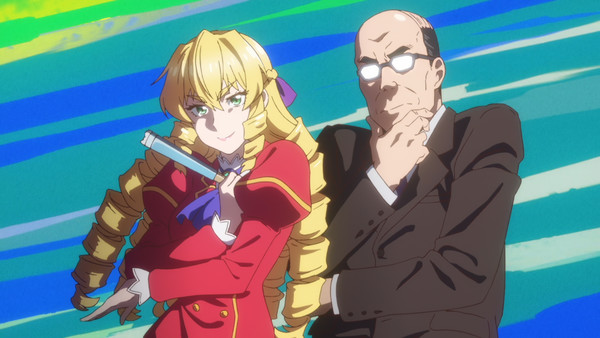
How would you react if I told you that the singular best villainess in all of anime right now is a balding, middle-aged bureaucrat with stiff muscles, worsening eyesight, and a wife and kid?
For the uninitiated, From Bureaucrat to Villainess: Dad's Been Reincarnated! is pretty much exactly what it sounds like: A middle-aged bureaucrat and father with a bit of an old-school otaku streak named Kenzaburou Tondabayashi, gets isekai'd into the magical world of one of his daughter's otome games that he only remembers sparse details about. More specifically, he's reincarnated as the rich and snobby, drill-haired villainess, Grace Auvergne. But Kenzaburou—a loving father, and dedicated bureaucrat—doesn't exactly have the ideal personality for an effective villainess. So he unintentionally makes Grace come off less like Regina George and more like a mom (dad?) friend. So, of course, it obviously ensues that everyone who normally falls in love with the heroine, instead falls in love with Kenzaburou-as-Grace—including the heroine herself.
In a landscape where it's far too common for harem (or…would this classify as a reverse harem?) protagonists to have about as much likability and flavor as a slab of raw tofu, it's refreshingly easy to understand why everyone is so thoroughly charmed by Kenzaburou-as-Grace. He's sweet, caring, funny, considerate, and has an endless love for his wife and daughter that he wears on his sleeve, even when they're the red and puffy sleeves of Grace's school uniform. And when he's not busy making sure his application to the anime father figure hall of fame has enough dad jokes in it to meet their quota, he's enjoying his new life as a spry young teenager in hilarious ways that only someone who's old enough to be able to remember a time before disco was dead and 8-track players can—by looking at things that are both close and far away without issue, and teaching the fellow youths about the analog joys of the abacus.
Of all the rapidly increasing takes we've now seen on the reincarnated villainess, Kenzaburou Tondabayashi, aka Grace Auvergne, aka the villainess' dad, easily stands out as one of the funniest, most creative, and most heartfelt. It's that dimensionality that prevents the joke that it's a middle-aged man in a teenage girl's body from getting stale, even though on a fundamental level, that's the singular joke that the series is telling over and over again. It's no secret that Kenzaburou 100% carries this series, and I know that hearing a series relies so much on the likability of its protagonist isn't always a good sign. But it's so, so hard not to fall in love with him that this is one of those rare times where that really works in this anime's favor, because Kenzaburou has more than enough star quality to make it work.
—Kennedy
- The Top 10 Anime of 2025
- The Best Anime Characters of 2025
- The Best Anime Moments of 2025
- The Best Anime Songs of 2025
- The Best Anime Movies of 2025
- The Best Manga of 2025
- The Best Video Games of 2025
- The Worst Anime of 2025
Disclosure: Kadokawa World Entertainment (KWE), a wholly owned subsidiary of Kadokawa Corporation, is the majority owner of Anime News Network, LLC. One or more of the companies mentioned in this article are part of the Kadokawa Group of Companies.
The views and opinions expressed in this article are solely those of the author(s) and do not necessarily represent the views of Anime News Network, its employees, owners, or sponsors.
discuss this in the forum (54 posts) |

this article has been modified since it was originally posted; see change history
back to The Best Anime of 2025
Seasonal homepage / archives