

The Best Anime Movies of 2025
by The ANN Editorial Team,
If you thought anime's spike in popularity was a pandemic-era fluke, 2025 came in to put that notion to rest. The first film in the Demon Slayer: Kimetsu no Yaiba – The Movie: Infinity Castle trilogy smashed box office records, not just for anime, but for movies as a medium. It became the first Japanese film to earn over 100 billion yen worldwide, surpassing Ghibli's Spirited Away and its previous chart-topping predecessor, Mugen Train. It managed to displace the long-time record holder, Pokémon: The First Movie, as the all-time highest-grossing anime film in the U.S.
But Demon Slayer wasn't a one-off phenomenon this year. Chainsaw Man – The Movie: Reze Arc rose to #1 at the Japanese and American box offices this year, and the Angel's Egg and Princess Mononoke 4K restorations cracked the U.S. top 10. The latter became a topic of conversation after Sinners star Michael B. Jordan expressed disappointment he wouldn't be able to catch the film in theaters during its three-day limited release. The film's success led to an extended release, and Jordan got a private screening.
Whether self-contained films, recut episodes of upcoming anime, or seasonal previews, anime continues to dominate theaters in a big way. Here are some of our favorite anime films from 2025.
The below entries may contain spoilers!
Mononoke The Movie: Chapter II – The Ashes of Rage
(Kenji Nakamura/Toei Animation/Netflix)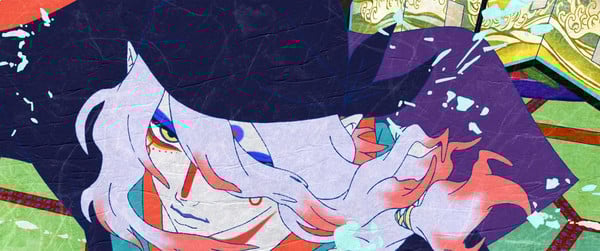
Rage burns incandescent. This film is hardly the first literary work to note that women's rage, in particular, is hard to extinguish (though it might be the most visually striking). Honestly, I feel like the closest comparisons are Charlotte Brontë's Jane Eyre and Charlotte Perkins Gilman's The Yellow Wallpaper. That's because both of those works use female rage in the same way as this film does: as a result of oppression and being locked away with no control. The furious spirit in the Ooku is both Bertha Mason and the nameless protagonist of Gilman's work, finding a way to burst out of the trap she's been placed in because of her gender. Set a month after the events of the first Mononoke film, The Ashes of Rage moves to that most obviously angry of elements, fire, as the medicine seller returns to the Ooku, where the consorts continue to fight over position and the emperor's attention. This time, fire rats are the ayakashi causing the problem, but as with the water movie, that's merely a metaphor for the real issue. The fight over who is worthy to bear the emperor's heir not only pits women against each other, but it also reduces them to their reproductive capabilities. They are nothing but uteri to the men at court, and maybe a vagina for the emperor's pleasure. They're not people, and as the spirit behind the mysterious flames shows, you can only take that kind of treatment and devaluation for so long before you snap. The women burn from the inside, and that's symbolic – forced to be perfect on the outside, the anger, the rage rises and consumes them.
Self-immolation isn't the perfect solution. It doesn't actually punish those who caused the problem in the first place. But it sends a message to the oppressors. The heat of the flames and the glow of the fire beneath the skin say that these are real, feeling people. Treat them as such, or suffer the consequences – women, this movie says, will not be papered over. We'd rather burn it all down.
—Rebecca Silverman
Angel's Egg
(Mamoru Oshii/Studio DEEN/GKIDS)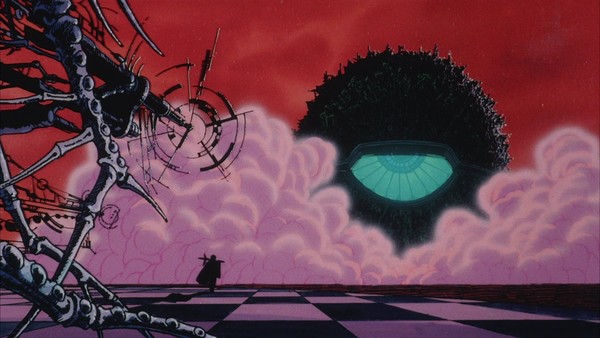
The best anime movie I saw this year was actually Totto-Chan: The Little Girl at the Window, but that film festival favorite is over two years old now in Japan and still hasn't been licensed in the U.S. Instead, I'm writing about a film that has finally made its American theatrical premiere 40 years after it first came out on video in Japan. Angel's Egg wasn't originally made for theaters, but watching the 4K remaster at the New York Film Festival, it boggled my mind that all this lavishly designed, intricately drawn animation was originally intended for VHS. I always find that “slow cinema” in the Tarkovsky vein is much easier to get transported by in a dark theater than via home viewing, so seeing this extremely artsy OVA for the first time on the big screen felt like the best way to experience it.
Don't ask me for a clear explanation of what exactly happens in Angel's Egg. I have my general interpretations of the film as a symbolic allegory for hope in a dying world and for the loss of innocence, but that symbolic nature resists a strict literal interpretation, leaving the specifics open to many possible readings. It's operating on a more abstract plane of dream logic. The one plot thread Angel's Egg explains directly in dialogue — that all the action takes place in the aftermath of a darker alternate version of Noah's Ark — got me wondering if Satoshi Kon wasn't the only anime director that Darren Aronofsky has taken copious inspiration from.
I still can't believe that Mamoru Oshii first conceived of Angel's Egg as a Lupin III movie, of all things! I know doing more serious installments of typically comedic franchises is one of Oshii's things, but how do you go from playboy thief to post-apocalyptic religious allegory with hardly any dialogue? Whatever the creative process that led Oshii and artist Yoshitaka Amano from that to this, the result is a work of astonishing aesthetic beauty with an experimental storytelling sensibility unlike pretty much any other anime around. It's insane that an anime this avant-garde played in hundreds of American multiplexes in 2025 - and made money! Unlike most other things that happened in 2025, it's the sort of insanity that gives me hope for the future.
—Reuben Baron
Fuuto PI: The Portrait of Kamen Rider Skull
(Yōsuke Kabashima/Studio KAI/Crunchyroll)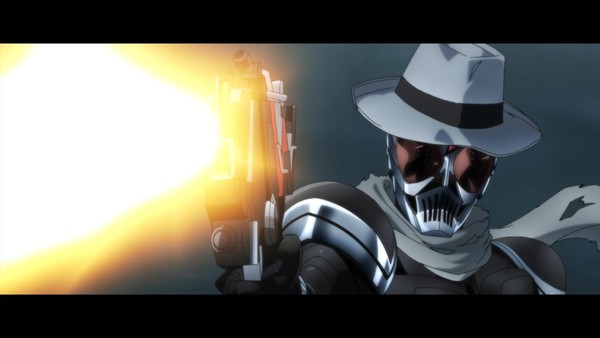
Despite Toei's best efforts, I have watched a lot of Kamen Rider W. The full series, along with a host of crossover movies, has effectively filled out the world of Fuuto and the histories of its residents, though inconsistently. Returning to the windy city with the FUUTO PI anime had been a welcome treat for me, and so I was just as eager to get back again with the movie. Plus, this film would focus on the consistent fan-favorite Sokichi Narumi, AKA Kamen Rider Skull? Sign me up!
So, of course, Crunchyroll took an embarrassingly long time to actually stream the movie here (it originally debuted in Japan over a year ago!). But here at the tail end of 2025, I at last got to see The Portrait of Kamen Rider Skull, and it didn't just deliver on my expectations—it Rider-Kicked them in ways I wouldn't have thought possible. I already alluded to this in my review of the movie, so I ask that you indulge me in my nerdery about how this movie works better than anyone versed in this fandom might have predicted.
While Kamen Rider Skull is always a fan-favorite draw for movies in the franchise, those inclusions don't always necessarily live up to the hype. His original guest-star appearance was a combination of flashbacks and fake-outs shuffled into a crossover with the baffling delayed ending of Kamen Rider Decade. His history-focused feature Skull: Message for W opted for the absurd explanation for his absence from his daughter's life that he was carrying an exploding spider in his body that he couldn't get close to her with. Some elements of the flashbacks and many of the fights were cool because Kamen Rider Skull was cool, but the successive retcons and overt mechanical explanations, in the face of the character's conceptual effectiveness, could dent and crack that cool skull.
So not only did The Portrait of Kamen Rider Skull assemble a coherent film narrative from all those disparate parts, it judiciously adapted them with new connective tissue that supported consistent theming throughout the narrative. It folded in Shotaro's story of how he came into Sokichi's care, fully connecting his past to the main characters of Kamen Rider W and really raising the question of why the writing never fully committed to doing so before. It's the kind of fanservice I can most appreciate, taking material that I already knew and appreciated and refashioning it into something I didn't even realize could be this cool. I'm not sure how much this reanimated origin story's efforts to get newcomers to check out the original will work. But for my part, I can say that The Portrait of Kamen Rider Skull made me want to jump in and watch Kamen Rider W all over again. Despite Toei's best efforts.
—Christopher Farris
Chainsaw Man – The Movie: Reze Arc
(Tatsuya Yoshihara/MAPPA/Crunchyroll)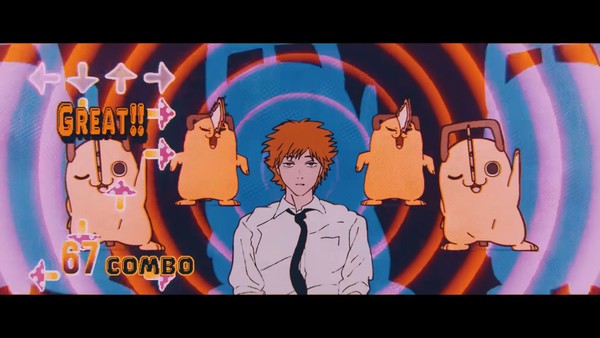
Let me be real with you: I did not have high hopes for this film. I thought the first season of Chainsaw Man was an unexpected and frequently brilliant interpretation of the manga. I thought the negative fan reaction (and subsequent villainization of director Ryū Nakayama) was highly overblown. And I thought that MAPPA would overcorrect its creative direction to please its loudest detractors—yet another symptom of modern, poisonous fan culture and its deleterious effect on art. Chainsaw Man is a weird, abrasive, and challenging work, so a good adaptation should echo those qualities.
Therefore, I was glad that this continuation felt fairly contiguous with Nakayama's vision. There are differences, to be sure. The film adjusts the palette and character designs, and later parts veer into even more foreign territory. However, I really enjoy the first and final chunks of the movie. It zeroes in on Denji's relationship woes with Makima and newcomer Reze, with the tone always balancing sincerity with farce, as is the series' modus operandi. Moreover, it doesn't shy away from the slow-cinema style the first season embraced. Many people refuse to see this, but under the guise of battle shonen, Chainsaw Man is, and has always been, a blend of tragedy with romantic comedy. Denji constantly fumbles baddies in darkly hilarious ways, yet his thematic underpinning is the series of personal and professional compromises he must accept to fit into society.
A sense of wistful melancholy follows Denji as he finds himself dating both Makima and Reze. His ever-mysterious boss in Public Safety reveals a vulnerable side of herself that can cry in a quiet, beautifully constructed scene in a movie. When you're watching this in a theater yourself, the metatextual symmetry speaks to you in a way that I'm sure Tatsuki Fujimoto must be pleased with. Later, the equally mysterious Reze leads Denji into a more traditional courtship, laden with the ultimate caveat that they are both emotionally stunted children-turned-weapons, play-acting an idealized, fictional version of adolescence. They, too, are living through a movie. As I said, tragedy plus romantic comedy equals Chainsaw Man.
The film sags for me in the middle section, where the battle between Chainsaw Man and Bomb Devil gets blown up into an extended sakuga spectacle. There are good character moments peppered throughout, particularly those involving Aki and Angel Devil, but I was a little exhausted by the time the fight wound down. Here, I felt the influence of fans begging for a louder, more colorful adaptation “befitting” Chainsaw Man's crazy, gory action scenes. But if you ask me, the manga utilizes economically written battles that rarely overstay their welcome, so the added bombast here feels antithetical. It is technically impressive yet ill-fitting. Still, I can't say I didn't have a blast overall, and the film assuaged my fears about the future of this adaptation. It may never reclaim the heights of the first season, but even with its flaws, Chainsaw Man is an explosive experience.
—Sylvia Jones
ChaO
(Yasuhiro Aoki/Studio 4°C/GKIDS)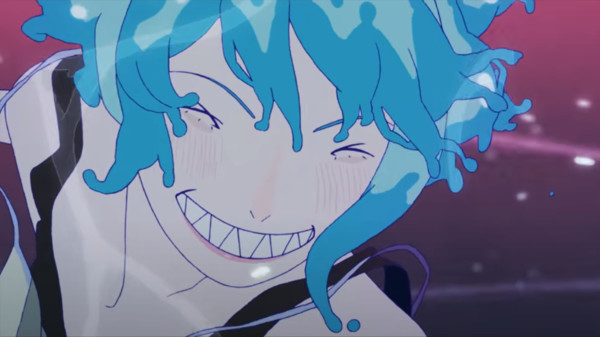
So any movie that powerfully reminds me why I fell in love with my wife so deeply gets a thumbs-up from me. Studio 4°C's modern-day reinterpretation of The Little Mermaid (mixed with a hefty dose of both Ponyo and Lu over the wall) is the story of the arranged marriage between reluctant land-dwelling human Stefan, and apparently fish-shaped mermaid princess Ao Soni ChaO Neptunus ("ChaO" for short). For reasons explained only much later, ChaO is wildly in love with Stefan, and seems to believe the feeling is mutual. In what becomes a media frenzy Stefan can't escape, he's obliged to marry this (in his eyes) disturbingly ugly fish-person to cement peace between land and sea. He doesn't exactly keep his displeasure hidden.
ChaO's nothing if not upbeat, however, and she tries her damned hardest to fit in on the surface world as his devoted wife. Her attempts to become a stereotypical housewife meet with increasingly humorous slapstick consequences. Gradually, almost despite himself, Stefan begins to fall for his disaster-prone watery bride, especially as he realises that when submerged, she takes on a far more aesthetically pleasing humanoid appearance. Oh, all right, she's a smoking hot fish girl.
Stefan learns that once ChaO comes to fully trust the man she loves, she will be able to maintain her gorgeous humanoid form on land as well as at sea, which will allay many of his concerns about their marriage. Unfortunately, not long after she learns to fully trust him, he goes and screws everything up, breaking her heart in a devastating, publicly humiliating way. This is one of the most powerful and indeed heartbreaking scenes in the entire film, one that made me ache deep in my core.
There can't be a man out there who hasn't inadvertently hurt the one they love in a moment of selfishness, of poorly-chosen words, of hot-tempered anger, or of unthinking selfishness. I know I have. With ChaO, the devastation she feels is outwardly expressed as her human form horrifyingly melts, distorts, and swells as she reverts to her previous, unwieldy fish state, great globular tears falling from her huge eyes. Stefan realizes he's done her wrong; we can feel his stomach sinking as he begins to perceive the depth of his incredible screw-up.
So follows Stefan's desperate attempts to win back the woman he now realises he loves with all his heart, but feels he may not deserve. He's willing to brave the unleashed elements of the open sea and the anger of ChaO's terrifying father (King Triton has nothing on this Elder God-esque guy) to plead his case. The central couple's dynamic reminds me so much of both my own emotional awkwardness and my wife's whirlwind energy and fragile heart. It's a wonderfully funny, offbeat film, but its emotional core hits me right where it hurts, and reminds me of why I love the woman I married so damned much.
—Kevin Cormack
100 Meters
(Kenji Iwaisawa/ROCK'N ROLL MOUNTAIN/GKIDS)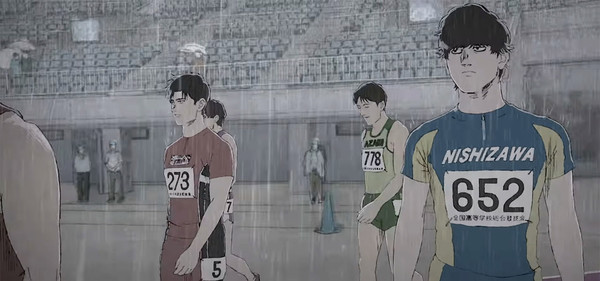
Kenji Iwaisawa's take on Uoto's track-and-field manga brought forth the snappy wit and exhilarating catharsis found in the five-volume series. As his second theatrical project, Iwaisawa's keen eye for detail—including drawing all the background trees in the movie's intense one-take scene himself—and impeccable comedic timing continue to build on an already strong skill set seen in ON-GAKU: Our Sound. Incorporating his rotoscoping style from his directorial debut, Iwaisawa brought together an A-team of talent: character designer Keisuke Kojima, art director Keikankun Yamaguchi, and scriptwriter Yasuyuki Mutō.
Even for those who don't normally like sports anime, 100 Meters is the one to watch. As it digs into the psyche of top-performing athletes, its fundamental takeaway is that winning doesn't matter. Sure, it's a nice-to-have but not the end-all goal when life goes on, and the world keeps spinning, as protagonist Togashi comes to terms with after his mid-movie loss. The outline of his body poetically fades into the haze of rain and fog as he faces a crushing blow, both internally and externally. It's no wonder the team focused so much on this three-minute forty-second scene, which steals the spotlight from even the movie's final scene.
After following the emotional highs and lows of the diverging journeys of Togashi and the deuteragonist Komiya, they—and the audience—reach the same conclusion by the end of the movie. This is why the “winner” of their penultimate race isn't shown: it simply doesn't matter; the enjoyment and immersion in childlike satisfaction is enough for them.
Despite its sharp promotional material and brassy trailer, the initial premiere of 100 Meters fell through the cracks as it was squished in a competitive window during its release in Japan, which was the same weekend as Chainsaw Man – The Movie: Reze Arc. Afterward, it had only a limited release in the U.S., making it even harder to see on the big screen. Luckily, the title will stream on Netflix at the end of December 2025.
The film's animation is top-notch, but its fundamental understanding of the human drive is what kept me glued to the screen. After the buildup of losing yourself to the anxieties that come with solely focusing on winning, the final realization—of throwing it all away to simply go all out—the true incentive—left me in tears, which was devastatingly cathartic in its extremes.
—Kalai Chik
Mobile Suit Gundam GQuuuuuuX -Beginning-
(Kazuya Tsurumaki/Khara, Sunrise/GKIDS)
When I watched this movie in March, I was one of only three people in the theater. With its mouthful of a title, Mobile Suit Gundam GQuuuuuuX -Beginning- was expected to be a Gundam fan's Gundam movie, unlikely to attract an audience any wider than those already in the know. Then, the first three episodes of the anime dropped—nearly a full recap of the theatrical release—and I changed my mind. With a star-studded production team including FLCL's Kazuya Tsurumaki (the protégé of Neon Genesis Evangelion director Hideaki Anno) and mecha designer Ikuto Yamashita (who designed the iconic Eva units), GQuuuuuuX turned out to have staying power after all. With a meta plot that combines the reimagined events of Mobile Suit Gundam and an engaging trio of original protagonists, this movie managed to rise to the top by appealing not only to Gundam fans, but anime fans at large.
What if the Principality of Zeon won the One Year War? This has been a thought experiment among Gundam fans for decades because if these baddies, rather than the upstanding Earth Federation, had triumphed in the plotline's initial conflict, it would have changed everything. Protagonist Machu, who resembles a round, furious tomato, has never known anything different. She lives in a Zeon colony, and that's her normal. But everything changes when she has chance encounters with incompetent criminal Nyaan and space hobo Shuji, kicking off a firestorm of events that lead to her piloting the supremely bizarre GQuuuuuuX mobile suit, an insectoid and profoundly un-Gundam Gundam. What follows is a dimension-hopping adventure that brings every bit of established Gundam lore into question, prompting characters both old and new to unlock the secrets of a mystery that spans a multiverse. For me, there were a lot of internal “I know him!” moments, but there was a lot more going on besides Gundam Easter Eggs. Machu's new-to-me world, with its organic mecha and Maverick-based combat system, stretched the idea of what it means to be a Gundam movie. Its fanfiction-like “what if” scenario, combined with an infusion of fresh originality, set it apart from just another alternate universe concept.
During my weekly streaming reviews of Mobile Suit Gundam GQuuuuuuX, I spent a lot of time pondering this story's legacy. How will we remember GQuuuuuuX's back-and-forth dialogue with its source material ten years from now, as a fanfiction-like anomaly or a sea change in how Gundam properties tie into the franchise as a whole? In the end, I think that even if its success inspires future meta Gundam projects, I don't think there will be anything quite like this again. Its inversion of the Universal Century as we know it made it a unique, provocative, and overall fun new way to experience Gundam.
—Lauren Orsini
Thunderbolt Fantasy Sword Seekers -The Finale-
(Chris Huang, Pao-Pin Cheng, Quan-Xiu Wang/Pili International Multimedia/Crunchyroll)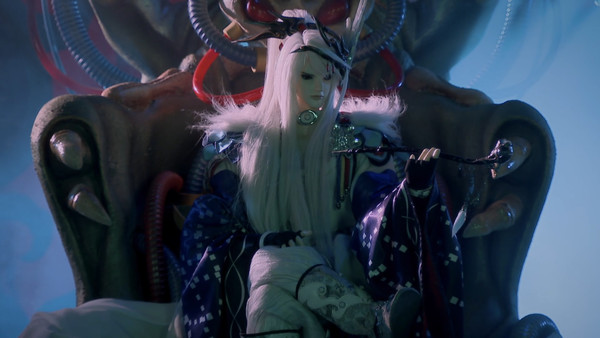
Thunderbolt Fantasy finally reaching its end after nearly a decade by way of this finale movie is bittersweet. On one hand, it's easily one of the more unique and creative shows we've had on offer, and it's a shame to see it end—there truly will never be anything else even remotely like this artistic powerhouse of a show. But on the other hand, it was always going to have to end eventually, and I'm sure Gen “master of misery” Urobuchi has been cooking up other great ideas for other projects.
Unfortunately, being a finale movie, this one is far less self-contained than any previous Thunderbolt Fantasy entries, so I can't readily recommend it as a potential starting point. In fact, it takes place directly where season 4 leaves off, which itself incorporates elements from previous seasons. So, alas, ideally —as its name suggests —this is where you'd want to end, rather than start, your grand Thunderbolt Fantasy marathon. For this same reason, it's hard to talk about its story without risking a tread into spoilery territory. Suffice it to say, this movie both offers long-awaited backstory for some of its protagonists and tries to end things in a way that ties up all the loose ends and feels satisfying.
By the end, the movie does feel like it's at least mostly accomplished that. It's hard to deny that it gets a bit rushed at times and the overall pacing suffers for it, but it also delivers plenty of the thrills and flair that I've come to love and expect from Thunderbolt Fantasy. In other words, admittedly (and disappointingly), this movie is far from being an all-time high point for Thunderbolt Fantasy. But to be fair, that might be an unrealistically high goal. It's still perfectly enjoyable, and delivers plenty of memorable moments that've continued to linger in my brain, even months after watching it for the first time—including, but not limited to, one of the best fights in the whole series. And the fights are generally one of the biggest highlights of this series, so that's high praise. Plus, as you'd expect from Thunderbolt Fantasy, the production value in this movie is nothing short of spectacular. The puppetry, the movements, the costumes, the visual effects, the fights, the environments, the soundtrack—it's rare for something to consistently check as many production boxes as Thunderbolt Fantasy has across its long, recently ended run.
—Kennedy
Demon Slayer: Kimetsu no Yaiba Infinity Castle
(Hikaru Kondo/ufotable/Crunchyroll, Aniplex of America)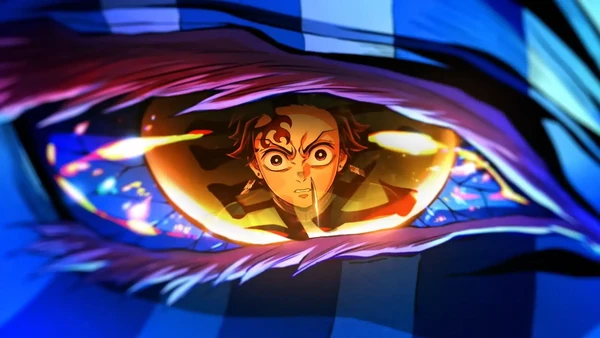
My feelings about the Demon Slayer anime over the past few years haven't been very positive. While the first season and the Mugen Train movie were both relatively solid, their success has come at the expense of the anime's pacing. Ever since it blew up, it's been pretty clear that Aniplex and ufotable have been doing everything in their power to drag out the story for as long as possible. Although the series still has occasional highs, its slow pace has gradually drained my interest with each passing season. While I thought breaking up the manga's final arc into a film trilogy might help speed up the pace a bit, even this felt more like six episodes of a TV show in a trenchcoat than an actual movie, which got more than a little exhausting towards the last 40 minutes. Yet despite all these grievances, when I look back on seeing this in theaters, I can safely say I had a pretty enjoyable time.
Even if the pacing feels more like watching a TV show, the level of presentation here is plenty cinematic. All the action scenes look gorgeous, and the team at ufotable went all out to make them as flashy and polished as possible, while still showcasing each character's individual fighting style through the animation in ways that generally feel distinct from one another. The stakes of the battles themselves are also pretty solid, as the series is starting to wind down character arcs. For as much as I've found Zenitsu's general antics to be annoying, I actually ended up really enjoying his battle with his former senior pupil, and getting some good payoff towards his overreliance on his single sword skill.
I was also really drawn into the climactic battle between Tanjiro and Akaza. Although the film's pacing suffered a bit from the length of the latter's backstory, I ended up getting sucked into it more than I expected. Part of that is thanks to how well the film gradually builds up the personal tragedies that helped shape Akaza into who he is now. Still, just as much credit is owed to Lucien Dodge's performance as the character. Although I enjoyed Channing Tatum's performance as his master, the former deserves as much credit as, if not more than, the latter for carrying the film's emotional core.
More than anything else, though, it was surreal to see this movie in a theater packed with folks ranging from enthusiastic teens to parents with their kids, and to get a glimpse of how much anime has managed to hit the mainstream here in the U.S. compared to where it was a few years ago. It was nice to experience firsthand. I'll likely continue to feel mixed on the Demon Slayer anime right up until its conclusion. Still, between its overall presentation and box office-smashing records, it's certainly made a case for itself as something worth seeing in theaters at least once, and for that, I'd say it's earned its stars as the most successful anime film of the year.
—Jairus Taylor
Senpai is an Otokonoko: Sunshine After the Rain
(Shinsuke Yanagi/project No.9/Crunchyroll)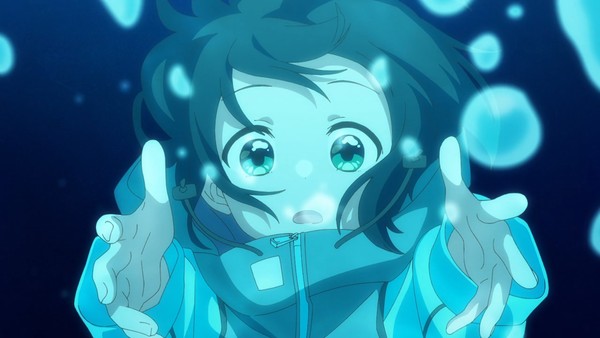
If the Senpai is an Otokonoko anime is largely about overcoming the internal struggles necessary to live your best life as your authentic self, then the sequel film Senpai is an Otokonoko: Sunshine After the Rain is about doing the external work necessary to find and maintain your personal peace. While the titular senpai Makoto and his best friend/maybe boyfriend Ryuji took up the majority of the screen time in the anime series, Sunshine After the Rain is the ever energetic Saki's time to shine!
Okay, it's more like it's her time to process her mother's abandonment, her father's unintentional but still hurtful absence, her grandmother's declining health, and who she is beyond trying to be like the inspirational people around her.
I know that description makes Sunshine After the Rain sound like a heavier piece of media. Still, it manages to navigate all of these themes and related plot points in a way that's as charming and cozy as the original anime. With the opening portion of the film focusing on Saki's trip to Hawaii to visit her dad and her slice-of-life adventures across the island of O'ahu, the film packs a lot of vibrancy and life into a work that's still clearly on a limited budget. With these constraints, though, come many of the movie's charms. Every time Sunshine After the Rain cuts to an even more simplistic animation style for a gag sequence while Makoto, Ryuji, and Saki are chatting, it feels even more like a real group of friends hanging out. Similarly impactful is the scene where Saki discovers that her mom has started a relationship with another man, and the film conveys her barely suppressed disappointment at realizing her family will never be able to come back together by displaying only the lower half of her face as she delivers chipper responses to the news.
Seeing Saki navigate her relationships with imperfect people who love her and accept that she's allowed to make the choices that are best for her, not for them, was incredibly affecting. Saki internalizing that the people she cares about can disappoint her, yet still finding value and comfort in those relationships, mirrored some of my own formative struggles in young adulthood. Senpai is an Otokonoko, a special little show from 2024 that any marginalized person could connect with, and Sunshine After the Rain is a special little movie that anyone trying to live their best life in an imperfect world with imperfect people can appreciate.
It's not the flashiest, and it's certainly not breaking global box office records, but Senpai is an Otokonoko: Sunshine After the Rain is easily one of the best movies of 2025, and if you're reading this, you should give it a watch.
—Lucas DeRuyter
Batman Ninja vs. Yakuza League
(Junpei Mizusaki, Shinji Takagi/Kamikaze Douga/Amazon Prime Video)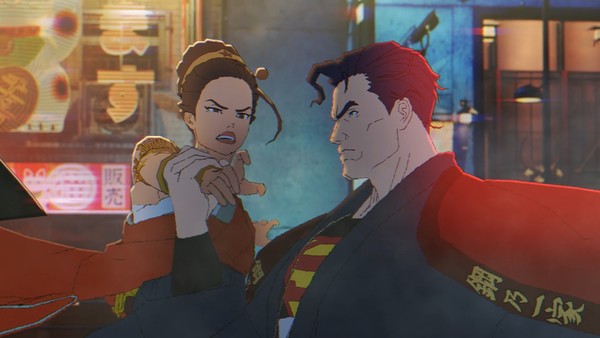
From the mind of the screenwriter behind Gurren Lagann and Kill la Kill comes this over-the-top DC Comics story where Batman is forced to fight the Justice League, who have somehow been twisted into yakuza stereotypes.
The plot allows for both silver-age-style shenanigans and deeper looks at some of DC Comics' most popular characters. In the same film, we have the Flash being defeated by aroma capsules that remind him of how hungry he is, and the development of a surprisingly deep and heartfelt sisterly bond between the yakuza-fied Wonder Woman and Harley Quinn.
But the real standout of the film is the battle between Batman and the yakuza Superman. It's not the “how” of the fight that's important—many of the ideas in it come from previous comic book battles between the two. Rather, it's the emotions behind it—the utter rage and disdain Batman has for this twisted version of Clark. The scene gives key insight into how Batman views Superman—and, in turn, how he views himself in comparison to the world's greatest hero.
All in all, this is a film where the more you know about the Justice League members on one hand and yakuza films on the other, the more you will enjoy it. That said, even if you have a passing knowledge of the characters, you'll find plenty to love. It's both hilarious and emotional, and it features some of the most creative character redesigns of iconic characters you're ever likely to see.
—Richard Eisenbeis
- The Top 10 Anime of 2025
- The Best Anime Characters of 2025
- The Best Anime Moments of 2025
- The Best Anime Songs of 2025
- The Best Anime Movies of 2025
- The Best Manga of 2025
- The Best Video Games of 2025
- The Worst Anime of 2025
Disclosure: Kadokawa World Entertainment (KWE), a wholly owned subsidiary of Kadokawa Corporation, is the majority owner of Anime News Network, LLC. One or more of the companies mentioned in this article are part of the Kadokawa Group of Companies.
The views and opinions expressed in this article are solely those of the author(s) and do not necessarily represent the views of Anime News Network, its employees, owners, or sponsors.
discuss this in the forum (54 posts) |

back to The Best Anime of 2025
Seasonal homepage / archives