

The Top 10 Anime of 2025
by The ANN Editorial Team,
This year was full of shōnen heavyhitters, raunchy sequels, and...contemplative dramas about adolescence featuring Santa Claus? TRIGGER, Science SARU, and Kyoto Animation were the stars of 2025. The long-awaited return to Daiten City proved to be worth it as PANTY & STOCKING picked up right where its lewd angels left off. Science SARU has established itself as the anime studio to hang your hopes on. The transition from Masaaki Yuasa's esoteric anime film machine to TV anime juggernaut was seamless, as DAN DA DAN and SANDA infused excitement into our weekly viewing.
Then there's beloved Kyoto Animation, back with its first television anime since the 2019 arson attack. CITY The Animation drenched Keiichi Arawi's humor in vivid color, continually building out an environment with mixed media and a playful joy.
Below are the top 10 anime of 2025 as nominated and voted on by Anime News Network's editorial team.
Note: Entries below may contain spoilers for series and plot developments!
10. New PANTY & STOCKING with GARTERBELT
(Hiroyuki Imaishi/TRIGGER/Amazon Prime Video)
I knew that New PANTY & STOCKING with GARTERBELT was (still!) going to be something special about a quarter of the way through the second episode. While competing with the Demon Sisters to defeat a ghost, Panty and Stocking are on a tear through Daten City to find the creature before their rivals. When they learn that the ghost is at a diner and get directions on how to get there, they make a series of turns, all denoted by the presence of a weed dispensary on each street corner.
The mention of dispensaries, let alone their meteoric prominence in most American cities today, was surprising to me, as weed is SUPER illegal in Japan. I thought it was odd that a piece of Japanese media would include a gag that its domestic audience would have very little frame of reference for, but then the secret sauce that's made this show a cult classic finally hit me. Panty and Stocking with Garterbelt isn't just a hyper crass television show where the leading ladies have sex and swear, it's also a roast of American culture by Japanese nerds who know and love America well enough to make fun of it.
Any decent American feels a lot of shame about their nationality right now, and over the summer, it was terrific to have NEW Panty and Stocking with Garterbelt take the piss out of us week after week. I've been in some version of a card/tabletop/hobby shop featured in the back half of the second episode more times than I can count, and have personally met the real-life counterpart of every character with a speaking role in that segment. I still can't believe that there was a parody of the movie Sixteen Candles in an anime from 2025! Also, I cannot begin to describe how the penultimate gag of the season, a Gen Alpha-coded character earnestly saying “'Sup Chat” as though it's a greeting, violently and unexpectedly ripped a laugh out of my chest.
Even on a technical level, NEW Panty and Stocking with Garterbelt manages to exceed the franchise's well-established reputation. The profanity-filled musical episode in particular was a delight and it took me several listen throughs to realize that the song was aired in the original Japanese in the English dub of the show, because Panty's new English VA, Courtney Lin, is a dead ringer of a voice match for the Japanese VA, Arisa Ogasawara. The transformation sequence for the new, male, Gen Z-coded angels, Polyester and Polyurethane, is also everything I wanted from the moment the two characters were announced and more!
If you're reading an anime website to discern which works best reflect or even elevate the medium in 2025, chances are you don't need me to tell you that Panty and Stocking with Garterbelt is good and that you should watch it. However, I'd like to stress that NEW Panty and Stocking with Garterbelt doesn't just recapture the magic of the original 2010 series; it iterates upon it. While still holding onto its core identity, this new series has evolved with our current culture rather than just further perpetuating the cultural moment that gave birth to the original. In a creative landscape that's increasingly defined by sequels and reboots of older works, I think this kind of iteration is something that all creators should aspire to, and that NEW Panty and Stocking with Garterbelt should be acknowledged for this feat.
—Lucas DeRuyter
9. My Dress-Up Darling Season 2
(Keisuke Shinohara/CloverWorks/Crunchyroll)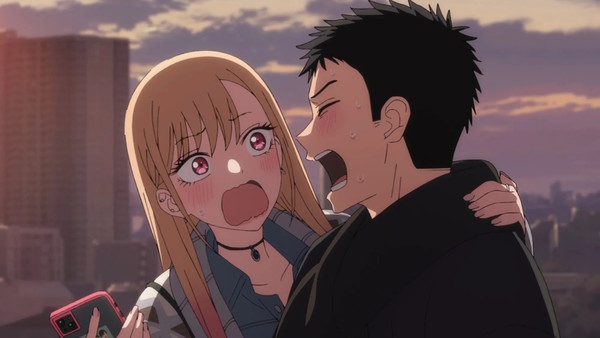
I love the first season of My Dress-Up Darling as it functioned as a solid introduction into the world of cosplay for those who might've been curious about it, while also telling a solid slice-of-life story revolving around two differing protagonists. At first, I wasn't sure what to think about season two, which forgoes a lot of the cosplay insight to focus more on the interpersonal drama of its main characters. But after seeing the season effectively build off of the foundation that was laid in that first season, I actually feel like there was more to emotionally relate to in season two. Season one is more for people interested in cosplay, while season two of My Dress-Up Darling is arguably for anyone who has ever dealt with interpersonal struggles or feelings of inferiority. While I don't think you could remove the cosplay element of season one without turning into a different show, the idea of the prejudices associated with unconventional hobbies and growing past your own personal insecurities for the sake of making connections with others are lessons that I think anybody in an unconventional creative field can relate to. At the very least, as someone who does a lot of online streaming and cosplaying and writes about anime for a living, I definitely related to it.
What's great about this season is how it hones in on Gojo. He is the focus for roughly two-thirds of the entire season. A lot of those insecurities that were touched upon at the beginning of season one are brought to light more here. He may not be a cosplayer, but the world of cosplay has opened up his social circle to an extent that I don't think he was expecting, which forced him to confront a lot of deep-seated traumas. I think the theme of season two is about finding that value in yourself because I noticed that message gets brought up with some of the other characters as well. I saw Marin finally begin to confront her growing affection for Gojo and whether she wants to introduce that monkey wrench into the relationship. Juju's character arc kind of comes around towards the end, and she finally gets to confront her insecurities by cosplaying different characters. I even get introduced to new characters like Amane, who gets to discuss and explore his interest in crossplaying. It's hard to explain, but season two ultimately felt much more mature than season one in how it treated its characters and how it wanted to make the audience feel. There is a sense that those who worked on the show had a strong vision they wanted to communicate emotionally, so they poured their hearts and souls into making sure that all those different anxieties and states of mind were showcased effortlessly.
Suffice it to say, the presentation of this anime is practically movie-quality for most of its run. Again, season one set a pretty high bar for slice-of-life anime. Still, this season knocked it out of the park because not only is the overall animation quality high, but the creativity also takes it to another level. We use different animation styles to showcase the various media the characters are cosplaying from, and we get unique comedic cuts and subtle character animations that are somehow even better. When we had a scene early in the season that presented information as a live-action puppet show, I knew I was going to put this anime in my top five for the year. The staff didn't need to go to all these extra lengths, both narratively and visually, for this show to resonate with people, but they did anyway. Watching season two of My Dress-Up Darling felt like I was being rewarded for appreciating a lot of things that made the original season so strong. I really hope we get season three to wrap some lingering emotional plot points like the romance between Gojo and Marin, but aside from that, I walked away from season two more than satisfied.
—Bolts
8. CITY The Animation
(Taichi Ishidate/Kyoto Animation/Amazon Prime Video)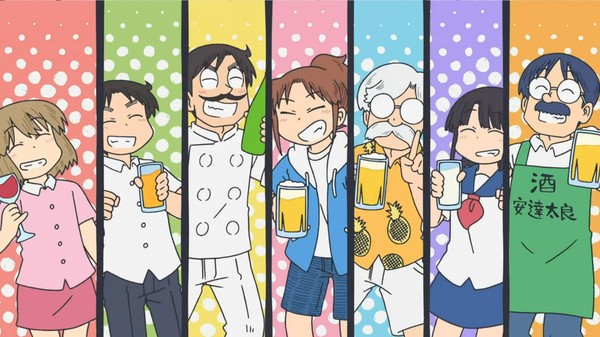
There's an idea that, in comedy, something remarked upon by the characters as completely ridiculous or absurd should go unseen by the audience. What viewers concoct in their heads will always be funnier than what an actual production could show. So it goes that, in the eleventh episode of CITY The Animation, the audience watches extremely married friends Nagumo and Niikura attempt to film a would-be viral video, set to "Mambo No. 5" as background music. And said audience accepts that they probably won't see the finished product, given the comedic parameters outlined above.
CITY The Animation then shows the full video at the end of the episode, set to "Mambo No. 5," and it's precisely as uproarious as anyone watching could have hoped. CITY The Animation can get away with doing this because CITY The Animationn is a perfect comedy. Anybody who's seen Nichijou knows that Keiichi Arawi's comedic sensibilities and Kyoto Animation's expression of them are a perfect match. This is a style of humor only made better when each gag, overt or anticlimactic, is rendered with the most lush, overindulgent animation it could possibly receive. Why just throw noodles into a guy's bag? Turn the whole thing into slow-motion orchestral cinema, where it happens a second time. Why let Niikura simply stress out over picking up a 500-yen coin? Have her take on a host of escalating, different devil-styled bad consciences. Why bother doing something like an expected collection of quick cuts between scenarios when they could just cram all the scenes happening at once onto the screen at the same time?
CITY understands that the most affecting moments of comedy come from laughing at our own lives. So all the absurdity of Arawi's busy world is punctuated with points that can be genuinely affecting. The heart-wrenching tale of Ecchan and Matsuri's pending separation is the most obvious point, yes. But this series also makes space for the more general wistful whimsy of spending time with friends, peers, and community, whether that's a group of old men enjoying their summer vacation, or everyone gathering to celebrate a local restaurant being awarded a (fake) Michelin star. Some of CITY's most memorable, memeable moments are grounded in dirt-simple singularities so many can relate to, or at least that's the case if my timeline's reaction to Niikura's confession of how she eats ramen late at night is any indication.
I can reassert KyoAni's treatment of all this material as what makes it special, but that does it a disservice, underserving the kind of manga magic they had to work with in the first place. Arawi's art is a popping kind of vibrancy that invites readers to pore over it even if they can't read a word. The animation in CITY The Animation thus embodies this appeal, being invitingly incredible to watch as a craft, even if you don't have subtitles or an English dub to follow along with the absurd assertions, ridiculous deadpan-narrated situations, or free-wheeling musical numbers. It's simply incredible to look at. It does have elements of maximalism that could, in any other hands, be accused of being too colorful, too overtly animated. But CITY The Animation can do it, make it look natural, make it look easy, because CITY The Animation is perfect.
—Christopher Farris
7. SANDA
(Tomohisa Shimoyama/Science SARU/Amazon Prime Video)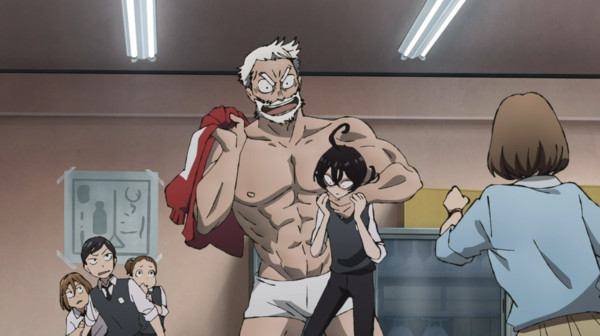
With the premise, “A teenage boy turns into Santa when he wears the color red,” I wasn't expecting much of SANDA beyond some gonzo action, silly fun, and an old man fetish. With animation by Science SARU, it seemed safe to assume that it would look gorgeous as well. I wasn't completely wrong either; SANDA does indeed have a lot of gonzo action, silly fun, and a lot of old man fetish material.
I may have been right about it having all those things, but I was dead wrong about that being everything SANDA has going on. Turns out it's densely packed with social commentary and a number of themes surrounding the fetishization of youth and anxieties around aging in a society with a low birthrate! My bad, my bad. Paru Itagaki uses Santa to represent a range of ideas: trusting relationships between adults and children, the importance of hope and fantasy, the concept of aging gracefully, the hypocrisy of a society that values children as a natural resource but hates them as human beings, and more. Every time I watch an episode, I end up spending at least an hour discussing it afterward because there's just so much to dig into about what it says about how youth, love, and gender are configured in its pointed social commentary.
However, if you're really just here for a goofy action series, SANDA still offers everything you could possibly want and more. True to form, the fine animators at Science SARU have created one of the best-looking anime one could hope for. They've brought Itagaki's character designs to life in a delightfully crunchy aesthetic, with thick, irregular lines that are a perfect fit for the bizarre world and quirky misfit cast. Fuyumura, in particular, has a wonderfully nostalgic design for me, reminiscent of a Jhonen Vasquez or Tim Burton sketch. The action is truly wild, regularly featuring fights with an old man in his underwear, with sleigh runners attached to his feet.
The show's score makes frequent use of a minor-key arrangement of Beethoven's famous “Ode to Joy.” To me, this leitmotif is a perfect encapsulation of the show's magic: the defamiliarization of something so recognizable that normally we would barely register it. Playful, but also sinister in a way that creates a sense of unease. Thoughtful, weird, and wildly entertaining, SANDA is the total package. Even if you don't feel particularly jolly about Christmas, this is holiday magic truer than anything on the Hallmark Channel.
—Caitlin Moore
6. Mobile Suit Gundam GQuuuuuuX
(Kazuya Tsurumaki/Khara, Sunrise/Amazon Prime Video)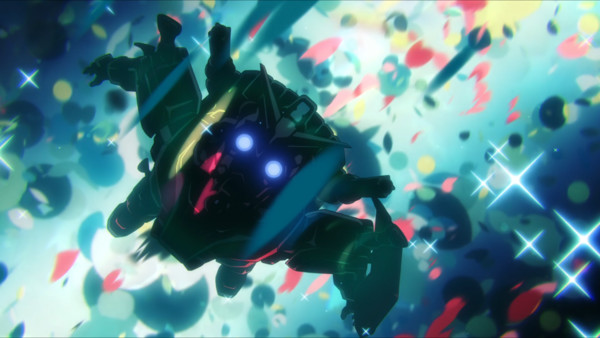
What is Gundam? Is it a cultural touchstone, a stack of model kits, or simply a cool cartoon you talk with your buddies about every week? Mobile Suit Gundam GQuuuuuuX has the answer to all those questions: it's all of those things...and then some. The original Mobile Suit Gundam television series has left an indelible mark on everyone who's seen it—including GQuuuuuuX director Kazuya Tsurumaki, screenwriter Yōji Enokido, and most famously of the Studio Khara bunch, Hideaki Anno. The intertwining legend of Red Comet and White Devil ended up following these creatives and fans across the world throughout their lives—far beyond the time they'd spent watching it.
In the six months since GQuuuuuuX's conclusion, I've found myself ruminating on what the series means to me. Honestly. Studio Khara's elaborately constructed “What if Char got to the Gundam first?” story isn't really all that concerned with what the viewers think—it was made for super fans and those super fans alone. It's almost as if the custodian of your favorite series gave you the keys and said, “Go make your fanfiction real.” However, I think that's not giving the creatives enough credit, because in part, GQuuuuuuX is about what the viewers themselves bring into the series—a quality within these creatives' other works, such as FLCL, Evangelion, and Revolutionary Girl Utena.
For that reason alone, huddling around the metaphysical TV with everyone for the latest GQuuuuuuX became one of the best community experiences I've ever had. Not too far from the Suletta Sundays or JoJo's Fridays of yore, every Machuesday led to deeper-than-normal conversations about the impact of Gundam on our lives—who that obscure character was, that plot detail you'd worry no one would understand, or how your best friend wants to eat up Challia Bull like a bowl of chilli. Each of these conversations shows just how deeply the Gundam legend runs within us all.
When looking back on the series' divisive finale in particular, I can't stop thinking about the long shadow cast by the original series. How do fans, creatives, and even the characters themselves push forward in such an overwhelming force? They break right through it—even if there isn't a clean resolution on the other side of that shadow, it's given you the unfettered space to ask “What's next?” With all that in mind, Mobile Suit Gundam GQuuuuuuX could be considered incomprehensible by some, but the series' unwillingness to hand the viewer any easy answers is why I'll be thinking about it and the musings above for quite some time.
5. Kowloon Generic Romance
(Yoshiaki Iwasaki/Arvo Animation/Crunchyroll)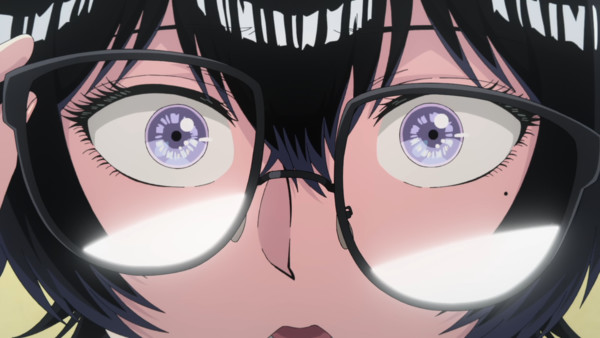
I was already a fan of Jun Mayuzuki's languidly-paced, yet compelling and hypnotic sci-fi mystery romance manga Kowloon Generic Romance. The wait for each English-translated volume (released at the pace of about two per year) is excruciating. I was tentatively excited to hear that this, one of my favourite manga of all time, was to receive its own complete anime adaptation. Considering the manga is still running, months after the adaptation finished, my main concern was the quality of the anime-original ending.
The starkest difference between KGR's manga and anime lies in pacing. There is a lot crammed into each episode, roughly an entire volume per 24-minute installment. Although this does rob the story of some of its lazy ambience, the writer and director make extremely wise adaptation choices to streamline the sometimes meandering plot. While this leads to the excision of quite a few entertaining slice-of-life scenes, they're ultimately extraneous to Mayuzuki's complex, emotional story about identity and self-actualization.
Protagonist Reiko Kujirai is a mystery not only to herself, but also to the viewers and her main romantic interest, Hajime Kudo. She's a thirty-something realtor who lives in Hong Kong's Kowloon Walled City, a place that isn't supposed to exist anymore. Gradually, she comes to realize that many aspects of her seemingly perfect world don't add up. Why does Kudo have a picture of them together that she doesn't remember being taken? Why does she have no memories of her past? Why is it always midsummer in Kowloon? These mysteries are compelling and unsettling, and the answers provided are ultimately satisfying, at least thematically.
KGR's sci-fi trappings are merely that. They're background plot devices that facilitate an exploration of what makes a person their true self. Initially a reactive character, Kujirai becomes more proactive as she seeks to determine who she is, for herself, not for a man who only sees in her something he's lost. Kudo wanders in a mirage of nostalgia, pining for something he will never be able to recapture. Likewise, every other character has their secrets, something in their past that either holds them back or they seek to escape.
The supporting cast and their stories are also wonderfully compelling, even sometimes threatening to overpower Kujirai and Kudo's weird semi-relationship drama. Gwen and Miyuki's on-again, off-again love affair is a fascinating counterpoint to the central couple's story, and Yaomay and Xiaohei are two of the most fun members of the cast, with heartbreaking pasts. The anime more than does justice to the manga, even with a slightly rushed ending that presumably uses only elements of author Mayuzuki's plans for her manga's eventual denouement. It's a gorgeous-looking show with an impeccable atmosphere and soundtrack that will linger with viewers long after the final credits roll.
—Kevin Cormack
4. ZENSHU.
(Mitsue Yamazaki/MAPPA/Crunchyroll)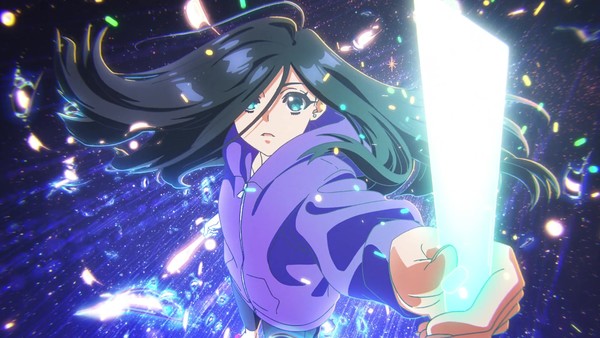
Who knew all it would take for me to fall in love with a new isekai series in 2025 was to replace all the video game/RPG trappings that tend to take me out of the genre with old-school anime ones? Well, that's not all it took, but the concept of an animation director entering the world of her favorite anime movie is a great hook. And then she uses her animating skills as a superpower, bringing elements from different genres into this apocalyptic fantasy! And she gets a fan fiction-worthy slow-burn romance with her husbando! And then there's some Princess Tutu-esque metafiction where saving the anime world from destruction creates conflict with the movie's also-isekaied original director! Director Mitsue Yamazaki and writer Kimiko Ueno have formulated the perfect isekai for anyone who wouldn't shut up about Eizouken.
I knew Ueno was heading places when I saw her name in the credits of all the funniest episodes of Space Dandy. 11 years later, she's the queen of anime comedy: this year alone, she was also in charge of series composition for SANDA and Ranma 1/2 and scripted over a third of the segments of New Panty and Stocking. ZENSHU is Ueno's first “original creator” credit (shared with Yamazaki), and in a time where original anime struggle to get produced, following this story week-to-week without a chance of anyone spoiling what would happen next was one of the most enjoyable anime-watching experiences of the year.
ZENSHU's pastiche of '90s anime archetypes with A Tale of Perishing is spot-on, which allows the viewer to laugh along with it but also take it seriously on its own terms when things head in a darker direction. I loved all the different ways Natsuko fought to shift fate, from inspiring Destiny Heartwarming to get ripped like Serval Cat Mask to helping the elf Memmeln out of a deep depression by giving her an idol anime to obsess over, and how her isekai experience was able to clarify her own understanding of love. The animation desk “transformation scene” always got me hyped, a perfect combination of visuals and music. While there was some understandable skepticism around MAPPA — infamously not the best environment for animators — making an anime about working in anime, the final product is so clearly an artist-driven labor of love that any cognitive dissonance I might have had around the studio wasn't nearly enough to push ZENSHU out of my favorites of the year list.
—Reuben Baron
3. The Summer Hikaru Died
(Ryohei Takeshita/CygamesPictures/Netflix)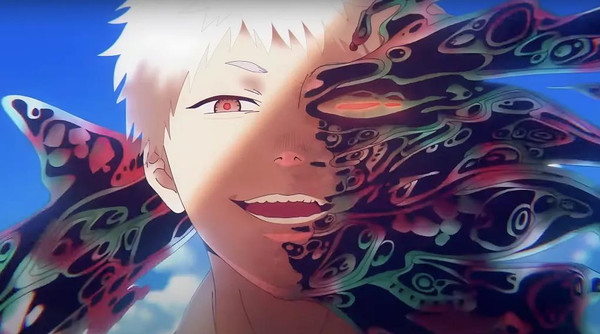
How do you mourn a person no one realizes is gone? At its core, that's a key theme explored by The Summer Hikaru Died, based on the manga of the same name by Mokumokuren. Yoshiki's best friend (and probable crush) Hikaru went into the mountains one cold night and never returned…even though someone who looks and sounds like him did come down the mountain. To most people, Hikaru is still there. But Yoshiki knows that it's "Hikaru" instead – a strange, ayakashi-like entity wearing his best friend's skin.
The series exists at the intersection of folk horror and tragedy, though I'd argue it also contains a lot of hope sprinkled throughout, despite those genre labels. Yoshiki and "Hikaru"'s relationship is profoundly different from Yoshiki and Hikaru's, with one major change being that "Hikaru" harbors what could be framed as romantic feelings for Yoshiki. He could also simply be imprinting on the first person he's interacted with in what may well be centuries. However, the season ends before we truly find out what "Hikaru" is, the safest and closest bet is that he's a local deity, enshrined and forgotten. As we've seen from Fall 2025's This Monster Wants to Eat Me (and other, less horror-centric, series about deities), gods have feelings, too, and "Hikaru"'s abandonment has hurt him. He's not a bad god or monster, but he also has limited experience being good. That makes him dangerous, particularly to Yoshiki, who bears the marks of "Hikaru"'s power on his skin…and possibly elsewhere.
The Summer Hikaru Died is a claustrophobic, deceptively slow series. As Yoshiki grieves Hikaru while growing closer to his replacement, "Hikaru"> learns about life among the humans and the danger he poses. No easy answers are waiting for either of them, and if they want to be together, sacrifices may well be necessary. But it's almost impossible not to wish that things could work out somehow.
Hikaru is gone, but "Hikaru" is here. Neither is replaceable. But what's the price Yoshiki may pay for loving his friend's new self?
—Rebecca Silverman
2. The Apothecary Diaries Season 2
(Norihiro Naganuma/OLM, TOHO animation STUDIO/Crunchyroll)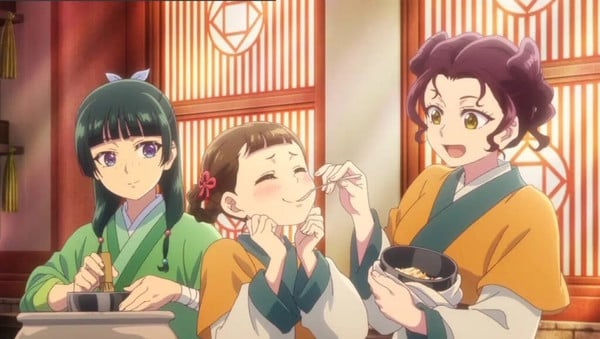
Combine palace intrigue in Ancient Fantasy China with classic detective work and an oddball gremlin protagonist to put it all in motion, and you've got The Apothecary Diaries Season 2. This two-cour second season is even better than the first: more complex and focused on solving mysteries that are ever more critical to the central plot. Viewers hardly need to be coerced to spend more time with the brilliant, lovable Maomao, but the protagonist is not this anime's only pull. Its ensemble cast has expanded with fascinating new characters, Suirei and Shisui. This instant classic blends characterization, drama, and humor, all the while humanizing the lives of court ladies and prostitutes, two groups who have often been historically sidelined.
One of the most appealing parts of The Apothecary Diaries is that it places its central focus on a space often considered inconsequential in many mainstream historical texts: the women's quarters. Maomao spent her childhood immersed in the pleasure districts because her eunuch adoptive father provided medical care to courtesans. This frank discussion of gynecological care, including everything from sex education to birth control to childbirth, is critical to the plot.
This essential knowledge aids Maomao, now a young adult, when she is once again surrounded by women in the Rear Palace, where the emperor's concubines and their staff reside. It's right there in the name that this setting is not considered the most important part of the palace by any means. But with hundreds of occupants, it's a thriving, vibrant backdrop oozing with invisible politics and mysteries just waiting to be unlocked. And the people behind the palace's most dangerous plots never should have underestimated Maomao.
This season expands Maomao's world with an increasing number of settings, including the caravan that sells exotic wares to the court ladies, the Shrine of Choosing and its bizarre series of colorful doors, the bathhouse where Xiaolan finds a new job, the hunting trip on which Maomao snatches up a handful of evidence from Jinshi (or maybe it was just a frog), and the mysterious Fox Village which Maomao finds herself visiting against her will. There are all the elements of a good mystery, including secret passages, hidden identities, and corpses that come back to life—or do they? You can leave it to Maomao to crack the case, and once she does, you might realize that the story had been laying clues for you to solve it with her all along.
Like all good mysteries, it's an intelligent story with an eye for the smallest detail. It's a show with great rewatchability because you can go back and see how Maomao did it. With a tragic ending that packs a powerful emotional punch, this story might even bring you to tears. The one thing that could possibly improve on it? The upcoming Apothecary Diaries Season 3 and feature film, both slated for 2026.
—Lauren Orsini
1. DAN DA DAN Season 2
(Abel Góngora, Fūga Yamashiro/Science SARU/Crunchyroll, /Netflix)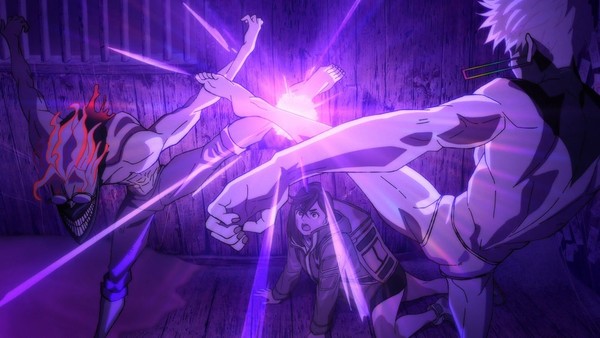
It's rare to have a season of any anime—much less a continuing one—that is so good from top to bottom. Starting off by resolving the lingering season one cliffhanger, this season is largely about knocking the legs out from under the viewer by breaking the series' established pattern.
In general, the pattern in the first season was that our heroes would encounter something supernatural, battle it, and, in the end, either overcome it or merge with it—allowing them to use the creature's associated powers without ill effects. This merging occurred first with Okarun and later with Aira. In both of these cases, the human characters built up a rapport with the monster—with Turbo Granny even acting as the group's reluctant sidekick.
However, this is not the case with Evil Eye. While Evil Eye's possession of Jiji starts off by seemingly following the same pattern—with a sob story flashback that mirrors what we saw with Acrobatic Silky—it's quickly revealed that Evil Eye is just as evil as the name implies. Rather than being overcome by the end of the arc, the Evil Eye possession problem continues throughout the rest of the season—throwing a wrench into our heroes' battles with the supernatural again and again. So not only does it mess with viewer expectations, it adds an ongoing source of tension.
This season also introduces a new main cast member, Kinta, whose haughty personality plays surprisingly well off Jiji and Okarun's kinder ones. The fact that his sci-fi knowledge plays as much of a part in victory as Okarun's cryptid/UFO knowledge also fleshes out the group dynamic—and the addition of an alien kaiju pilot to the roster is a great cliffhanger to end the season on as well.
Beyond that, this season features our heroes realizing they are a found family of sorts—and one that sticks together through both supernatural problems (yokai, cryptids, and aliens) and everyday ones (like a house that keeps getting destroyed). It adds a solid emotional foundation to the season as the characters interact and grow.
Lastly, on the visual side of things, DAN DA DAN remains fantastic. Science SARU lives up to the reputation earned not only from the first season but also from their other works, bringing a hefty helping of animated excellence in both the normal and the surreal. Between the horrific pit below Jiji's house and the kaiju battle that ends the season, there's more than enough eye candy to satiate anyone.
All in all, it's one of the best anime of the year and absolutely one you should check out—and if that means you have to watch the first season for the first time to catch up… well then, I envy you.
—Richard Eisenbeis
- The Top 10 Anime of 2025
- The Best Anime Characters of 2025
- The Best Anime Moments of 2025
- The Best Anime Songs of 2025
- The Best Anime Movies of 2025
- The Best Manga of 2025
- The Best Video Games of 2025
- The Worst Anime of 2025
Disclosure: Kadokawa World Entertainment (KWE), a wholly owned subsidiary of Kadokawa Corporation, is the majority owner of Anime News Network, LLC. One or more of the companies mentioned in this article are part of the Kadokawa Group of Companies.
The views and opinions expressed in this article are solely those of the author(s) and do not necessarily represent the views of Anime News Network, its employees, owners, or sponsors.
discuss this in the forum (52 posts) |

this article has been modified since it was originally posted; see change history
back to The Best Anime of 2025
Seasonal homepage / archives