

Spring 2026 Manga Guide
Exotic Animal Doctor
What's It About?
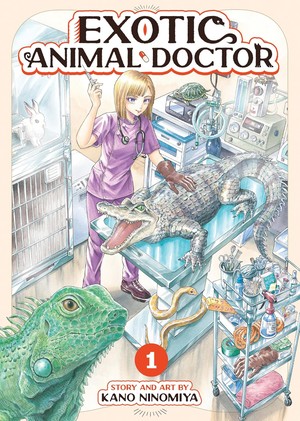
Welcome to Gekko Animal Hospital, where the staff treats the kinds of patients most vets won't dare touch! Whether your pet has fur, scales, talons, or razor-sharp fangs, this dedicated team is ready to help. From a tortoise with a cracked shell to an anemic tarantula or a snake recovering from burns, they work tirelessly to provide expert care and heartfelt compassion to some of the world's most extraordinary animal companions.
Exotic Animal Doctor has a story and art by Kano Ninomiya. English translation is done by Tristan K. Hill and lettering by Phil Christie. Published by Seven Seas Entertainment (May 12, 2026). Rated T.
Is It Worth Reading?
Bolts
Rating:
I love cats and dogs, but I am also allergic to a good chunk of them. So I felt a lot for the main character in this story, who wanted to be a veterinarian, only to more or less have his prospects limited by a developing allergy to those very animals. So why not just work with every other animal besides cats and dogs? I didn't know that in Japan, anything that isn't a more typical house pet, like a cat or dog, is considered an exotic animal, and these exotic animals can range from bunnies to giant lizards that need specific treatment. The book starts a little bit ridiculous, with our main character literally starting their first day at an exotic vet across the street from a burning building that is rapidly trying to evacuate a couple of dozen exotic animals. But outside of that initial setup, I do have a lot of respect for this book's dedication and attention to detail.
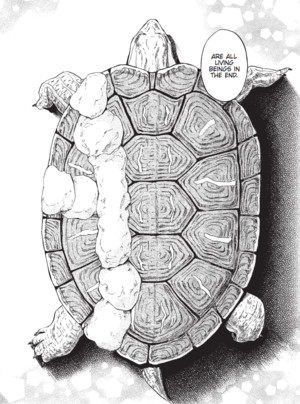
You can tell the writer of this book either has a strong affinity for treating exotic animals, given the amount of research that went into what it takes to take care of those animals. While there is a story about a young man trying to find his place in an unconventional animal treatment world, the story feels more like an excuse to act as how to book what it takes to treat those types of animals or what specific ailments they can be afflicted with. It could be something extreme, like how to treat the broken shell of a turtle, or something simpler, like the proper way to hold a snake so it can be treated. There is a solid level of realism here despite some of the exaggerated comedy. When it gets down to the gritty details of everything, there's a lot of pathos present. I feel like I'm supposed to shut up and listen as I'm reading the book because I'm being taught a lesson, but not in a way that feels demeaning or like I'm being talked down to.
I feel like an intern in a veterinarian's office, watching characters treat these animals or work with these pet owners in order to find a solution to these complicated problems. It's very hard to strike that balance of edutainment, but that balance can go a long way because there is a lot of merit in being able to teach what are extensively unconventional skills to a more general audience. That's why I like shows like Dr. Stone so much. Granted, this series is nowhere near as off the wall as that, but this tickles the slice-of-life fan inside of me while also making it clear that I'm walking away with more wisdom than I originally thought. I don't plan on owning a snake or an exotic animal anytime soon, but this book definitely makes me have a lot of respect for people who do take care of those animals. If you have a passing curiosity, this is something that you should pick up.
Rebecca Silverman
Rating:

It's no secret that I have a lot of cats. I have a dog, too. But it was a surprise to me that the rabbit I had growing up (Ingmar, a Netherland Dwarf) and the parakeet (Kokapetl, named after the bird in The Mysterious Cities of Gold, proving my early nerd credentials) would be considered exotic pets in Japan, necessitating a special veterinarian. Our regular vet saw both of them along with the cats and dogs we had, and I see people bringing ferrets, hamsters, guinea pigs, rabbits, and birds to my current vet all the time. That makes this fascinating reading in two ways: the care of unusual pets and the culture surrounding them in Japan.
As the title suggests, this series takes place at a veterinary hospital specializing in any pet that's neither a cat nor a dog. (Nor livestock; no horses here.) The pets explored in this volume run the gamut from turtles and rabbits to a Caiman alligator, and the vets are expected to be able to treat them all. While it is mentioned that the small gator isn't a good pet (she's living at a reptile rescue, not in someone's home), there's no judgement for people who choose to keep exotic animals. That seems to have more to do with what's considered “exotic” in Japan; where I live that label is applied more to things like big cats and other, actually restricted-to-own species. Instead, the information presented is aimed at explaining how to care for these creatures and what owners need to know. The rabbit chapter does a particularly good job with this, explaining how rabbits' needs differ from those of dogs and how treating them as analogous species could stress a rabbit out.
The art, while fine for the people, really devotes itself to the animals. You can clearly see the differences between types of snakes and lizards, and scenes of a severely injured tortoise show the damage to his shell without getting gruesome. It's also important (to me) to note that no animals die in this volume, although the preview for volume two suggests that such might not be the case going forward. The rabbit chapter does acknowledge that first-time owners of specific pets are rarely one-time visitors to the hospital, no matter how good their intentions, and that comes with a sense of the emotional weariness vets can face: you can tell someone how to best care for their pet, but there's no guarantee that they'll do it.
If you're an animal person, this volume is worth picking up. It's interesting and engaging and full of information. I can't say with certainty that it will continue to be death-free, but this first book, at least, is safe to check out if you're as big a wimp as I am.
Erica Friedman
Rating:

Kanna is a veterinarian with an unfortunate allergy to dogs, which causes him to also be awkward and unhelpful. In a last ditch effort to get and keep a job, he ends up at an animal hospital that takes anything other than cats and dogs, i.e.,”exotic” animals. Kanna is a little hard to like at the beginning of this manga, as he comes off a sincere but incurious, and more than a little judgmental.
As Kanna begins to understand Dr. Gekko's clients, the turtles, snakes and other animals he encounters, both Kanna and we are introduced to the decidedly more obscure wolf of caring for animals that are not cats, dogs or livestock. Kanna is still awkward and prone to getting bitten, but he has good ideas. With the guidance of Dr. Gekko and vet tech Hoshi, it is obvious that Kanna is going to become a great vet. We get a chance to learn about how Japan deals with the issue of exotic, imported animals. The story is pretty good about explaining how exotic pets aren't simple to keep and are often abandoned…and can often be dangerous to care for. From Caiman to rabbits, we are repeatedly cautioned that while dogs and cats have lived alongside humans for millennia and we've learned how to interpret each other's emotions, other animals are more obscure. These are great lessons which give the story a much more realistic footing.
On the unrealistic side, Dr. Gekko is a motorcycle-riding adventurer, whose exploits are hinted at, and vet tech Hoshi who raises bugs and has incredibly fast reflexes, are enough of a mystery for many chapters to come.
Exotic Animal Doctor, Volume 1 is a solid teaching manga and very entertaining for those who are interested in the care of raising of animals.
The views and opinions expressed in this article are solely those of the author(s) and do not necessarily represent the views of Anime News Network, its employees, owners, or sponsors.
discuss this in the forum (20 posts) |

back to Spring 2026 Manga Guide
Seasonal homepage / archives