

The Winter 2026 Manga Guide
Wandervogel
What's It About?

Shirou had a childhood friend who was “kidnapped” in front of his eyes. He's been looking for Yuuto ever since by calling all his classmates. Okitsu has been living rough due to claustrophobia and finds himself taking shelter with an eccentric ghost writer in this BL mystery romance manga.
Wandervogel has story and art by Sakae Kusama. English translation is done by C2 with lettering by Vibrant Publishing Studio. Published by Tokyopop (February 10, 2026). Rated M.
Content Warning: dubious consent
Is It Worth Reading?
Erica Friedman
Rating:
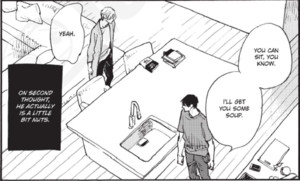
We meet Shirou, whose childhood memories have been treated as a pathology, and who is just re-entering society to go to college. His friends are supportive, but there is something weird going on as he searches for his lost friend. When he uncovers the identity of his friend, it turns out he's been right in front of him, using a borrowed name.
The owner of that name is also dealing with his own issues and finds himself living rough on an island in the south, working at a little izakaya, and puzzling over the scene he sees of an older man strangling a younger man who happens to be one of the regulars at the diner.
Wandervogel is three stories that intertwine in a very messy, but kind of cute BL romance. It takes a while to get there, though, because the convolutions of the plot are not helped along by characters that mostly look and act the same through about two-thirds of the story. This is very much one of those stories where, if you are to recommend it to someone, you must tell them to wait; it all makes sense in the end.
I found the art to be difficult to parse at times, in part because more than one character is using an assumed name. The tension in the various arcs doesn't really rely on how people look, and as I said, as everything started to fit into place, it all began to make sense.
There's a darkness in the background of most of the main players that feels like it might touch upon some real trauma, but is handwaved away as a mere plot construction. This doesn't really affect the story, as this single volume ties everything up relatively neatly. The author's note in this volume is well worth reading, as it provides some insight into the opening premise and the overall tone. There is definitely room for more mystery and psychological drama. I really hope that any future volumes develop some of the darker themes and allow the characters time for growth.
Rebecca Silverman
Rating:
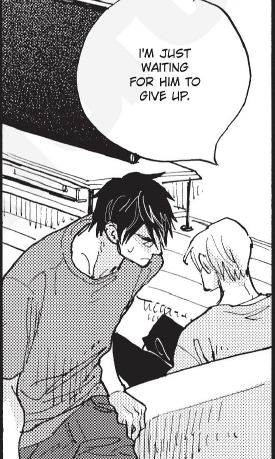
I was leery going into Wandervogel based solely on the title – while the word has the innocuous German meaning of “wandering bird,” it's also a term co-opted by the German Youth Movement of the early 20th century. Fortunately, creator Sakae Kusama appears to be simply using it in a literal sense – the characters in this story are all wandering rather than migratory birds, struggling to make sense of life and to cope with the traumas that affected them as elementary school children. They're all searching for something that they may not even fully understand.
That's the strongest piece of this admittedly odd book. This volume is comprised of two moderately related stories, with the first dealing with two college students looking for a long-lost childhood friend. One worries that he invented the other as a particularly realistic imaginary friend, while the other has blocked out many of his early memories as a form of coping with trauma. The story is strange and meandering, and with the two young men essentially deciding to make their own reality as a pair, although the fact that one led the other on a deliberate chase keeps it from being fully wholesome. But that's perhaps the point: there is no such thing as a perfectly sweet and smooth happy ending, and everything and everyone comes with baggage.
This is also the underlying theme of the second tale, which follows a man trying to cope with his claustrophobia and his budding relationship with an author who thinks he can only write the stories in other people's heads. This piece suffers from being not quite fantastical enough – I almost didn't want there to be a logical explanation for anything because the story was so close to being what used to be called a weird tale – a work that's part magic realism, part science fiction and not entirely meant to be understood. The more prosaic pieces of this story risk undercutting the rest of it, and I definitely could have lived without the scene of dubious consent, which honestly felt out of place.
Wandervogel is one of the odder works I've read for this guide. I didn't hate it, but I didn't particularly like it, either. Between its awkward storylines and art that made it hard for me to tell characters apart, it never felt like it was living up to its potential. But even though this undermines the purpose of a review, I think this might be one of those books where you just have to read it for yourself and see how it hits you.
discuss this in the forum (14 posts) |

back to The Winter 2026 Manga Guide
Seasonal homepage / archives