

Forum - View topicMushishi (TV) (w/ index).
|
Goto page Previous Next |
| Author | Message | ||
|---|---|---|---|
chefneer
 Posts: 1686 Location: Fort Worth, Texas |
|
||
|
I haven't seen it, and I probably won't for some time. The broadband connection in the dump in which I currently reside is broadband in name only.
However, I do fervently hope - and beseech the gods for their blessing - that this series will ultimately get a North American home video release. DVD or BD, I don't care. This is one of my favorite shows and season two would look very good on my shelf next to season one. Yes it would. |
|||
|
|||
|
Errinundra
Moderator
 Posts: 6692 Location: Melbourne, Oz |
|
||
|
Mushi-Shi is weaving its magic over me once again.
The second episode is classic Mushi-Shi. It's languid, heartfelt, gentle and ineffable. Like the pure, chiming notes of the soundtrack it doesn't say much but what it does, it does with utter conviction. Everything is so simple: from the sighing of the water along the sea shore to the design of the characters to the story itself. And yet... and yet it had me in tears in the end. |
|||
|
|||
Tony K.
 Subscriber SubscriberModerator  Posts: 12058 Location: Frisco, TX |
|
||
|
Sorry it took so long. I was busy re-watching Monster, catching up on sleep, obsessing with Guild Wars 2, and trying to make time to go see Captain America: The Winter Soldier this past week.
Anyway, here's the next episode. Episode 13: One Night Bridge (clicking this will take you back to the Index) ---------------------------------- Plot Summary Zen and Hana are attempting to elope and escape an arranged marriage that Hana has with another village leader's son. But in attempting to escape, Hana falls off the bridge. However her body seems to still be up and moving around despite the rather large plummet, albeit in a very blank state. Ginko arrives in reply to a letter sent to him about coming to investigate this phenomenon. It seems there is a type of mushi (Nisekagura) that can take control of other animals and use their bodies to feed on light. And every 20 years, these Nisekagura all gather to make a "bridge" and leave the mountain (hence the name of the episode). However, in leaving, the Nisekagura's hosts return to their normal state, dead or alive. When the mushi eventually leaves Hana, she dies for good. In attempting to cross the mushi bridge, Zen feels a Nisekagura brush his hand. He feels it is the last remaining thread of Hana and decides to take his life by purposely falling of the bridge as well. ---------------------------------- Comments As you can tell from the plot summary, this episode is pretty tragic. What started as a couple in love trying to find their freedom to do so ended in a sad, or maybe even bittersweet way, depending on how you look at it. Not mentioned in the summary is the hesitance on Hana's part. In the flashback leading up to her falling off the bridge, Hana decides she wants to stay at the village so that both theirs and the other one would flourish as a result of her marriage. Even though she clearly admits to loving Zen, she thinks it would be better to sacrifice her love for the greater good, whilst still loving Zen from the inside. And after the mushi leaves her body and touches Zen's hand on the bridge night, I suppose he was so desperate in not wanting to let her go that he clung on to that mushi as the last remnant of Hana. In falling to his own death, maybe he thought that same Nisekagura that took over Hana would have taken over his body as well and created some sort of transcending bond within the vessel of his body? Of course, that's just my interpretation. But knowing the kind of show this is and all the other weird or unexplainable happenings that occur, who's to say something may or may not happen just because it isn't overtly explained in the narrative? I guess the moral of the story is that love can really drive some people over the edge. Maybe for better, maybe for worse. But it's really up to the individual to believe what they wanna' believe. And if it helps them feel like that love wasn't a total waste, then so be it. ---------------------------------- I thought I could try and lower the number of screencaps to a small handful (like, 15 or 20), but in trying to take these snapshots, I realize the show looks so freakin' awesome in HD that I couldn't help but get 30, so bask in the awesome artwork!  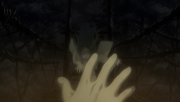  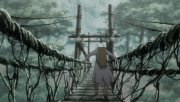 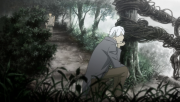  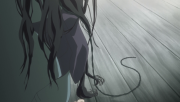 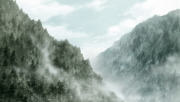 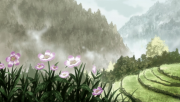 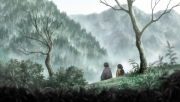 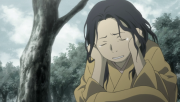 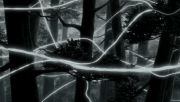 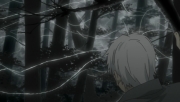   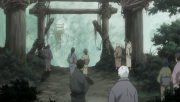 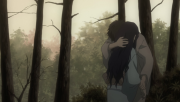 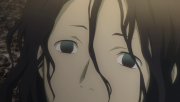  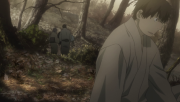  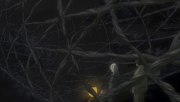 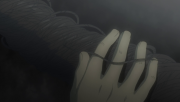 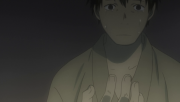  
EDIT: Just realized I didn't get 30. My bad. Will make sure to get the count right, next time. |
|||
|
|||
danilo07
 Posts: 1580 |
|
||
|
This show is so brilliant.In a typical Mushishi fashion,the creator took a seemingly simple story and tied numerous themes to it.They are tied in a logical and precise manner,so the story still maintains it's simplicity.
The main theme was the necessity of living in a society.The character in our story wants to protect his own in this case his family.He think that the best way to achieve that is through seclusion.But at the end he realizes that humans can only function if they are a part of society.There were also ideas about the harshness of nature,forgiveness and the acceptance of death.Moore on to the nature part.Though Mushishi often has ecological themes,the nature is never seen as the wholly good entity that is being destroyed by evil and selfish humans(a la Terrence Malick). No,nature is neither good or bad,it is neutral,irrational and uncontrollable.Like in this episode,people died and had to risk their lives because of the cruelness of nature but at the end spoiler[the nature paradoxically gave them pearls that saved them.] Also is it me or is every episode of Mushishi ending with some gorgeous shot?I mean the first season had a lot of those,but not in every episode. |
|||
|
|||
zawa113
 Posts: 7391 |
|
||
|
Season 2, Episode 1
I'm one of those dirty peasants who don't pay for crunchyroll, but I don't mind being a week behind either. I liked the new OP song. And it's more classic mushishi! I feel like most comments will be "it's more of the same, and that is awesome" I am curious if that stuff will make an appearance later in the show though. I should try drinking sake in other news. |
|||
|
|||
AiddonValentine
 Posts: 2920 |
|
||
|
More of the same is good enough for me.
|
|||
|
|||
Knoepfchen
 Posts: 698 |
|
||
|
I am very happy and grateful to have these little, yet so incredibly powerful stories back in my life. The second episode especially felt like we never left Ginko and his intriguing, frightening, poetic, and enchanting world. More of the same is a very good thing.
edit: Just watched ep. 3, the best of the new episodes for me so far. A poetic, and, in retrospect, powerfully moving intro followed by a touching story full of characters acting so organically around one another that they, as they always do with Mushi-shi, felt like complex, real, and breathing characters I can care about more than other characters I get to know for much longer than 20 something minutes. The little girl whose innocence is very much able to grasp, if not understand the sadness of the snow's inability to decide where it's going to fall, spoiler[the heart of her brother turned cold by grief, protected from death by snow falling under water and brought back to life by the sound of his friend's warm heartbeat, the snowflake turning into a final tear on his once again warm cheek] - hauntingly beautiful. |
|||
|
|||
|
Tony K.
Subscriber Moderator Posts: 12058 Location: Frisco, TX |
|
||
|
I've decided that a once-a-week entry format will be good and would prefer to post this on Fridays so that people can kinda' mull on the content over the weekend or possibly go back and forth to/from the thread if they've got nothing better to do with their time.
I see that people might still be hesitant to actually join the discussion, but, regardless, the thread itself is still getting a pretty decent amount of views. I believe I've gotten well over 200 views since my last post, and at least half of those were after the thread sunk down to page 2 of the Anime forum. Meaning people are interested in something. Whether it's my formerly overly-in-depth analyses of themes and symbolism, the detailed plot summaries, or the pretty pictures/screencaps that may or may not end up being used by other people for whatever purposes (wallpapers, plagiarized blogging, etc.), I guess I'm doing something right to attract so much attention. Anyway, this entry is a little late, as I ended up falling asleep quite early yesterday while under the drowsy side effects of Benadryl. I haven't had allergies this bad in years, and usually am not affected by anything other than large amounts of dust or fibers in the air like when I worked in retail. But now that I can breathe freely and don't have any annoying nasal drippage, I present you with: Episode 14: Inside the Cage (clicking this will take you back to the Index) ---------------------------------- Plot Summary Ginko stumbles upon a peculiar bamboo forest where a man claims to have been stuck there for 3 years. Upon eventually finding his way out of said forest, Ginko learns from the nearby village that an apparent and mysterious white bamboo tree lies somewhere in the middle of all the controversy. After finding the man once again, Ginko discovers that the white bamboo tree is a mushi called Magaridake, a mushi that takes the form of a singular bamboo tree and whose roots control the thoughts and actions of all its offspring throughout the forest as if they were limbs or extensions of itself. The man's wife, however, is a hybrid offspring of the Magaridake and a human woman, and his daughter, a result of their own procreation. And after further investigation, Ginko discovers that the water emanating from the mushi for all its children's sustenance has a unique power that restricts any one or thing from leaving the forest. Learning this truth, the wife feels torn that her husband was never able to leave the forest and go back to his friends and family in the village because of the mushi. She cuts the tree down, and the man is finally able to leave. But in his return to the village, so much fear and resentment had built up, that he and his daughter were no longer welcome. The man returns to the forest to live with his wife, until enough time passes without the mushi's presence (and water) that the wife and daughter eventually die. But upon burying their corpses and through a little passage of time, a new Magaridake sprouts in the forest, and two new children are born atop the graves of his family. ---------------------------------- Comments I almost thought this one would end up being as tragic as the last episode. I mean, the wife basically killed her parent for the sake of the husband to go back to village. But even then, everyone in the village shunned him because of their fear for the unknown, as is a normal reaction for any kind of mob mentality that doesn't understand something. Fortunately, with the nature of this particular mushi being very plant-like, I guess the life cycle of birth, death, and rebirth was a convenient characteristic to possess. A new Magaridake had sprouted, and the remnants of his wife and child became new offspring. And as typical of this franchise's universe, who's to say that these new vessels couldn't also have retained some former spiritual inklings of his family's souls? Plus, on the bright side they now had another "parent mushi" to provide the proper sustenance, so all wasn't lost after all. I think the prevalent themes for this episode were about "appreciating the present," "learning to let go of sentiment," and a little bit of "hope." The appreciation of the present is pretty obvious in the husband. Despite being stuck in the forest for years and not being able to see anyone from the village, he still had his wife and daughter. I mean, it could've been infinitely worse if the guy was stuck in the forest all by himself without nary a soul to talk to. But instead, he had what he presumably loved the most in life. And sometimes, that's just enough to happily get by. The idea of sentiment was a double-edge sword. On the one hand, sentimentality can add value to something, which, coincidentally, led to the aforementioned "appreciation of the present." But on the other hand, it can sometimes weigh you down, because for some personal reason you just won't allow yourself to move on. In this case, the sentiment for the husband caused his wife to cut down the Magaridake and essentially seal the fate of herself and their daughter. It was a bit of a weird cycle because the husband couldn't let the village go and the wife couldn't let the husband go, but it seemed to work out in the end. And that brings us to ever-present idea of hope. Given the nature of the series and its wholly mystical and unexplainable happenings (as such is life), there's always the chance that something good can occur, simply because the laws of physics and creation are so magical in this world. And what could've ended as another tragedy was, instead, a much more uplifting conclusion that gave hope for something better. People who keep asking/desiring/speculating/wanting more anime continuations and/or sequels could do well to learn from the themes in this episode  . .
---------------------------------- More wonderful 1080p screencaps. I originally ended up with 51, but narrowed it down to a mere 30: 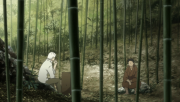 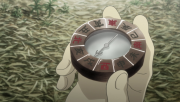 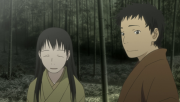 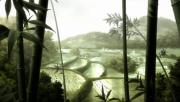 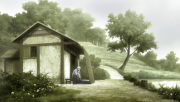 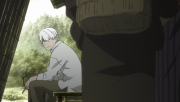 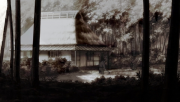 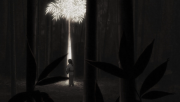 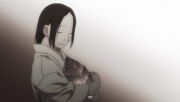 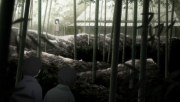    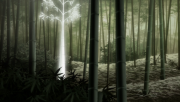 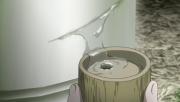 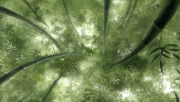 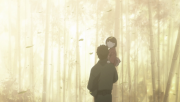 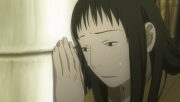 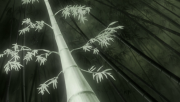  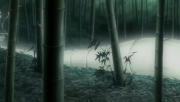 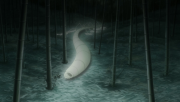   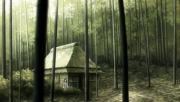 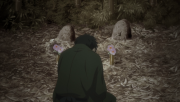 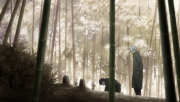 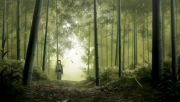 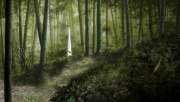 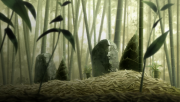
---------------------------------- Thanks for reading. |
|||
|
|||
|
Tony K.
Subscriber Moderator Posts: 12058 Location: Frisco, TX |
|
||
|
Quick question: would anybody be opposed to me hijacking this thread with my Mod powers and doing what I did with the first series?
Obviously, I can't do pics of the physical media since it's not out yet, and I doubt I'll be able to buy it ('cause it's licensed by Aniplex, which means it'll be way out of my budget). But I can at least do the whole master index (for my own posts, anyway), plot summary, comments, and screencaps thing to create some uber intellectual discussion material, right? |
|||
|
|||
Gina Szanboti
 Posts: 12725 |
|
||
|
Aniplex? Guess that means no continuation of the dub, huh. Oh well.
I'd love it if you used your magic powers on this series! I wish you'd used them to finish the first season past 13, but what you can, when you can is my motto.  I look forward to your (and everyone's) analyses of the new episodes, since everyone always sees what I don't. I look forward to your (and everyone's) analyses of the new episodes, since everyone always sees what I don't.
|
|||
|
|||
darkhappy1
 Posts: 495 Location: PA |
|
||
|
Episodes 13 and 14 are my favorite episodes of Mushishi, and the fact that they are sequentially paired together emphasizes how complementary they are to each other, at least thematically. (Granted, it's been quite some time since I last watched these episodes, so there may be some inaccuracy and vagueness whenever I attempt recalling details not mentioned in the summaries. I really shouldn't be procrastinating on my work that I've already procrastinated on for a week now, but oh well.)
Hesitation plays a huge part in both episodes. The consequences of hesitation is much more immediate and metaphorically visible in Episode 13, as one step backwards on either the actual wooden or mushi bridges means plunging towards a "delayed" death, as the body is animate only to return to the village and then inanimate with only the most essential life functions preserved for a limited amount of time. The immediacy of these consequences is appropriate to the objectives, both of which required escape. The first objective that was shared by Hana and Zen, which was to eschew the arranged marriage and live on a relationship solely based on love, required the escape to be prior to the actual marriage taking place. Once the marriage happens, future elopement with Zen would lead to more recognizable, dire consequences: abandonment of her husband (with whom she may have found bearable) and possibly children, spiritual uncleanliness, rescinded benefits her village would have already received once the marriage happened, and as a result the relationship between the villages worsens dramatically. To much would have been established. Therefore, hesitancy was not an option, but she hesitated. She chose the village over Zen, both the character and peace of mind. The second objective, which is only Zen's (Ginko doesn't count in my analysis), is to escape from the village. Now, this is more based on hypothetical and metaphorical, but if Zen was not to escape using the mushi bridge, then he would never escape. At this point in the episode, he has nothing tangible left to hold him back, for all he had was Hana, and even then only her shell. Even when the wooden bridge is repaired, he would still hesitate, and after more thought, be physically and mentally held back by his deep love for her. If I remember correctly, Zen did eventually reach another village after falling, albeit possessed by the Nisekagura of course. However, this could still represent how, even if he did escape to another village, he would still feel empty because he is unable to mentally move on from Hana. Perhaps the fact that Hana couldn't cross the wooden bridge and Zen couldn't cross the mushi bridge is significant in what sort of trial the two individually went through. For Hana, the consequence is very tangible to not just her but to the entire village. For Zen, it is a spiritual trial. Ironically, Zen is unable to achieve inner peace even when Hana (which means Flower), the person to whom he directed all of his earthly desires, has died. Hesitation led both Hana and Zen back to where they started, either situational or metaphorically psychological, but once they've hesitated and fallen, they've proven that they would be unable to commit to their escapes and are thus resigned to their fates. The fall is a realization of loss, and the eventual return to land is evocative of resignation. Once they return, they are left regretful, empty, and longing for something they will never be able to reach, visible through their lifeless condition and the constant stare towards the sun. On a figurative level, they have already died. Only when the Nisekagura congregate again are they freed from this condition, but that means that they have completely died. This would be a completely bitter interpretation of Episode 13, but the slight sweetness that could be gleaned from this interpretation of the episode also relies on the congregation of the Nisekagura to form a bridge. If one interprets the entirety of the episode from a Buddhist perspective (which I shall do with the very shallow knowledge of Buddhism I have, apologies in advance), then this is an episode in which the inability to be free of desire even when the desire has become practically unattainable prevents the characters from reaching enlightenment. The Nisekagura are the souls that continue to crave unattainable earthly desires, bound to a state of suffering until death. Then, the Nisekagura move out of their physical bodies and join to form a bridge for the purpose of leaving the mountain, the earth, and starting another cycle of reincarnation. (It isn't as if the Nisekagura are ever going to disappear, after all.) (... Wow, I've typed a bunch of words for hours (soooo slow at writing), and I haven't even covered Episode 14 and how they're related yet. I'll edit this post with more of my thoughts when I have a bit more time.) |
|||
|
|||
|
Tony K.
Subscriber Moderator Posts: 12058 Location: Frisco, TX |
|
||
|
Sweet. After all this time, there are still like-minded, long-winded thinkers like me roaming the Internet. It's great to see another "Mushishi-maniac" (I made that up just now, 'cause I couldn't think of anything else) that likes to interpret the possible deeper meanings within each of the stories.
You bring up an excellent point of the correlation between the bridges, morality, spiritualism, and allegory of how it all connects (that post is a good stopping point, by the way; please put your comments for episode 14 in another post; don't wanna make too big a wall of text to scare everyone off like I did before  ). ).
Getting to your proposed point of Buddhism, though, that's a very good approximation. From my general understanding of what my mother practices, the basic philosophy of Buddhism is to lead less so a material life, and more so a spiritual one. In this case, the elopement symbolizes a kind of physicality or material desire for Zen and Hana to run away and live together. But in doing so, the two of them would be turning their backs on their village, friends, and family. Eventually, their consciences may have become burdened with guilt, which, then, would possibly initiate a cycle of unhappiness that could've led to all sorts of scenarios and affecting their psyches in any number of ways later on. But because Hana hesitated, which, coincidentally, also caused Zen to hesitate, as you said, their fates were kinda' sealed from the very beginning, and it wasn't a happy ending. Perhaps their re-animation through the Nisekagura could be interpreted as a kind of purgatory, not as a representation of any particular religious concept, per se, but maybe as a "moral to the story" considering all the astute observations you made. |
|||
|
|||
|
Gina Szanboti
Posts: 12725 |
|
||
|
The new season made me try to recommend this to a friend, which in turn made me pull out my disks to watch again to remember what they would be watching.
In doing so, I've noticed that so far this season seems to be echoing the first season.
The series began with The Green Seat, in which the Mushi Banquet and kouki figured heavily, while this season kicked off with a sort of Mushi-shi banquet centered around kouki. S1 E2 was Eyelid's Light (which I hadn't remembered coming so early in the series), a story about a child, who had effectively lost her sight, separated from her family and community, while S2 E2 was also about a child, who had effectively lost her voice, separated from her community. S1 E3 was The Tender Horns, which like S2 E3, is about snow country and the people and mushi who live there. Further details reveal additional parallels in all of the above, but I won't dig that deep for now. Despite that, it doesn't feel like they've "run out of ideas" or anything like that, but rather that it might be a deliberate revisiting of previous themes. I mean, we don't think nature has run out of ideas because it keeps making Spring. I just wonder if they will continue like that for the rest of the series?
|
|||
|
|||
|
Tony K.
Subscriber Moderator Posts: 12058 Location: Frisco, TX |
|
||
|
I think season one covers roughly half of the manga. I own up to vol. 6 (out of 10), but stopped somewhere around 3 or 4 a looong time ago, so don't quote my guess as fact. But it wouldn't surprise me if they're picking the best of the remaining stories to animate into season two.
Not sure how many episodes they even plan on doing. But if my guess is correct, then I'm sure they still have plenty of source material to make an entire 26 episode season out of. Or heck, they could even do 12 or 13 for season two and save the other stories for more seasons down the road, considering how transitionally flawless the production seems to be. Still haven't watched any of season two, yet, but I guess I will on Monday. And if it's just as "the same" as it was (i.e like it never even left), then major kudos to the production team at Artland for being so stable. |
|||
|
|||
|
danilo07
Posts: 1580 |
|
||
|
They are planning on adapting everything left over.You are right Tony K.,the first season adapted 26 chapters out of 50 so that leaves with possible 24 episodes.From what I have heard,the second season is split cour,which means that 12 episodes will air in spring and another 12 will air in fall.
|
|||
|
|||


 |
All times are GMT - 5 Hours |
|
|
|
Powered by phpBB © 2001, 2005 phpBB Group