

This Week in Games
Talking Mega Man with Koji Oda
by Jean-Karlo Lemus,
Welcome back, folks! Being that we're living in Hell World, I take refuge in as much as I can. And the knowledge that Success has been really, really leaning into Izuna's cameo appearance in the upcoming Cotton Rock With You: Oriental Night Dreams gives me hope—not just that the upcoming Cotton game will be fun, but that Izuna 3 might be around the corner. Success has been organizing lots of local test plays for Oriental Night Dreams and even giving out some Izuna merch while they're at it (like a postcard of Izuna in a cute kimono). Waiting and seeing how this goes is about all I can do, sadly... Don't let us down, Success!
Nintendo Sues the United States Government
Crimeny, man. You read the headline, it's about as clear as it gets: Nintendo's taking the United States government to court. The reason: tariffs! The launch of the Switch 2 was already shadowed by the tariffs from the get-go; Nintendo had delayed the console's release in anticipation of the tariffs, hoping the situation would be able to resolve itself in some sort of peaceful manner. They had also taken precautions to relocate most of their manufacturing from China to Vietnam and Cambodia, in an attempt at side-stepping Trump's increasing belligerence towards China and its industry. This didn't help much, as Trump then enforced global tariffs to, uh, everyone—including Vietnam and Cambodia, which put the squeeze on Nintendo. Nintendo was able to squeeze past the situation (albeit by jacking up prices on Switch 2 peripherals and Amiibos), but it's been touch-and-go ever since, such that even Nintendo's President Shuntaro Furukawa admitted that they were keeping a close eye on the situation.
As of this past February 20, the United States Supreme Court found that Trump's tariffs are illegal, which puts the US$130 billion that the US has earned through these tariffs into question. And Nintendo has wasted no time in demanding that the United States not only pay back what Nintendo has paid in tariffs, but also pay interest.
Now, a point has to be made: while people are quick to illustrate this as "Nintendo being litigious," it's important to acknowledge that Nintendo isn't alone in suing over the tariffs; a great many other companies are suing as well, including Toyota, Barnes & Noble, Costco, Staples, Prada, Kawasaki Motors, and others. It's likely many others will join in as well. At the time of writing, Microsoft and Sony haven't filed lawsuits... but then, I doubt they'd want to. Sony and Microsoft alike boast fairly expansive government contracts, and likely don't want to do anything that would put those contracts at risk, like issuing a lawsuit against a particularly fickle government.
I don't know how this'll end. Granted, I don't think any of us could've seen this one coming. Maybe we'll return to precedented times soon...
Nihon Falcom Unearths Dragon Slayer As Part of 45th Anniversary
Nihon Falcom doesn't get quite enough reputation, considering how important it is in history. With the studio celebrating its 45th anniversary this year, that fact jumps out at me even further. Now, I'm complicit in this: it's taken me until extremely recently to actually play a Trails game—and I still haven't played Ys or any of Falcom's other long-running RPGs. And when discussing major figures like Monolith's founder and CEO, Tetsuya Takahashi, or composer Yuzo Koshiro, their early days working for Nihon Falcom also get overshadowed somewhat. It's a good time to brush up, and Falcom is ready to make us do it: as part of their 45th anniversary, they've announced a new Dragon Slayer project set for consoles.
【おしらせ】
日本ファルコム創立45周年を記念して、
コンシューマ向けの新作プロジェクトが始動!
=======================
🐉ドラゴンスレイヤー・プロジェクト🐉
=======================
続報をお楽しみに❕https://t.co/0gye2VlzZz#ドラスレ #DSP pic.twitter.com/elanemaZxv— 日本ファルコム (@nihonfalcom) March 9, 2026
With Dragon Slayer being such a central pillar of Nihon Falcom's output, it's fitting that they turned to this game for the studio's 45th anniversary. Also timely, since we haven't had a new Dragon Slayer game since 2012. While Dragon Slayer wasn't Falcom's first game, it's been their most fruitful... but I'm getting ahead of myself. The original Dragon Slayer was released on the PC-8801 in 1984, billing itself as a "new-type, real-type role-playing game." That's because it's one of the original Japanese action-RPGs, featuring real-time combat and exploration. You play as a humble hero whose house has been built in a cave full of monsters; your goal is to slay a massive multi-headed dragon and collect its crowns. But to do this, you need to get stronger. By collecting gold coins and precious gems and bringing them to your house, you can increase your health and strength; experience points don't actually make you stronger, only acting as a means to earn new abilities like magic spells or the ability to walk and attack diagonally. Easy enough, right?
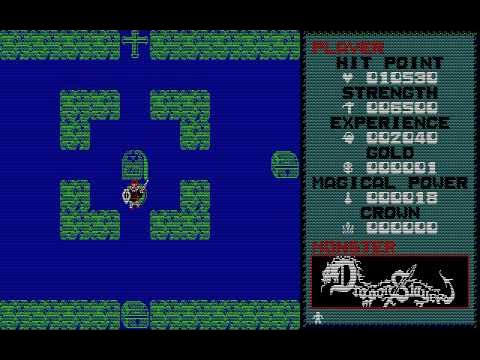
Well, there's a wrinkle to the formula: your hero can only hold one item at a time, which includes the gems he has to collect to get stronger. And there are other items he'll have to juggle to make his way around the various floors of the dungeon. There's a ring that lets him push objects around, like stone blocks, treasure chests, or even his own house. There's a cross that serves to block the paths of the monsters that roam the dungeon. There's the key needed to open the treasure chests. And, of course, you'll need a trusty sword if you want to inflict meaningful damage upon enemies. So while you're hunting down gems to get stronger, you also have to remember where these key items are, all the while being hounded by continuous waves of monsters zeroing in on your position. In a move inspired by Wizardry, you also have to mind certain monsters capable of sapping your hard-earned strength or stealing one of your abandoned items.
It's a surprisingly engaging system, once you wrap your head around it all. And it's fairly timeless; long-time players might even remember Dragon Slayer as a title released on Game Boy in 1990 (featuring an endless loop of Antonín Dvořák's Slavonic Dances No. 7 as the backing theme). Of course, the Game Boy version is not the ideal way to play Dragon Slayer, as it's functionally unbeatable; given how slow your movement is in the Game Boy version, and the lack of a save function, it's impossible to beat the game even with a fresh set of batteries. (I've also heard unsubstantiated claims that it's similarly impossible to do so even if you plug your Game Boy into an outlet, as it'll still take so long as to cause the Game Boy to overheat.)
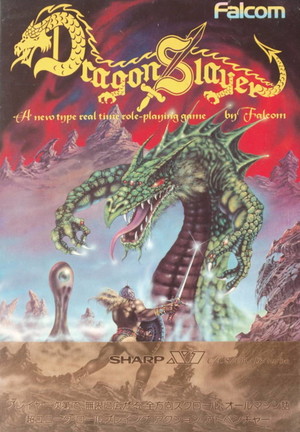
But it's here that the story goes deeper, because Dragon Slayer obviously became popular enough to earn sequels. But these sequels... went places. The very second Dragon Slayer title, for example, continued the action-RPG trappings but also introduced side-scrolling segments. The title of that game was Xanadu: Dragon Slayer II. This wound up being the birth of the long-running Xanadu series, which continues to this day courtesy of the Tokyo Xanadu games and the upcoming Kyoto Xanadu. This also includes the Famicom/NES Faxanadu, which was an original Xanadu title made for Nintendo's console (hence the name, "Fa-micom Xanadu"). Meanwhile, Dragon Slayer IV: Drasle Family also saw life on the Famicom and NES as Legacy of the Wizard, which shook up the formula by giving you a whole family of Dragon Slayers who had to wander into the dungeon and use their own unique abilities to find magic crowns. The fifth Dragon Slayer game took on the title Sorcerian and returned to the side-scrolling format while adding a new class function, allowing you to make a variety of characters that could each confront problems and obstacles in unique ways. There was also an aging system wherein characters would grow older and potentially die, which made maintaining your characters a challenge among all of Sorcerian's myriad expansions. The seventh Dragon Slayer, Lord Monarch, was a real-time strategy game. I skipped ahead to seven because the sixth game should be all too familiar to my readers: it was titled Dragon Slayer: The Legend of Heroes, and moved away from real-time combat for a turn-based system. This would spawn the Legend of Heroes series, which in turn eventually gave us The Legend of Heroes: Trails in the Sky, which itself has overtaken the Legend of Heroes series and given us the expansive Trails series. It's a bit like Namco's expanded universe revolving around Xevious, only as if Ridge Racer and Ace Combat had explicitly debuted with Xevious branding.
Now, most of these games have moved past the Dragon Slayer branding, but the action-RPG origins are still there, if you squint. Trails has gone on to incorporate more and more real-time action mechanics in its turn-based mechanics, for example. But once you step back and appreciate the wide web of long-lived spin-offs and sequels Dragon Slayer spawned, you really start to appreciate just how much Nihon Falcom has pulled off. And we haven't even started talking about stuff like the long-running Ys games. You can see why Falcom settled on a new Dragon Slayer game as their big project to commemorate their 45th anniversary; it's just in their blood! Details are currently short on what the project will actually entail, as only a teaser website is available. I can only hope the new game actually has Slavonic Dances No. 7.
NetEase Pulls Out from Funding Gang of Dragon
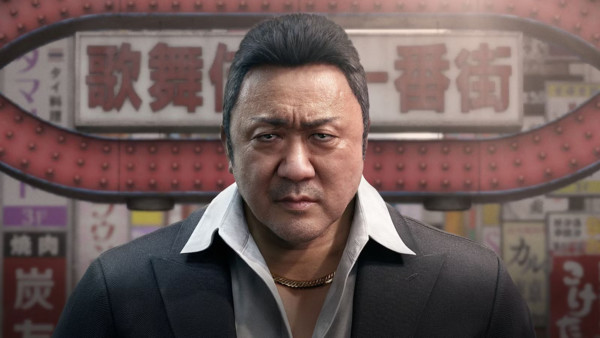
Not too long ago, NetEase and Tencent alike were going to any studio with cash in their hands and hope in their eyes, funding any project pitched by anyone with a pulse. But that money seems to have dried up, and Tencent and NetEase alike have taken knives to their projects. The latest casualty: Toshihiro Nagoshi and his eponymous Nagoshi Studios. While currently hard at work on Gang of Dragon, their new crime-drama starring Ma Dong-seok, NetEase has decided to pull the plug on Nagoshi.
It's this kind of attitude that has given so many such misgivings about NetEase and Tencent alike; we had already been around the block with Embracer group buying up every property and studio they could get their hands on, and taking them out back once it was clear they weren't going to start printing money. While things are dire enough in the gaming industry at large that I don't blame anyone for taking a deal in the name of getting something made, a deal from NetEase or Tencent is looking increasingly like the kiss of death for a studio. It's not even just the Japanese studios; Tencent had also shut down TiMi Montreal back in February before they even managed to release a single game, and NetEase similarly shut down Bad Brain Game Studios this past November.
It's now that we remember that NetEase also bought Grasshopper Manufacture, which recently put out Romeo is a Dead Man (and is in talks to reveal a new game later this year). All eyes are on the beloved house that Gōichi Suda and Travis Touchdown built... In the meantime, Nagoshi and company are scrambling to get funding, and per the terms set by NetEase, they'll only have enough funding through May of this year. All the best to them, let's hope Gang of Dragon manages to see the light of day..
Interview with Koji Oda and Shingo Izumi, Director and Producer of Mega Man Star Force Legacy Collection
With the Mega Man Star Force Legacy Collection due for release in the near future, fans and newcomers alike are possibly nursing a few pressing questions. We were lucky enough to get a chance to speak to Koji Oda and Shingo Izumi, the Director and Producer of the Star Force Legacy Collection, respectively, and ask them a bit about Mega Man's past, present, and future—especially its future...
Anime News Network: Were there concerns over porting the Star Force games to modern consoles, given their reception in the past?
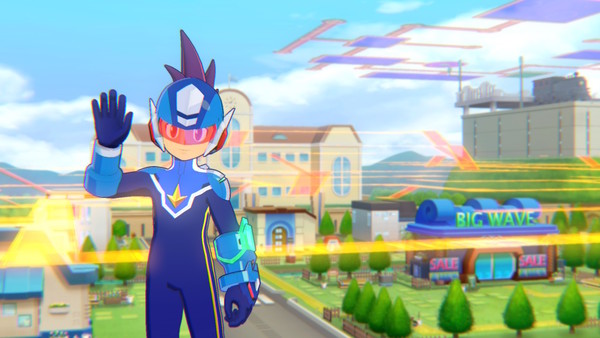
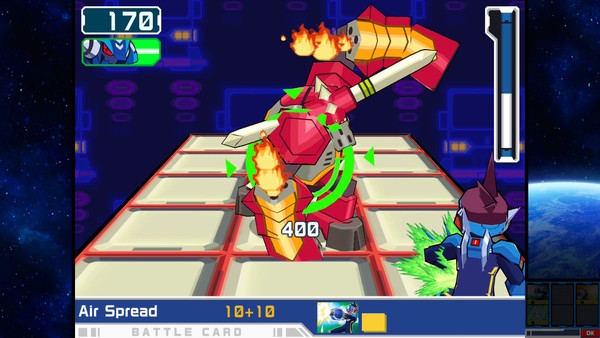
Koji Oda: In the original version, it was possible to dramatically alter Mega Man's abilities by obtaining toys that linked with the game, separately sold items, or cards that were distributed on a limited basis. However, because very few players were aware of the full scope of these features, even at the time, it could not be said that strategies or competitive balance were fully established. With this release, we've consolidated all of those elements into a single title. As a result, there is some uncertainty—but also excitement—that entirely new strategies and deck combinations may emerge, including ones even the original development team never anticipated.
ANN: For people who have only played the Battle Network games, what is it that you feel differentiates Star Force from Battle Network?
Oda: A wide variety of systems are available to bring out Mega Man's strengths and allow players to develop a Mega Man that is tailored to their own preferences, such as Tribe On, Noise Changes, toy-linked features, and bonus cards. Because the game was developed for Nintendo DS, whose hardware performance is significantly more advanced than the Game Boy Advance, both visuals and sound have been greatly enhanced.
ANN: For some fans, the true soul of the Mega Man games is in their side-scrolling platform nature. What, in your opinion, is the true soul of Mega Man, and how does that manifest in Mega Man: Star Force?
Oda: While 2D action games and RPGs differ as genres, we feel that the essence shared by all Mega Man titles remains the same: “By repeatedly taking on challenges, any obstacle can be overcome,” “If you identify an enemy's weakness, victory is always within reach,” and “There are multiple strategies and approaches to breaking through.”
ANN: There was a period in Mega Man's history in America where fans viewed him as a tougher, stronger character than he is depicted in Japan (such as with the American Mega Man cartoon, where he's a muscly teenager). Do you feel that this difference in perception has been an obstacle for the Mega Man franchise?
Oda: I don't particularly feel that way. Mega Man's origin lies in the story of a modified helper robot modeled after a young boy, and his relationships with other robots—almost like siblings—who were similarly modified and put into battle. That fundamental concept has been passed down unchanged, especially within the 2D-style Mega Man action games. During the era of 8-bit hardware, limitations in storage capacity and expressive power made it difficult to fully explain or convey this background, which meant much of that context was hard for players to grasp. However, as hardware capabilities have improved and the amount of information that can reach fans has increased, the series' origins and original intentions have become easier to communicate. As a result, I feel that even North American players are beginning to understand that being “tough” is not necessarily the most important aspect of Mega Man.
ANN: Previous Legacy Collections like the Battle Network collection offered fan service in the form of bringing back old voice talent as Mega Man.EXE for the menus; what can longtime fans expect from the Star Force Legacy Collection?
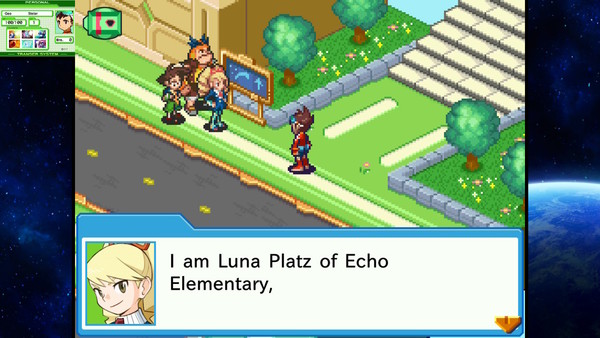
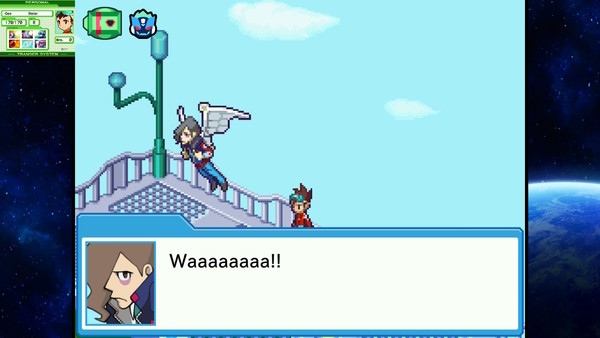
Oda: While the protagonists are Geo Stelar and Omega-Xis, we also explored ways to include the Brothers, who become part of Mega Man's power, as indispensable presences in some form. This includes the use of past voice actors as well as various gameplay mechanics and presentation elements. We hope players will enjoy discovering these details throughout the game.
ANN: There are some fans who look at the Legacy Collections as what is informally known as "the CAPCOM Test," where remakes are used to gauge interest for a possible new entry in a series. How would you assuage the concerns of these fans?
Shingo Izumi: We don't release collection titles specifically to explore the possibility of new entries. However, the reception of a collection does serve as one indicator when considering the development of new titles. That is why we believe it's important to deliver this game to as many fans as possible and to listen carefully to their feedback.
ANN: With the massive Success of the Battle Network Legacy Collection shipping over one million units, and the upcoming Star Force Legacy Collection, many fans are hoping for a possible Mega Man Legends Legacy Collection. Is such a thing currently in the cards?
Izumi: At present, we are fully focused on bringing this title to as many players as we can, so we are not yet thinking about what comes next. That said, if we consider future collection projects down the line, a “Mega Man Legends Collection” would certainly be one of the candidates.
ANN: Back when Battle Network and Star Force were first released, the number of network-connected devices in the games was a matter of fantastical exaggeration. But nowadays, the "Internet of Things" is commonplace, such that all manner of devices are WiFi-capable. Do you feel this makes Battle Network and Star Force more mundane?
Oda: The main theme of Mega Man Star Force is “bonds”—the connection between hearts and minds, so differences in device evolution have little impact. And I don't particularly feel that the series has become ordinary or lost its uniqueness.
ANN: Both Battle Network and Star Force featured collaborations with Konami's Boktai series; have there been any other franchises that you'd like to see collaborate with Mega Man?
Izumi: Most recently, Mega Man, Proto Man, and the Rush Roadstar have appeared in Sonic Racing: CrossWorlds, so we hope fans will look forward to that as well. Mega Man and Sonic share similarities like both being from side-scrolling action games with blue heroes, making this a highly compatible collaboration. We would like to continue exploring opportunities to collaborate with other franchises that share similar affinities.
ANN: Do you have any final statements for the Mega Man fans in our audience?
Oda: For those who enjoyed the game at the time of its original release, this collection makes it easier to discover something new, while also allowing newcomers to Star Force to enjoy the game at their own pace with confidence. To achieve this, we have included a variety of features that were not present in the original versions. These include rare Battle Cards that were only available to a limited number of players at the time, newly arranged background music that can be switched in-game, an art gallery containing over 1,000 pieces of material, and online battles where players can not only aim for the top but also customize their profile. There is no shortage of highlights that truly define this collection, and we sincerely hope you enjoy the world of Mega Man Star Force.
Let's wrap up with some quick tidbits:
That'll do it for this week. Being the first week without a Direct, I feel like I've actually managed a break for once! But we've still got plenty coming in down the pipes, so I hope you guys stay tuned. Spring hasn't even started yet, and our annual deluge of releases has yet to begin! Be good to each other. I'll see you in seven.
This Week In Games! is written from idyllic Portland by Jean-Karlo Lemus. When not collaborating with Anime News Network, Jean-Karlo can be found playing Japanese RPGs, eating popcorn, watching VTuber content, and watching tokusatsu. You can keep up with him at @ventcard.bsky.social.
The views and opinions expressed in this article are solely those of the author(s) and do not necessarily represent the views of Anime News Network, its employees, owners, or sponsors.
discuss this in the forum (12 posts) |
