

Spring 2026 Manga Guide
The Pipe Machine
What's It About?
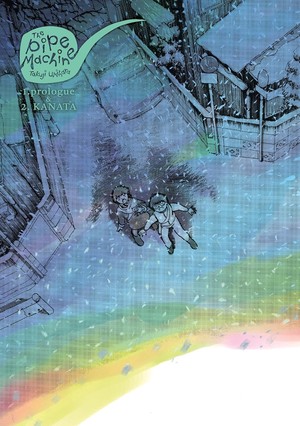
Saburo is a normal kid—or at least he tries to be, but the bizarre finds its way to him with alarming precision. First, a weirdo with a samurai haircut clad in just undies is hanging around his town, then his father builds an honest-to-god time machine that looks like a giant metal smoking pipe. A quick test of the pipe time machine flings the poor boy into the outer realms of space, where robots, space captains, and a girl who looks very similar to a friend at home await him.
The Pipe Machine has a story and art by Takuji Umihara. English translation is done by Dan Luffey and lettering by Marcos Vinìcius Riberio. Published by Manga Mavericks (March 3, 2026).
Is It Worth Reading?
Lucas DeRuyter
Rating:
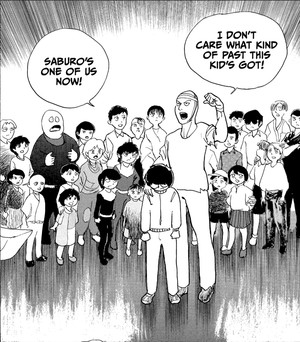
Takuji Umihara's The Pipe Machine, which contains a reference to H. G. Wells in its opening pages, is an overt work of pulp science fiction. Its focus on time travel is now somewhat ironic as the work today feels like something out of a time capsule. Originally released independently in 1991, and focusing on a story that Umihara had been ruminating on since the 1970s, this work's character designs, slower pacing, and minimalist backgrounds make it clear that this is an older manga. However, the story of the first two volumes of The Pipe Machine is timeless and generates the kind of intrigue that made pulp sci-fi such an iconic and inspiring genre of literature.
Much to his chagrin, Saburo Morita's scientist father is building a time machine. After six years of work with only the machine's smoking pipe-like shape being finalized, Saburo comes to view his father as a crackpot and is committed to being dependable and diligent to make up for his father's frivolity. However, on one snowy January day in 1980s Japan, the secrets of time travel begin to unfold with the appearance of a nearly naked buff man and an apparent alien who has hidden four artifacts critical to winning a galactic war. With the guidebook the alien provides, Saburo, his father, and his classmate Kyoko Aoki travel to the year 2050 to obtain one of these artifacts, only for Saburo to be trapped in a dystopic future thanks to the actions of the nearly naked man who's also pursuing these artifacts.
That more or less covers the events of the first two volumes of The Pipe Machine and, if it doesn't sound like much happens in them, you'd be right. This manga is very much a slow burn and prioritizes curating its atmosphere, establishing its characters, and fostering the relationships between them over economical storytelling. While this quality might be off-putting to some, I found it surprisingly refreshing! Perhaps this is an affordance of this originally being a self-published work, but I appreciate how it creates such a specific tone across these two volumes rather than immediately trying to hook the reader with some kind of gimmick. This slower pacing also gives The Pipe Machine a palpable sense of dread that I rarely experience in manga, and I find myself enamored with how this work feels distinct within the medium of manga but incredibly familiar within the broader genre of science fiction.
This being a work first published in 1991 and only now available to read in the US, The Pipe Machine also contains some social commentary that's aged interestingly. The future dystopia that Saburo becomes trapped in is overtly informed by the decay of the Earth's ozone layer, creating a world that's perpetually blacked out by smoke to protect humanity from the sun's radiation. While Umihara uses this setting to explore themes related to class and tribalism, I couldn't help thinking about how the ozone crisis was functionally solved by humanity between this work's first being published and it becoming available for me to read. A manga rarely makes me feel like I'm getting a peek into the past and the issues that inform the creatives of that era, and I really appreciate that quality of The Pipe Machine.
The age of The Pipe Machine does cut both ways, though, and it's a little tough reading a work where the antagonist is an equal parts comical and intimidating man simply called “a weird foreigner” during a time when nationalistic and xenophobic rhetoric against immigrants is on the rise in Japan. That being said, there's far more material in The Pipe Machine that endears me to the work than makes me balk, and its simplistic art style lends itself well to dramatic expressions that are used often for hilarious and dramatic effect. The Pipe Machine is something special that I'm sure will prove a breath of fresh air for manga readers and a familiar comfort for science fiction fanatics.
The views and opinions expressed in this article are solely those of the author(s) and do not necessarily represent the views of Anime News Network, its employees, owners, or sponsors.
discuss this in the forum (9 posts) |

back to Spring 2026 Manga Guide
Seasonal homepage / archives