

This Week in Mobile Games
CTW CEO Ryuichi Sasaki Talks the Advantages of Browsers in the Anime Game Wars
by Josh Tolentino,
Hello, and welcome once more to another installment of This Week in Mobile Games, your actually-biweekly look at the latest in gaming on phones, tablets, and other mobile devices.
In our first installment, I noted that while the line between mobile games and "regular" games on PCs and consoles is thinner than ever before, an appearance on the likes of Android and iOS serves as a good baseline requirement for being considered a "mobile game". That said, strictly adhering to such criteria overlooks the humble browser game, which played a significant role in the development of modern mobile games.
In the earlier days of smartphone adoption, phone and tablet hardware still lagged considerably behind any kind of dedicated gaming device in terms of delivering more than the sorts of games that'd be classified as minigames in your average RPG. On the other hand, mobile web browsers on those early smartphones were evolving quickly and matched the capabilities of desktop browsers in short order. Thus, browser games playable on phones and desktops (and with minimal thirst for then-costly mobile data) made for a crucial bridge experience, allowing people to play connected, complex game types without worrying about their low-spec smartphones and tablets.
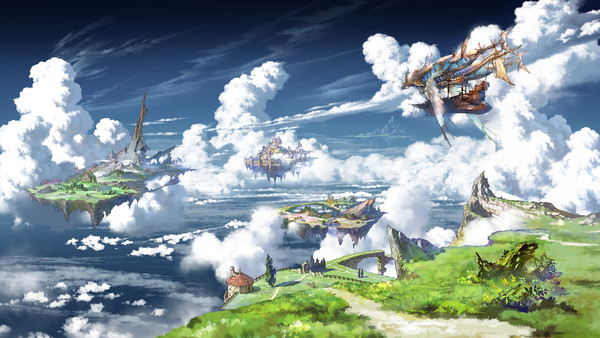
Developers of browser games operating on portal sites also got away with more experimental designs that bypassed the review process governing platforms like the Apple App Store and Google Play. Even today, browser games hosted on platforms like Itch.io, CrazyGames, and more are a bastion of everything from casual free time-wasters to MMORPGs and experimental indie developments. Several notable Japanese game brands also began life as browser games, including Cygames' Granblue Fantasy and Kadokawa Games' Kantai Collection.
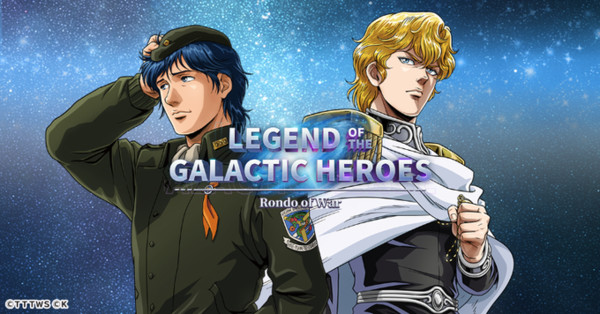
One growing player in the browser game space is CTW, which operates G123, a browser game platform hosting dozens of games. Unlike some of its rivals, G123's stable of games is almost exclusively focused on anime tie-in games, ranging from popular isekai series like Reincarnated as a Sword and So I'm a Spider, So What?, to niche and classic titles like Legend of the Galactic Heroes, Monster Musume, Queen's Blade, and Peter Grill and the Philosopher's Time. New games are being added regularly, with the pre-registration list promoting upcoming releases based on Highschool of the Dead, Kakegurui, Cute High Earth Defense Club LOVE!, and, unusually, The Apothecary Diaries. The sheer breadth of offerings can be surprising, particularly to an old guy like me who recalls "anime tie-in" being synonymous with bad fighting games, platformers, or Dynasty Warriors knock-offs.
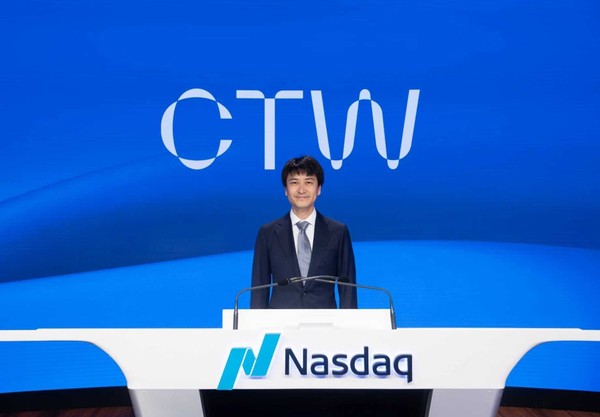
As it happens, I had the opportunity to ask a few questions to CTW's Founder and CEO Ryuichi Sasaki, and get his insight on topics like the selection process for adapting anime series into games, how G123 works as a platform, the advantages of browser games over more traditional hardware-based gaming platforms, and more.
How does CTW go about selecting new anime series to adapt into game form for G123?
Ryuichi SASAKI: At CTW, our starting point is always respect for the original work and its fans. When we consider a new anime series for G123, we look at several factors in combination: the strength and longevity of the IP, how engaged and diverse the fan community is, and whether the world and characters lend themselves naturally to interactive experiences.
Equally important is our relationship with the rights holders. We work closely with Japanese creators and licensors to ensure that any adaptation aligns with the spirit of the original series. Our goal is not simply to “gamify” an anime, but to create an experience that feels like a natural extension of the story and universe fans already love.
Some G123 titles are based on older or niche anime. What led to the decision to adapt these shows into games?
SASAKI: One of the strengths of anime as a medium is its long tail. Series like Legend of the Galactic Heroes or Magical Circle Guruguru may not be new, but they have deeply loyal fanbases that span generations. In some cases, these fans have been waiting years for new ways to engage with the IP.
For niche titles, we often see an opportunity to serve communities that are passionate but underserved by mainstream game publishers. Browser-based games allow us to reach these fans efficiently and globally, without the high barriers associated with traditional console development. In that sense, G123 is well-suited to giving both classic and distinctive anime a new life.
Please describe the development process at G123. Does CTW maintain internal studios or teams?
SASAKI: CTW does not operate game development studios, nor do we create or update in-game content ourselves. G123 is a platform business.
Game development and in-game content creation are handled entirely by third-party developers working in collaboration with the relevant IP holders. CTW's role sits in the middle of the ecosystem; we provide the platform infrastructure and services that allow those games to be delivered efficiently and reliably to players worldwide.
Internally, our teams focus on platform technology, security, payments, localization support, compliance, customer service infrastructure, and overall user experience. By separating game creation from platform operations, we are able to scale globally while allowing developers and IP holders to focus on what they do best: making great games that stay true to the original works.
What are the advantages of G123's browser-based experiences compared to traditional console or PC games?
SASAKI: The biggest advantage is accessibility. G123 games can be played instantly on a browser, without downloads or high-end hardware. This lowers the barrier to entry and allows fans to jump into the experience wherever they are, whether on PC, tablet, or smartphone.
From a design perspective, browser-based games are also well-suited to long-term engagement. They allow for frequent updates, seasonal events, and community-driven features, which are especially important for anime fans who enjoy following characters and stories over time.
Are anime creators involved in the game development process?
SASAKI: Yes, anime creators and IP holders play an active and essential role throughout the process, particularly in safeguarding the integrity of characters, stories, and overall IP representation.
At CTW Cayman, we do not develop games ourselves — we do not handle coding, design, mechanics, or programming. Instead, we work closely with IP holders to facilitate their involvement and collaborate with experienced, independent external game development studios that carry out the actual game creation.
In practice, CTW coordinates smooth communication between IP holders and developers, manages content review and approval processes, and helps ensure the final games faithfully reflect the original works while meeting high-quality standards.
The core development work, from creative direction and art to technical implementation, is fully managed by our professional third-party developer partners, with final creative and IP approvals always resting with the rights holders. This collaborative model allows us to deliver respectful, high-quality adaptations that fans around the world can enjoy.
How is CTW handling localization for global audiences, especially English-language players?
SASAKI: Localization is a core part of CTW's platform services. Historically, we have relied on in-house localization experts who work closely with third-party game developers and IP holders to support high-quality localization across multiple languages.
In recent years, we have also developed and adapted internal AI-based tools to support the localization process. These tools are used to improve efficiency, consistency, and quality control, particularly in areas such as terminology management and workflow support. Human expertise remains central, with AI used as a support tool rather than a replacement.
As part of our global expansion strategy, we are further strengthening localization by focusing on key markets. For now, that focus is on English-language players in the U.S., and we plan to enhance our capabilities by hiring local experts with native-level language and cultural insight to better support those audiences.
What challenges did the team face in adapting Doraemon Comic Traveler into a browser game?
SASAKI: Doraemon is one of the most iconic and beloved franchises in Japan, which brings both opportunity and responsibility. One challenge was ensuring the game appealed to a broad audience, including families and long-time fans, while still offering engaging gameplay.
We focused heavily on tone, accessibility, and respect for the original characters. Translating Doraemon's sense of imagination and warmth into an interactive format required careful design and close collaboration with the rights holders.
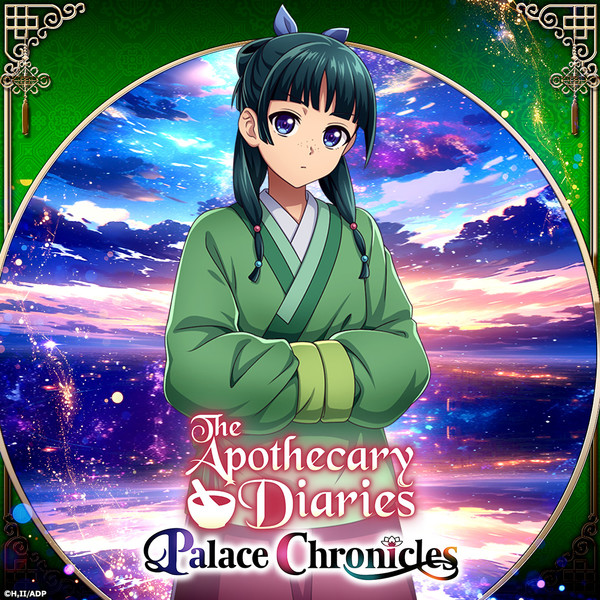
How did the team approach adapting The Apothecary Diaries into a game?
SASAKI: The Apothecary Diaries is unique because its appeal lies in mystery, observation, and character relationships rather than action. Instead of forcing conventional mechanics, the team focused on gameplay systems that emphasize investigation, narrative progression, and decision-making.
Our approach was to let the source material guide the design, rather than the other way around. This philosophy allows us to adapt a wider range of anime genres while staying true to what makes each series special.
What message do you have for players concerned about live service game shutdowns?
SASAKI: We understand these concerns. At CTW, we approach each title with a long-term service mindset. Our browser-based model allows us to operate games more efficiently and sustainably than many high-cost development models.
While no live service can promise permanence, our focus is on stability, responsible operation, and clear communication with players. We aim to build services that players can enjoy over time, not short-lived experiences.
The use of AI in games has become a hot topic lately. What role does AI play in CTW Cayman's operations and development?
SASAKI: At CTW, we view AI as a powerful operational tool, but not a standalone solution. Its effectiveness ultimately depends on how people apply it and integrate it into real-world workflows. Our focus has been on building AI-backed systems that meaningfully support our teams and partners, rather than deploying AI for its own sake.
We have developed and adapted a suite of AI-backed tools that support key platform operations, including creative asset management, advertising operations, customer support, localization, task management, and other internal management functions. These tools are designed to reduce repetitive and time-consuming work, helping us launch games more efficiently, operate the platform smoothly, and deliver more consistent experiences to players.
AI at CTW is used to amplify human judgment, not replace it. Creative direction, game design, and in-game content remain firmly in the hands of game developers and IP holders. By combining experienced teams with purpose-built AI tools, we believe CTW is well-positioned to unlock the practical value of AI within a complex, global platform environment.
Do you have any final words for fans and readers?
SASAKI: We are grateful to the fans who have supported G123 and the anime creators who trust us with their work. As we expand globally, our commitment remains the same: to respect anime culture, collaborate closely with creators, and deliver accessible experiences that fans around the world can enjoy.
Thank you to CTW and Chike Nwanie for arranging this interview, and to Ryuichi Sasaki for his comments and insights.
Granblue Fantasy's Steam Release Hit With Preemptive Soshage Curse
Speaking of browser games, I mentioned that Cygames' Granblue Fantasy, for years one of the best-known and now longest-running "anime gacha" games around, is getting an official release on Steam for the first time. The one wrinkle to this new development is that when it launches on March 10th, it'll only be for players outside Japan. Additionally, players currently playing won't be able to link their current Granblue Fantasy accounts to the new Steam version, meaning they'll have to start fresh.
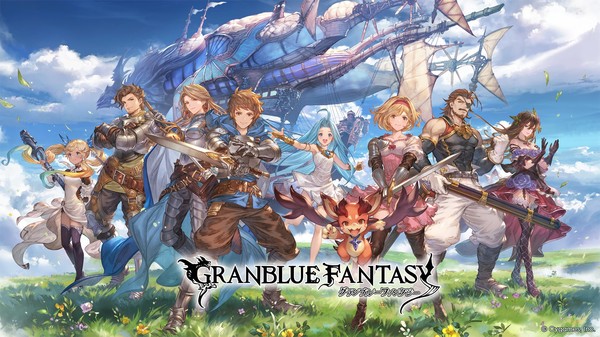
Naturally, this disappointed a number of longtime fans who are playing the Japanese version, which happens to have a full, very high-quality English-language localization just tucked in alongside it despite never having an official international release. Some wondered why, given how much they'd already spent on their current accounts over the years, why Cygames might "force" them to start over just to be able to buy things through Steam.
As it turns out, buying things through Steam might be the very reason account crossover isn't possible. As explained by Reddit user Jedmund, Granblue is one of the last remaining successes from the early wave of Japanese Soshage (short for "Social Game"), a type of browser-based game that allowed players to play using accounts established on various third-party social networking platforms, including Yahoo! Japan, Mobage, DMM, and others. Those platforms also have their own infrastructure for account management and microtransaction payments.
Thus, in addition to potential legal or technical barriers to allowing account linking and microtransaction purchases across international lines, those companies have little incentive to give up their cut of players spending money on Granblue Fantasy to Steam. It's not unlike similar complications that affect cross-platform multiplayer games like Fortnite and Genshin Impact. If you play Genshin on a PS5 you can play on the same account on an Android phone (provided you've linked them properly through your HoYoVerse account), but any Primogems you've purchased on the PS5 won't show up for you to use while you're on your phone.
So while Granblue veterans might not be able to reap the benefits of a Steam-mediated gem purchase they can still at least enjoy playing the game as they have for years now. Granblue Fantasy's debut on Steam will be more for new players (or perhaps those who hopped on to the Cygames train through Umamusume).
Honkai Star Rail's Stellaron Hunters Hunt at Fortnite in About A Fortnight
HoYoVerse announced that its space fantasy RPG Honkai Star Rail will receive its next major update on February 13. Called "No Aha at Full Moon," the update moves the Trailblazers' adventures from the vaguely Greek-themed world of Amphoreous to the new world of Planarcadia, a place where "clout is supreme," to engage a divine contest called the Phantasmoon Games, competing for the right to become an "Aeon" (Star Rail's term for "space god").
As with previous updates, the 4.0 storyline will include new playable characters, including the Xianzhou general Yao Guang and Sparxie, who looks like an inverted-color version of the existing character Sparkle. Notably, her name in Japanese and Chinese is effectively flipped from Sparkle's (火花 versus 花火). The trailer also teases further involvement from characters Blade and Silver Wolf of the Stellaron Hunters, who really seem to get around the way they show up everywhere.
And speaking of showing up everywhere, they're also going to show up on The Island, thanks to an upcoming crossover between Honkai Star Rail and Fortnite. On February 26th, Fortnite players will be able to acquire character skins based on Kafka and Blade.
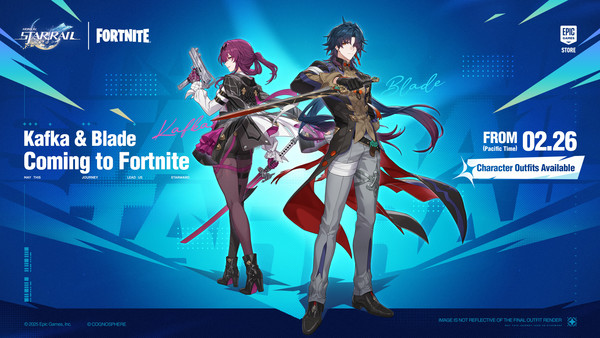
I haven't played Honkai Star Rail or Fortnite in a while, but I'd say Kafka's a good choice for Fortnite as she's quite popular and one of the only characters in Star Rail that uses a recognizable firearm. By contrast, it'll be amusing to see Blade, whose name is Blade, traipse around the island looking for the best assault rifle (right alongside fellow gun-lovers Son Goku, Superman, and the Xenomorph).
Let's close out this edition with a few more bits of news.
- Goddess of Victory: NIKKE will launch its next crossover event on February 12th, this time hooking up with none other than anime series Lycoris Recoil. Protagonists Chisato Nishikigi and Takina Inoue will appear on the in-game gacha banner as playable SSR units, while players can claim a free SR version of Kurumi by participating in the event. Premium cosmetic skins will also be sold via the in-game pass system, putting Chisato and Takina in band outfits. NIKKE's no stranger to crossovers, with its first-ever crossover event adding Makima, Himeno, and Power from Chainsaw Man, and over the years hosting crossovers with the Rebuild of Evangelion films, Re:Zero, developer SHIFT UP's own Stellar Blade, and most recently, Resident Evil. Interestingly enough, NIKKE's crossover with NieR:Automata also holds the distinction of adding the game's only playable male character to date, since the Machine Lifeform Pascal (who was added as the free giveaway unit) identifies as male.
- While Honkai Star Rail's next update seems focused on a public competition for fame and clout, it just so happens that Zenless Zone Zero's version 2.6 update, "Encore for an Old Dream," zooms in on just that theme, as well. Launched on February 6th, the 2.6 storyline centers around the idol trio Angels of Delusion. One of its members, Aria, is a robot that wears a holographic skin that makes her look human, while her partner Sunna composes music for the group. Both are the new playable characters debuting alongside the update, and HoYoVerse has even gone to the step of promoting the update by encouraging players to tune into "official" Angels of Delusion streams on YouTube and TikTok throughout the month of March.
- Kuro Games launched version 3.1 of Wuthering Waves on February 5. Titled "For You Who Walk in Snow," the update brings new main story content and the new playable characters Aemeath and Luuk Herssen. Notably, version 3.1 is being billed as a new jumping-on point for curious new players, bundling several streamlining-focused improvements to the leveling and character progression process, as well as performance improvements on PC and mobile. If I do end up making time for WuWa, I'd be glad for the performance improvements. I bounced off the game back at launch because it made my phone hotter than I'd like, and the PC client hard-crashed my computer.
- Right on time for Lunar New Year, Infold Games set a February 10 opening date for Love and Deepspace's Spring event, "Mortality's Tenderness," featuring a new set of interactive memories featuring the game's men dressed in traditional Chinese clothing.
- The version 3.2 update for Persona 5 The Phantom X launched on February 5, bringing the finale of Chapter 3's main story, as well as a new version of Riko "Wind" Tanemura. Notably, the Japanese and North American versions of the game received the update on February 5, but the Southeast Asian version will get it several days later, with players in those regions gaining access to version 3.2 around February 13.
- Kaiju No. 8 The Game is celebrating its half-anniversary, marking six months since its global launch. The celebration includes free gacha rolls, Chapter 8 of the main story, and a new premium character, Spear Sagan (i.e. a spear-wielding version of Sagan Shinomiya). Back when the game was first announced I wondered how they'd squeeze a lot of variety out of a show where most of the characters wear very similar uniforms, but it looks like
- Arknights (the original one, not Arknights Endfield) put up a dramatic teaser for its upcoming crossover event with BanG Dream! Ave Mujica. You might think this is a rather out-of-left-field collaboration between the gacha tower defense game and the famously intense girls' band definitely-not-a-party, but Arknights hosts a number of characters from games like Rainbow Six Siege to Delicious in Dungeon and Monster Hunter.
That'll be all for this installment! By the time the next column goes up, I'll be (temporarily) free of day job crunch and hopefully on the way to breaking free of Arknights Endfield's starting areas. Charge your phones, and I'll be back in a couple of weeks.
discuss this in the forum (1 post) |
