

The Most Anticipated Anime of Winter 2026
by The ANN Editorial Team,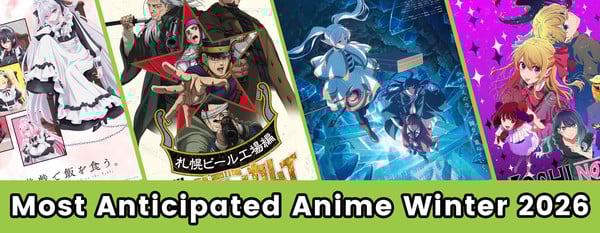
What anime will bring the heat this winter? January 2026 is shaping up to be the season of major sequel returns. While one sequel starring a fan-favorite elf is set to make its grand return alongside the highly anticipated teenage sorcerers of Jujutsu Kaisen, there are up-and-comers worth keeping on your radar. Journal with Witch is a quiet drama centering on an introverted writer after she takes in her recently orphaned niece, and Hana-Kimi, a shojo phenomenon from the late '90s, is finally getting its animated adaptation.
Below are the anime our critics are most looking forward to next month. Read on below to find out why you should add them to your watch list.
10. My Hero Academia: Vigilantes Season 2
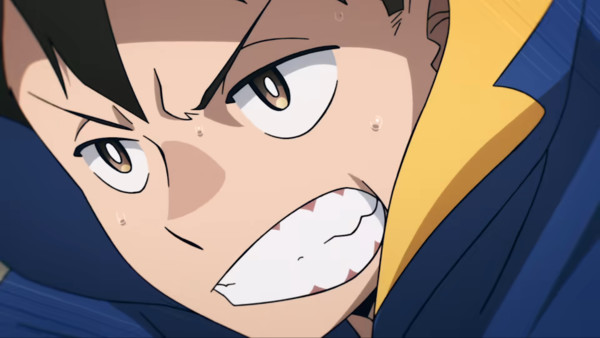
With an almost ten-year run having recently ended, what are fans of excellent shonen anime My Hero Academia to do? Don't worry, instead of crying into their official All Might hoodies, fans can be reassured that prequel/spin-off anime Vigilantes returns in January 2026 for a second season. Based on the fifteen-volume manga by writer Hideyuki Furuhashi and artist Betten Court (who both currently work on the well-received Spider-Man: Octo-Girl manga), the story is set several years before the main events of Kōhei Horikoshi's My Hero Academia.
Handily split into three main story arcs, I expect this second season to adapt the middle storyline, leaving the exceedingly intense final arc for a probable third season. Upcoming episodes should show vigilante/unlicensed hero protagonist Koichi Haimawari coming into his own as his powers develop after his “master”, the Batman-like Knuckleduster, leaves him to his own devices. Meanwhile, super-cute pink-haired part-time vigilante/idol singer Pop Step continues to pursue her singing career. I adore Pop Step.
This part of the manga delves into the backstory of future UA teacher Shota Aizawa, one of the professional heroes with whom Koichi develops the closest working relationship. Expect to see a disaster movie-esque action spectacle when Koichi must step up to protect thousands of people and help out the professional heroes fend off attacks from a mysterious enemy.
While the first season seemed to mostly resolve the background plot involving quirk-enhancing drug “Trigger”, that was really only the beginning of the full story, as the true antagonist begins to make their influence felt. Events occur in this arc that reverberate all the way to the eventual conclusion.
Animated by studio Bones, who did such an incredible job of the parent series' adaptation, I have full confidence that they'll do justice to this spin-off that far exceeded expectations in print form. In my recent review of the entire manga, I stated that, at times, I enjoyed the spin-off even more than the original. Vigilantes succeeds not only in telling its own very compelling story, but also in the many links to the original series only proliferate as it progresses, making this anime essential viewing for any MHA (or superhero genre) fans.
—Kevin Cormack
Golden Kamuy Season 5
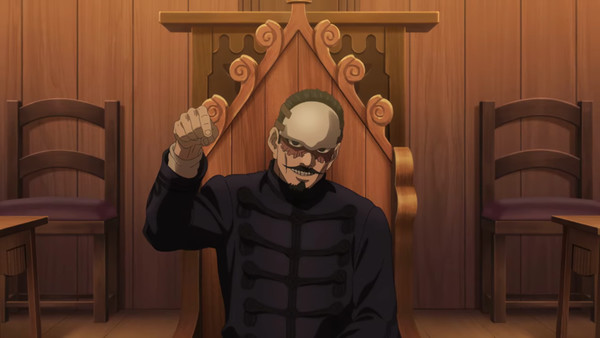
For nearly eight years now, Golden Kamuy has been the peak “if you've heard of this anime and think you might like it, you should really read the manga instead” anime. With the first four seasons animated by the fledgling Geno Studio, and the latest fourth season by Brains Base being plagued by tragedy, the Golden Kamuy anime is charitably described as having “limited” animation. This has been a shame as Satoru Noda's Golden Kamuy manga is easily one of the most hilarious, intense, impactful, and authored works ever put to fiction. I am desperately hoping that, after what will have been two and a half years of waiting, the Golden Kamuy anime manages to stick its landing and deliver a finish that's as big and boisterous as the closing chapters of the manga.
Best described as a spaghetti western set in turn-of-the-century Hokkaido, Golden Kamuy follows various factions attempting to find a ridiculous amount of gold by collecting pieces of a map that are tattooed across the bodies of some of the most dangerous criminals of the era. It's masterfully written, with characters who always feel motivated in their actions and a central narrative that never fails to grip its audience; on top of that, it's extremely violent, gay, and ultimately a celebration of the indigenous Ainu culture at its center. What starts as a story about the war hero dubbed “Immortal Sugimoto” and the Ainu girl Asirpa going on a treasure hunt to do right by the people they care about rapidly transforms into a tale that's as human as it is intriguing.
Golden Kamuy is also one of the few long-running manga that manages to completely and fully stick its landing, and this fifth season is set to bring some of the best material in the manga to the medium of animation. Just about every character in this show is a weird little freak or idiot, and there's a solid chance I might cry repeatedly as I say goodbye to them all over again in this final season. This show has burned me countless times before with its bad CGI bears, poorly composed shots, and stilted animation, but I can't help but root for this anime in its final return. I know I'm probably going to be disappointed and reach a point of frustration with this anime that I end up rereading the last couple arcs of the manga instead, but I want to believe that good things are possible and that the Golden Kamuy anime will finally live up to the manga's hype.
—Lucas DeRuyter
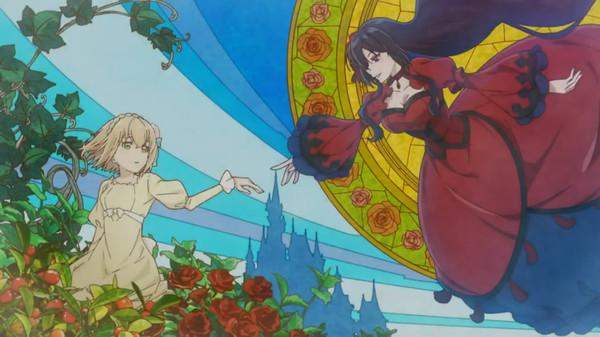
Villainess stories are a dime a dozen right now. They have been for the past few years. But The Holy Grail of Eris is not a villainess story – or at least, not in the way we've become accustomed to the genre. Set in a world awfully similar to our own, the story is more of a mystery than anything else. Heroine Constance Grail, whose family motto is always to be “sincere,” trips her up more than she'd like to admit. She is attending a ball one evening when she suddenly sees Scarlett Castiel… whose execution she watched ten years ago. Scarlett was a high society lady deeply involved in both social and political circles, and she was executed for the death of a member of her coterie. But Scarlett says that she didn't do it, and she's going to use Connie to prove it – and to find out what really happened ten years ago.
The strength of this story lies in how it subverts what we've come to expect from the villainess story and how it unfolds as a compelling mystery. Ten years isn't a long time in the scheme of things, and those who knew Scarlett are still alive, still involved, and still coping with the fallout of what happened. Connie, at seventeen, is the same age Scarlett was when she was killed, and the way she navigates everything makes readers (or viewers, now) reevaluate everything that Scarlett saw or did. Scarlett saw herself as the wealthy daughter of a powerful nobleman, as the center of everything. But is that the hubris of seventeen? Or a truth Connie can't even begin to imagine herself living?
The Holy Grail of Eris is, hands-down, my favorite light novel series. From its carefully drawn European setting, roughly analogous to early 19th-century England, to its mystery and what it has to say about women's roles in society (as seen by men), it's a cut above most similar works. Even if the anime only captures a fraction of its appeal, it will be worth watching.
—Rebecca Silverman
7. Oshi no Ko Season 3
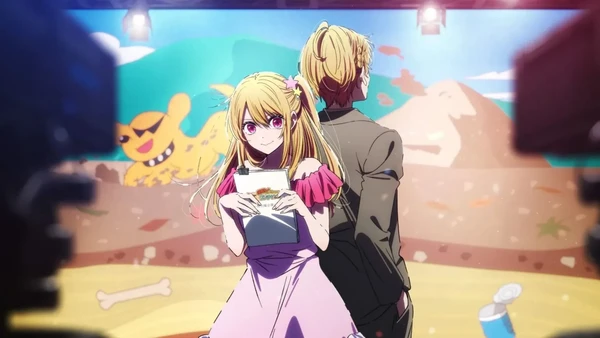
It feels like there's been less hype building up for Oshi no Ko Season 3 than there was for Season 2. Given how great Season 2 was, you can't say it's the fault of anything the show itself has done thus far. I wouldn't even blame the marketing, though there is definitely a shift from being the single most popular show on HIDIVE to just one of a larger crowd of major sequels on Crunchyroll.
No, the big issue facing the Oshi no Ko anime is that the manga ended shortly after Season 2, and everyone I know who has read it utterly hates the ending. Having not read the manga myself and somehow managing to avoid spoilers for what's so bad about it (I've been assured it's not as bad as the ending of the Bunny Drop manga, at least), I'm approaching the new season of the anime with slightly more caution than I would have otherwise.
But otherwise? Of course I'm excited for more Oshi no Ko! How could I not want to see what happens next after the big reveal of Aqua and Ruby's murderous father? I've loved the show's unique combination of mystery/revenge plot and in-depth exploration of different facets of the Japanese entertainment industry so far, and it looks like Season 3 will have plenty more where that came from. Based on the trailer, it appears that somehow Pikachu is involved? And there's a search for cosplayers? And more good Kana content, which is always welcome! Whatever's going on, I'm intrigued. Dōga Kōbō's animation production looks great as usual, and the soundtrack is guaranteed to give us some of the best earworms of the new year. There's still a way to go before the part everyone hates, right? I'm ready to keep enjoying this anime for as long as I still can (and who knows: maybe the adaptation will have the freedom to improve the ending?).
—Reuben Barron
6. Hana-Kimi

Hana-Kimi ended up on my “Most Anticipated” list halfway out of sheer principle. After surviving on scraps for the better part of a decade, the fall of 2025 and the winter of 2026 seasons have offered us shoujo fans an unaccustomed feast. Don't get me wrong, the overwhelming onslaught of MMO and Dragon Quest-inspired isekai and battle shonen still dwarf shojo and josei offerings. Having half a dozen of forty series aimed at a female audience is a huge imbalance. Still, I'm thrilled that not only have we been getting a vastly expanded selection of shoujo series, but some of them are also based on the series I read as a teenager.
While Fruits Basket and the yet-unscheduled Magic Knight Rayearth are remakes, Hana Zakari no Kimi-tachi e, also known as Hana-Kimi, has never been animated before. It's getting a glossy adaptation from Signal.MD, a studio that has a history of strong output, if not jaw-dropping. “Strong, if not jaw-dropping,” is just what a character-driven series like Hana-Kimi calls for. Its protagonist, Mizuki, enrolls at a boarding school in Japan after spending most of her teen years in the U.S., after seeing a picture of Izumi Sano, a track team member, in a magazine. It's an all-boys' school, but she doesn't let that stop her; she just cuts her hair short. But when she moves into the dorm, she discovers her roommate is Sano! Oh no!
While the aforementioned remakes make heavy use of fantastical elements, Hana-Kimi is a simple school romance. If you want a sweet, straightforward shoujo romance, this is your jam. As one would probably guess from the premise, Mizuki is a scrappy, determined heroine whose stubbornness tends to get her into trouble just as often as her resourcefulness gets her out. Although the story gets a bit soapy, as is so often the case with long-running shoujo series, Sano is a good kid, and their relationship remains sweet throughout.
I do feel compelled to point out a major caveat: the gender of it all. You weren't expecting a nuanced, progressive exploration of gender identity from a heterosexual romance manga that started its run in 1996, were you? It relies on stock cross-dressing tropes, including “Oh no, I'm attracted to my best friend? What do I do???” gay panic subplot, or putting Mizuki into positions where she only narrowly avoids revealing her true gender. It's never truly hateful or homophobic, but it's… outdated.
But if you can look past that, Hana-Kimi is a nice story about nice kids who are fun to spend some time around. Hey, if we're adapting problematic 90's shoujo, can we do Red River next?
—Caitlin Moore
5. SHIBOYUGI: Playing Death Games to Put Food on the Table
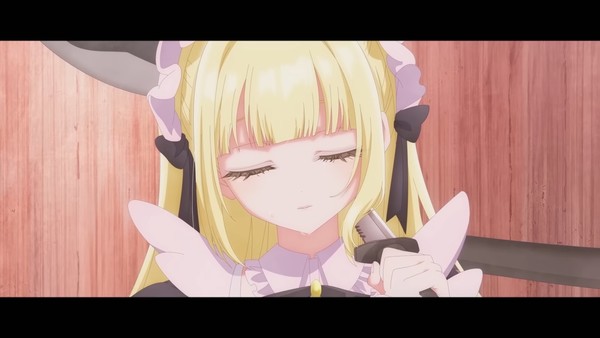
Despite the astonishing amount of lows it's entailed, I can't find myself nearly as exhausted by the death game genre as I am by other overexposed frameworks like isekai or litRPG stories. Maybe it just lends itself better to "low" entertainment. Even a mediocre death game anime still has a decent chance of being a schlocky good time. I enjoyed like 50% of Jūni Taisen, and Gleipnir is still very near and dear to my heart. So something with a slightly more elevated, knowing take on the well-worn genre, here in SHIBOYUGI: Playing Death Games to Put Food on the Table, has the equal potential to turn out engrossing and profound or hopelessly hokey, just in its own unique way.
If the trailers are anything to go on, the skewed take on the premise in SHIBOYUGI means that the tone will be distinct as well. Immediately, there seems to be less of the harsh, heavy-handed edginess of so many other muderlympics—here the vibe is melancholy. A sad inevitability of death is wearing down its protagonist, who has been through this kind of orchestrated tragedy so many times before. Perhaps that's what draws me to this series: having seen it over and over, I can relate.
There is still tension, since these are still death games, after all. It's an atmospheric fear, evident in the absurd amount of sauce glimpsed in the design of this animated production. Ominous angles of architecture, weapons, and things that could be both aim themselves at these girls. It's an imposing, oppressive structure designed to grind you up, like most anything we subject ourselves to to put food on the table.
Now I may be just waxing poetic based on early impressions and my own hopes, and SHIBOYUGI will turn out to be nought but cruel mush. This, too, is akin to the risks one takes in engaging in death games. Director Sōta Ueno's resume is short, but it includes a few entries that suggest some familiarity: Cells at Work! and Sasaki and Miyano don't exactly fall into the same space as SHIBOYUGI's death games. But those were still strongly put-together anime, and I'm always down to see someone grow in their role and abilities. I'm happy to single something out purely on potential, and if SHIBOYUGI grabs me, that's great. If I'm taken out of it after only an episode or two? Hey, that's what happens to a lot of the people in these shows.
—Christopher Farris
4. Journal with Witch
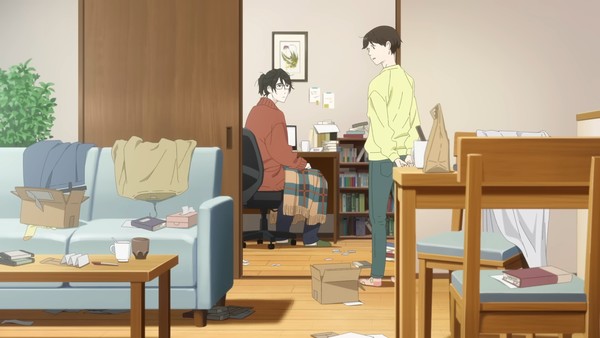
As soon as I saw the trailer for Journal with Witch (also known as Ikoku Nikki), I knew it had to be my most highly anticipated anime of the upcoming winter season. Josei anime are already few and far between, and one that possesses both an intriguing premise and an apparently artful adaptation belongs on everyone's radar.
Based on the manga by Tomoko Yamashita, it tells the story of a shut-in novelist who becomes the guardian of her teenage niece after a car accident takes the lives of both her parents. While I'm not familiar with the manga myself, I have it on good authority that the story takes a dual-protagonist approach, exploring the trials and tribulations of both adolescence and adulthood as they converge in this new and awkward familial relationship. That sounds like a solid enough foundation to me! I love down-to-earth and women-focused character dramas.
In addition to the trailers' quality, the staff buoyed my expectations. While this will be Miyuki Oshiro's first stint as series director, she has plenty of animation credits, as well as experience storyboarding and directing on series like Natsume's Book of Friends and Jujutsu Kaisen. Adapting the script is Kohei Kiyasu, who did an excellent job on Run with the Wind. kensuke ushio is probably the biggest name attached to the production, and I have yet to hear a soundtrack from him that I haven't liked. Finally, if you'll allow me some personal bias, I am always stoked to hear Miyuki Sawashiro in a lead role as an adult woman. Call of the Night spoiled me this past summer, and I can't wait to hear her husky tones throughout winter.
I foresee this being a sleeper hit—highly regarded by the small population of viewers who hop on it. Don't you want to be one of the cool kids? To paraphrase Monthly Girls' Nozaki-kun, you should watch josei anime every so often and develop your emotions.
—Steve Jones
3. Fate/strange Fake
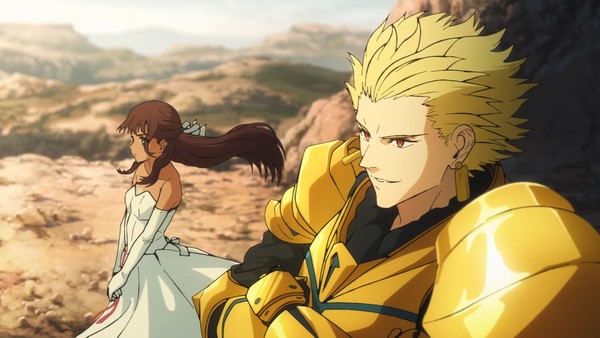
Fate/strange Fake is the story of six mages who summon six heroes from myth and legend to battle it out to obtain the wish-granting Holy Grail. However, unlike in past Fate anime, this time, the so-called “Holy Grail War” is taking place in America and using an incomplete version of the ritual. This in turn causes things to go in rather “strange” ways—especially once the police and the Church get directly involved.
On one hand, Fate/strange Fake feels like the direct sequel to every Type-Moon anime out there. It has major connections to Fate/Zero, Fate/stay night: Unlimited Blade Works, and Lord El-Melloi II's Case Files: Rail Zeppelin Grace note, along with a myriad of more minor connections to everything from Fate/Apocrypha and Fate/Prototype to Tsukihime and The Garden of Sinners. Recurring characters like Waver, Flat, and Gilgamesh play major roles in the story (be that directly or indirectly), and many of the backstories and motivations for the extensive cast of characters are related to previous entries in the franchise. This is the epitome of an anime where the deeper you are into the overall lore, the more you will be rewarded.
However, Fate/strange Fake is perfectly watchable without knowing any of that. This is because it is written by Ryōgo Narita, the man behind such stories as Durarara!!, Baccano!, and Dead Mount Death Play. Narita's trademark as an author is writing stories with dozens of characters interacting in complex and often opposing ways. Yet, somehow he keeps things easy to follow while still giving each character clear motivations and layered development—making him a perfect fit for a Fate story.
In addition, the already released opening chapter to the story, Fate/strange Fake -Whispers of Dawn-, lays out the basics of what's going on rather early for newcomers and as long as you understand a few key terms like “masters,” “servants,” and “Noble Phantasms,” you're pretty much good to go.
With high-quality animation, excellent directing, and a Hiroyuki Sawano-penned soundtrack, this is not an anime to miss out on—but you don't have to take my word for it. Both -Whispers of Dawn- and the first episode of the series proper are already streaming. Feel free to give them a look!
—Richard Eisenbeis
2. Frieren: Beyond Journey's End Season 2
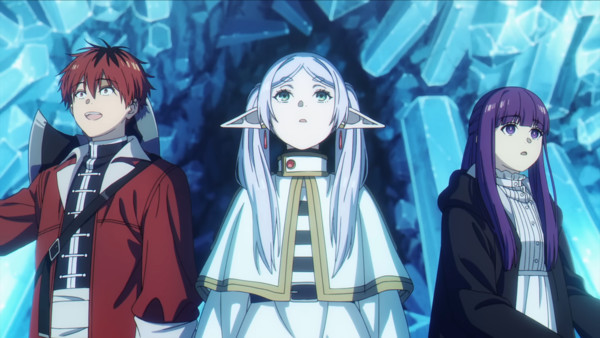
Talk about a quick turnaround, eh? Not even a fortnight ago, I'd reviewed the first season of Frieren: Beyond Journey's End—a series that took me two years and the appearance of an elven suitcase on my doorstep to finish. Why'd it take me so long? I couldn't stop tearing up, honestly. Right from the jump, Frieren is a deeply affecting meditation on life, death, and the people we meet along the way. It's a lot to process, especially if you're not expecting it. In my case, it didn't help either that I'd start crying at the slight invocation of milet's “Anytime Anywhere.”
But upon finally returning to the series, I found that I'd been profoundly moved by the very same elements that'd once scared me away. Then again, I might just appreciate the true value of a good sob nowadays. While I wasn't initially a huge fan of Frieren's shift from “mindfully paced journey” to “full-fledged magic tournament arc,” I've greatly warmed up to the characters and world-building established during the First-Class Mages Exam. These new cast members might've been a lot to juggle at the moment, but I think they'll all have the chance to really shine in Season 2.
In my review, I'd likened the exam to my convention trips over the years—running into folks who become colleagues, acquaintances, and even lifelong friends. While you might not see these people all the time, it's really something special when you run into them out in the wild. As shown by Wirbel's appearance in a recent trailer, I have a feeling that Frieren, Fern, and Stark will be running into their old mage acquaintances as they continue along their journey.
And as MADHOUSE continues their own adventure, Tomoya Kitagawa (one of the first season's episode directors) is taking over the main directorial reins from Keiichirō Saitō. Considering the immense stress that probably came with directing Bocchi the Rock! and Frieren seemingly back-to-back, I'm glad to see that Saito's had the opportunity to step back a smidge for the upcoming season.
I'm really looking forward to picking up right where I left off with the quirky elf and her young companions on their northward trek. Not to mention that the little I've heard of milet's latest tune—“The Story of Us”—is already setting off the waterworks. With all that said, it seems like I'd actually chosen exactly the perfect time to go beyond journey's end.
—Coop Bicknell
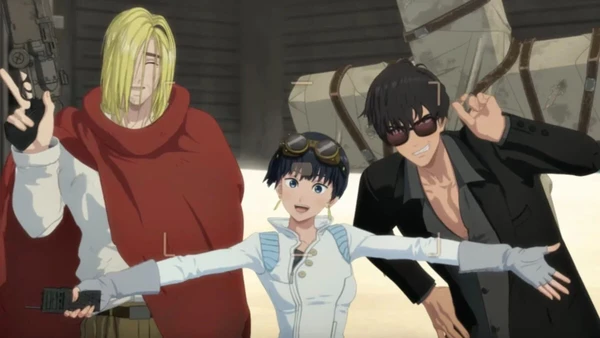
Same studio, new direction. After Trigun Stampede shocked fans with a new 3D animation style and (horror of horrors!) a new hairdo for Vash the Stampede, the official trailer for Trigun Stargaze shows that Studio Orange has even more tricks up its sleeve. As its title implies, this season will drop even more of the spaghetti western facade and aim its sights skyward, transforming into a straight science fiction story with a bit of desert flavor. It's an indicator that the source material is just inspiration for a new plot more than anything else. Billed as the final and conclusive season of Vash's story, I'm excited to see how season two balances nostalgia and innovation to deliver on the original Trigun's promise and bring it to a close.
I could never skip the opening for Trigun Stampede. It featured a determined-looking Vash trudging through endless sand, set to the melodic electronica “TOMBI” by Kvi Baba, which sounds to me like a hit from The Weeknd. The key mood this opening evoked was one of isolation. This time around, though, it won't be just Vash against the world. “No Longer Alone,” reads the on-screen text in the official trailer for Trigun Stargaze. Now he's got Meryl, Wolfwood, and the much-awaited Milly by his side. And it's a good thing, too, because his number of enemies has increased even more than his allies. Millions Knives is still a major threat, and returning villain Legato is back as well. I'm looking forward to the strong ensemble scenes among these memorable characters, but this nostalgia is only one component of Trigun Stargaze's watchability. If I wanted nothing but cameos, I'd watch the original Trigun.
The really exciting part about Trigun Stargaze is that, other than the overarching PLANT vs. humanity plot, it's a blank slate. Not only does this season seem like it's going to be increasingly action-packed, but the stakes are higher as well. Since the plot has already transformed into a totally different beast than the original series (for example, Knives didn't pop up until the end), it's invigorating to have no idea what's coming. As I wait to see how Studio Orange wraps up this story with a satisfying ending, I'm planning to keep an open mind. There have already been so many changes from the original story that have transformed Vash's adventures in ways I never considered. I predict that by the end of Trigun Stargaze, fans will no longer be wondering “Which one should I watch? Trigun 1998 or Trigun 2023-2026?” By then, they'll be so different from one another that there will no longer be any comparison.
—Lauren Orsini
Disclosure: Kadokawa World Entertainment (KWE), a wholly owned subsidiary of Kadokawa Corporation, is the majority owner of Anime News Network, LLC. One or more of the companies mentioned in this article are part of the Kadokawa Group of Companies.
The views and opinions expressed in this article are solely those of the author(s) and do not necessarily represent the views of Anime News Network, its employees, owners, or sponsors.
discuss this in the forum (22 posts) |
