

The Most Anticipated Anime of Spring 2026
by The ANN Editorial Team,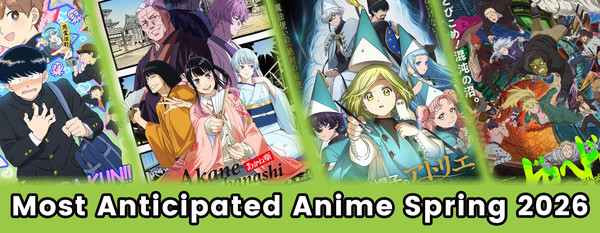
There is no rest for dedicated otaku. The winter season offered a wealth of great stories, from action to romance, and spring is shaping up to do the same. We have the long-awaited return to Hole in Dorohedoro Season 2, a brand-new pint-sized hero ready to test our pun skills, and Witch Hat Atelier. Everyone do a quiet prayer for the staff over at BUG FILMS, who are under the most pressure to succeed since Shinichirō Watanabe's Lazarus.
Below are the anime our critics are most looking forward to next month. Read on below to find out why you should add them to your watch list.
10. Gals Can’t Be Kind to Otaku!?
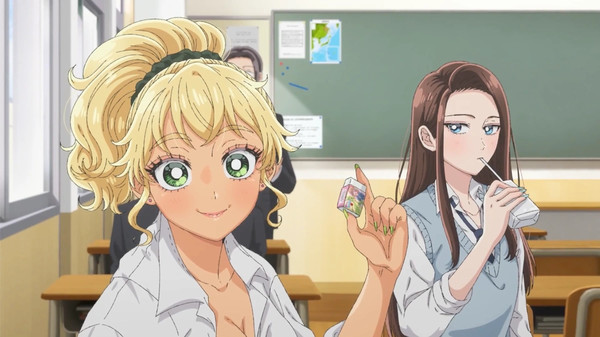
I will admit, when I read the title of this manga, I was expecting another generic story. This type of wish-fulfillment, where the quiet nerd gets with the outgoing, flashy girls in the classroom, has been done to death. The love-triangle setup only soured that first impression even more. But I think Gals Can’t Be Kind to Otaku!? is a perfect example of how you can take a worn-out premise and make it appealing with the right amount of heart put into it. The series is what I thought it would be on paper, but in execution, it's an incredibly sincere, almost slow-burning romance. In the blink of an eye, I read almost every available chapter, so I was only more excited to find out it would get an anime adaptation.
Like other shows with this type of setup, the two gal characters are more on the laid-back, easy-going side of things than the titular otaku Takuya, but their interactions come off as far more natural than most. There isn't any big event or hardship that draws them together; it's just a natural curiosity in each other's interests. This series felt less like archetypes playing roles and more like teenagers genuinely interested in each other's hobbies. The chemistry between Amane, Takuya, and Kotoko is great. Based on the trailers, it looks like the staff is not only perfectly emulating the art style from the original manga but also adding additional highlights and using color to make everything feel more vibrant than I ever thought possible. I think this is best shown with Otaku-kun, who looked a little too simple in the original manga, but here he comes off as far more expressive and stands out in the right ways.
The original manga already felt like it should have way more color given its overabundance of screen tones, so I'm glad this anime looks like a feast for the eyes. The trailer looks like it's showcasing a lot of material beyond the initial volumes, so I'm curious how many emotional beats the season will cover. If any of you guys have read my reviews or recaps, you know I am a massive romantic comedy fan, and this is going to be my treat of the season, I can almost guarantee it.
—Bolts
9. Re:Zero Season 4
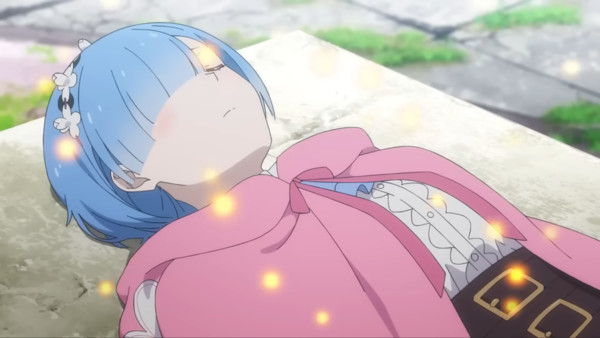
Once upon a time, Re:Zero anime fans lived in a seemingly endless purgatory, as following the end of the first season's excellent adaptation of author Tappei Nagatsuki's dense fantasy light novel series, there was a four-year gap before the advent of the second season. Now, we're relatively blessed, as it's only been a year since the third season ended. Perhaps this reflects a significant change in the anime industry. Where seasonal anime shows would previously struggle to attract sequels, now it's not unusual for each season to feature twelve or more sequel series, and episode orders are renewed much faster than before. This is very much to Re:Zero fans' benefit, as the series is multifaceted, with a huge cast of colorful characters and complex storytelling with many moving parts.
Much of Re:Zero's success can be attributed to the lead character, Natsuki Subaru, who has come a long way since his first appearance as an extremely divisive protagonist. Anecdotally, I'm aware of several anime fans who started Re:Zero but dropped off hard after the first few episodes because they found Subaru annoying. I'm not going to disagree here, as early Subaru was indeed utterly insufferable, but written deliberately so, in order to illustrate his incredible character development sustained throughout the next sixty-plus episodes. Time-loop stories can threaten to become repetitive and dull, yet Subaru's Sisyphean struggle against destiny and causality is deeply compelling, if only because we witness the truly horrible ways wrong choices lead to horrendous consequences not only for Subaru but also for his friends and even the whole world. Season 2 has forever altered the way I perceive bunny rabbits. Shudder.
It's not only Subaru who keeps viewers returning, though. There's Best Girl (fight me) Emilia, plus twin oni sisters Rem and Ram (though Rem has been out of action for a while due to existentially horrifying plot shenanigans), adorable spirit Beatrice, shady clown noble Roswaal and his bizarre vocal inflections, plus more secondary characters than are feasible to list here. They all have meticulously crafted histories and personalities, and I'd happily watch spin-off media starring almost any one of them.
From an animation perspective, Re:Zero has always looked spectacular, and last season treated viewers to some unbelievably intense fight sequences between our band of heroes and some truly psychotic enemies that were easy to hate. It's a rollercoaster of action, insanity, brutal plot twists, and heartfelt emotion that, to me, epitomizes the strengths of the animated medium. It's also a show that rewards re-watching to pick up the myriad little details missed on first exposure. I'm so delighted that Subaru is returning to suffer for our entertainment, I might go all the way back to re-delight in his past travails in seasons 1-3 because I guess I'm just a little bit sick in the head like that.
—Kevin Cormack
8. Rooster Fighter
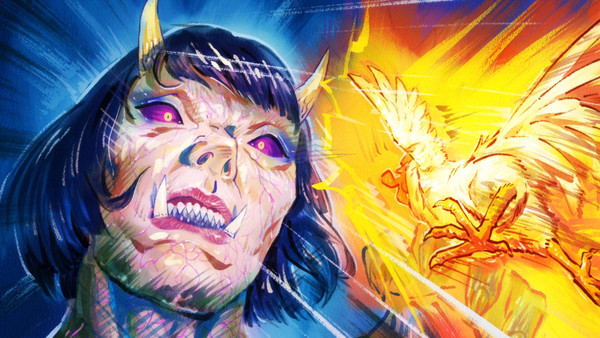
It's not every day that a show premieres so early that by the time we make a most anticipated list, it's already started. And yet, that's exactly the unusual case I find myself in with Rooster Fighter, which, as of the time of writing, has one episode out and will probably have two by the time you read this. Based on the manga of the same name by Shu Sakuratani, Rooster Fighter is a textbook example of something that's stupid, complimentary. Everything about this show is so silly, so over-the-top, so unambiguously, unabashedly, and dare I say indulgently stupid, that you can't help but absolutely love it.
Rooster Fighter follows a rooster (shocking, I know) named Keiji. With the incredible voice of either Kenta Miyake (All Might, Avdol, and Fullmetal Alchemist's Scar) or Patrick Seitz (Dio, Bleach's Kenpachi, Franky, and Endeavor) depending on whether you're watching sub or dub (although it should be said plainly that both have cast him exceptionally well), he's something of a wandering warrior, defending humanity from giant, titan-esque monsters, in search of the one that ate his sister. It hasn't been made explicitly clear yet, but one presumes his goal is revenge. In the meantime, with the help of his strong heart and rooster strength, he's preventing anyone else from having to experience the grief he's been forced to endure.
Once you get past the concept, the big thing that stands out about this anime is its direction, which is absolutely on point for a series as ridiculous as this one. It's nothing short of jaw-dropping that series director Daisuke Suzuki is so limited in his directorial experience—up until now, he's mostly just been on the CGI side of things. And yet, baffling as it may seem, he's got the tone and timing for everything in that first episode down perfectly. And when it comes to going full-throttle into the absurd, he's definitely not chickening out. It's reminiscent of samurai movies, over-the-top battle seinen, and at times even super sentai, all in the same show. It's truly unlike anything else you've ever seen.
—Kennedy
7. MARRIAGETOXIN
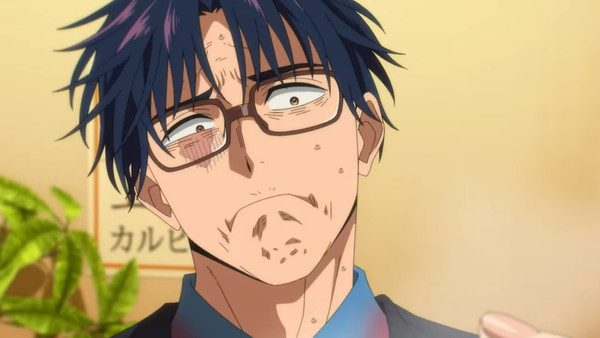
Between the long awaited adaptation of JoJo's Bizarre Adventure: Steel Ball Run, the critical acclaim of Akane-banashi, and a new Hiromu Arakawa series with Daemons of the Shadow Realm, there's no shortage of big shonen titles to look forward to in the spring, but while MARRIAGETOXIN doesn't have the same level of prestige as those series, it still has quite a bit going for it to keep up with the competition. The series follows an assassin named Gero, a member of a clan of poison specialists, who has no real aspirations to get married or continue the bloodline. However, when his sister is threatened with having to break up with her girlfriend in order to be forced into marriage, Gero takes it upon himself to find a bride, and with the help of a cross-dressing marriage swindler named Kinosaki, attempts to transform himself into the perfect suitor.
It's an extremely off-kilter premise, and one that the manga embraces wholeheartedly. Each arc of the series sees Gero coming across a new potential bride while also fending off assassins from clans with varying specialties ranging from controlling fire to channeling curses, which combine to make for a delightful combination of romantic hijinks and off-the-wall action. What really makes this formula work though, is that much like The 100 Girlfriends Who Really, Really, REALLY Love You, the series is really adept at highlighting the charms of every new heroine Gero encounters, and gives him enough chemistry with them to make each of these individual romances feel really believable in a way that shouldn't work as well as it does for a set-up this absurd.
All this has helped to make the manga a fun, casual read for me, but what has me especially excited for the anime is that it's being helmed at Studio BONES, which nearly always turns in high-quality work, and seems like a great fit for a lot of the over-the-top action sequences the manga provides.
On top of that, it's also being directed by Motonobu Hori of Carole and Tuesday fame, who (outside of the misstep of Metallic Rouge) has shown himself to be a pretty solid director, with everything seen in the various making-of videos or interviews leading to premiere suggesting that he and his crew are pouring a lot of passion into this adaptation. Between the fun of its source material and the team working on the anime, MARRIAGETOXIN has all the makings to become one of the spring season's strongest shonen offerings, so if this one's not on your radar, it's absolutely worth keeping an eye on.
—Jairus Taylor
6. Liar Game
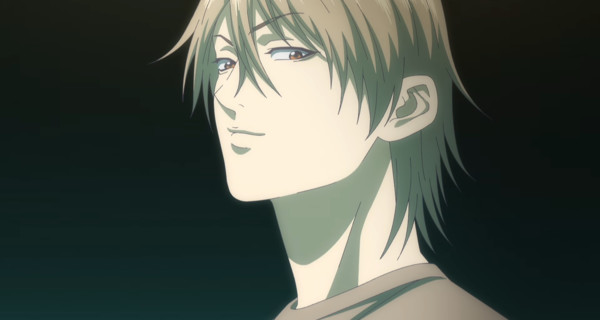
What if you could become incredibly rich at the expense of saddling your opponent with debt? Would you think differently if this were a stranger or someone close to you? Welcome to the Liar Game Tournament. With my vote as one of the most intellectually influential—and frankly, genius—manga titles to finally receive an anime adaptation, Liar Game has been waiting for its time to shine for two decades. The source material and its 2007 live-action TV drama series introduced a generation to high stakes and betrayal.
From the mind of Shinobu Kaitani, a manga author whose popular works focus on psychological thrillers about gambling, it's baffling that Liar Game took this long to be adapted. Nao Kanzaki, an optimistically naïve main character, is dropped into a dangerous game that she's wholly unprepared for. Despite the story focusing on lies and deception, the core concept is the ability of teams to successfully work against a system. Its smart storytelling and surprising twists have seemingly inspired The Genius, a Korean game show, and make the intellectual duels between L and Light of Death Note look like child's play.
I approach this adaptation with cautious optimism, based on what I've seen in the trailers. Madhouse's releases can either be middling or amazing, and it's clear that the animation budget leans more towards Frieren: Beyond Journey's End and Scenes From Awajima. However, Liar Game isn't a title that necessarily needs stellar animation, but its story pacing will make or break it.
Taking a close look at the staff credits, Liar Game's director Yūzō Satō, who worked on One Outs—Kaitani's sports gambling series—it's evident that the production group chose the right person for the job. He's led other anime series that are in the same witty ballpark—pardon the pun—such as Kaiji: Against All Rules, Akagi, and Trillion Game.
Although gambling is the focus of the story, Liar Game's understanding of game theory, while sprinkling in well-timed comedic relief, is what makes it shine. That places a tough job on scriptwriter Tatsuhiko Urahata, who worked on Monster, Violet Evergarden, and Akagi—all series with excellent character building and tension. Another way to heighten atmospheric tension is with music, and the Liar Game team couldn't have picked a better composer than Yūgo Kanno, who has worked on the JoJo anime franchise since JoJo's Bizarre Adventure: Stardust Crusaders. He's also penned music for more subtle, emotional stories like 2.43: Seiin High School Boys Volleyball Team.
As in the story, the right players have been gathered in one place, but will their teamwork be enough to pull off a successful adaptation? As a long-time fan, I care less about a faithful adaptation and more about a thrilling and remarkable story with substance. The true payoff can't be captured in a one-minute preview, but I assure you the emotional and mental highs of following the first arc will be worth it.
—Kalai Chik
5. STEEL BALL RUN JoJo’s Bizarre Adventure
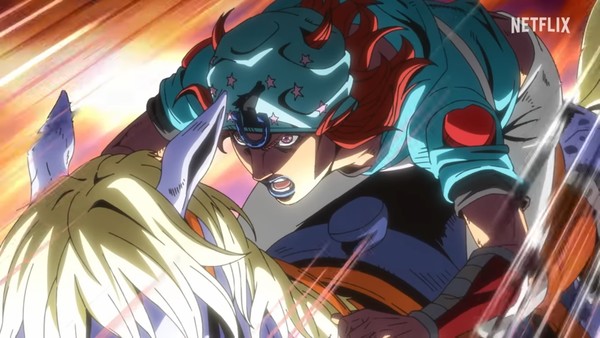
As of this writing, we still aren't certain what the deal is with Steel Ball Run's premiere on March 19. Either that 47-minute episode will come and go with a promise of additional episodes in a later season, or these fabulous folks will be off to the races for a regular release schedule across the spring season. Either way, there's no reason to hold our horses about being excited for this premiere.
Here, I ask that my editors feel free to insert post-launch comments about exactly how things actually worked and how well-founded my faith was. Be understanding! (Sadly, we still have no idea as of editing this feature)
But seriously, it's JoJo's Bizarre Adventure, and despite Netflix's best efforts to suck the oxygen out of the hype that franchise fuels, it's still going to persist one way or another. Probably the biggest news for this seventh part in Steel Ball Run is the potential to grow that dedicated audience. That is, if you've been waiting for a place that could conceivably serve as a jumping-on point for JoJo, this is it. It's a clean, rebooted break, taking the fashionable fellows and supernatural shenanigans back to late 1800s America for some seriously wacky races.
It's funny that the stray cat's been out of the multicolored bag about Steel Ball Run for nearly two decades, since its status as a new story that anyone can jump on was precluded back in manga form before it revealed itself as the seventh JoJo part. Yes, it still stars a Joestar, this one a paraplegic former horse-racing jockey named Johnny. And this Mr. Joestar is involved with a seemingly superpowered, mysterious man of the Zeppeli clan, in this case, Gyro. But everything about the story's course feels fresh and unburdened when you jump in. Are the powers these characters possess like the Stands of previous parts, or are they something else? How far do the conspiracies driving this alternate history go? What's a dastardly dude named Diego Brando up to here? There are so many massive moments for familiar fans to look forward to and new viewers to discover. Hence, the raw pining for a proper weekly release that everyone can follow together.
Regardless of how it gets out of the gate, we can hope for the best with the show's production. david production has had several years to get the project together—potentially longer if they're only releasing the one episode this season. A weekly release schedule would also potentially ease things compared to the crammed conditions that led to Stone Ocean's production feeling lackluster at times. There are still quite a few slides, stills, and shortcuts visible in the trailers Netflix has released thus far, but that's par for the course for animated JoJo. And hey, at least it looks like they're actually hand-animated the horses here some of the time, which is damn impressive in principle. Mysteries abound in Steel Ball Run, and one of them is whether the fabled JoJo Fridays will successfully reincarnate into a new universe for Thursday releases (Thoroughbred Thursdays? The Spin Thursdays? We'll workshop it). For now, let's all just pray that it works out well for everyone to watch.
—Christopher Farris
4. Dorohedoro Season 2
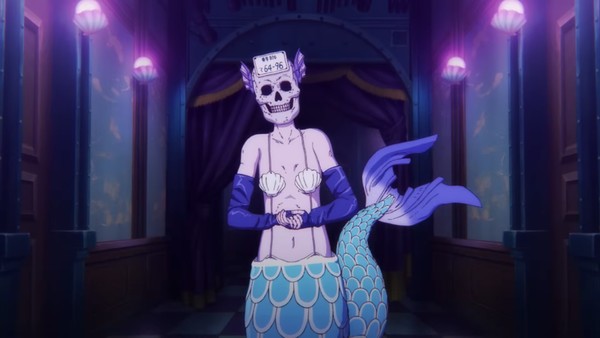
Y'all, I am so excited to return to Hole. I love Hole. And I love every other grimy morsel found in the dankest nooks of Q Hayashida's Dorohedoro. My thoughts on the manga haven't changed since I wrote about it in our “Most Anticipated” feature six years ago. It's still one of my all-time favorites. The main comment I'd add now is that the strength of the first season makes me all the more eager to sit down with the second. I've only been waiting six years, after all. That's a small price to pay to see Noi's muscles in motion again.
Thankfully, the anime's staff hasn't changed much in between seasons. Yuichiro Hayashi continues to direct the series at MAPPA. The core voice cast remains the same, and I'm particularly glad to hear Wataru Takagi reprise his role as the lovable lizard man Caiman. (K)NoW_NAME returns to do the opening and ending songs. That's all great. If it ain't broke, don't fix it.
My one twinge of worry comes from Miho Sugiura replacing Shinji Kimura as the art director. It is basically impossible to translate Hayashida's style directly into animation on a large enough scale to support a traditional production. Her illustrations are too intricate, too messy, and too singular. Kimura, however, distilled Dorohedoro's essence and beautifully transposed it onto the seedy, busy backgrounds of the anime's first season. It felt like the manga, even if it couldn't look exactly like it. Those are big shoes for Sugiura to fill. Kimura is still credited with “world visual design,” so I assume the second season will largely reuse and/or build on the work he's already done. That means we should be okay, but it's a possible pain point to look out for.
Overall, though, I can't wait to spend more time with this motley crew of murderous goofballs. There's nothing else like Dorohedoro. Except, naturally, more Dorohedoro.
—Sylvia Jones
3. Go for It, Nakamura!
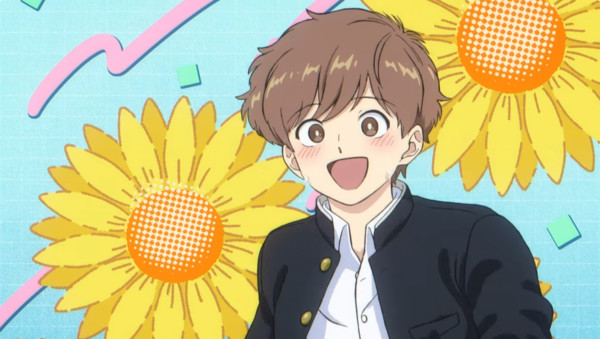
I'm willing to bet that a good portion of the population only knows Go for It, Nakamura! through the meme it inspired. The meme featured a character with a crush in the center of the image, hunched and blushing, surrounded by star-shaped images of the object of their affection, smiling and laughing. Little did many of the people creating their own spins on the format realize that they were recreating the cover of a single-volume BL manga. Or maybe they did. Who knows.
The point is, the meme took it off because the format perfectly expressed the stress of having a hopeless crush, but in a cute, appealing way. And there we have Go for It, Nakamura! in a nutshell. The titular Nakamura-kun is a gay sixteen-year-old boy with a crush on his classmate, Aiki Hirose. He considers his crush impossible: he's dull in both looks and personality, while Hirose is adorable, energetic, and well-liked among their peers. However, becoming friends seems much more within his grasp, and thus, what he sets his mind to.
Studio Drive's anime adaptation was supposed to come out a year ago, but was delayed until this season at the last moment, despite having special screenings of the first two episodes. I hope the extra time was worth it, because fervor for the series seems to have died down considerably. Still, the charm of the series reaches beyond flash-in-the-pan meme fodder, with Nakamura's episodic misadventures in trying to get to know Hirose better. It is first and foremost a sitcom, putting characters into situations and watching them flail about, and Nakamura and his classmates are a likably awkward crowd. Syundei's cartoony, '90s Rumiko Takahashi-inspired art style looks great animated with thick lines and bold use of color.
One thing that gives me pause is that there isn't really enough material to cover twelve full episodes of anime, even if they incorporate the sequel volume. They may need to create anime-only episodes to cover the full run. Director Aki Hirose, who was one of the driving creative forces in the absurdist Pop Team Epic anime, certainly has the creative experience for the sometimes surreal, dream-like humor that defines the manga, but series writer Yasuko Aoki has a considerably less inspiring resume. Still, if the team can bring in the same energy as the manga, it's guaranteed to be a fun watch.
—Caitlin Moore
2. Akane-banashi
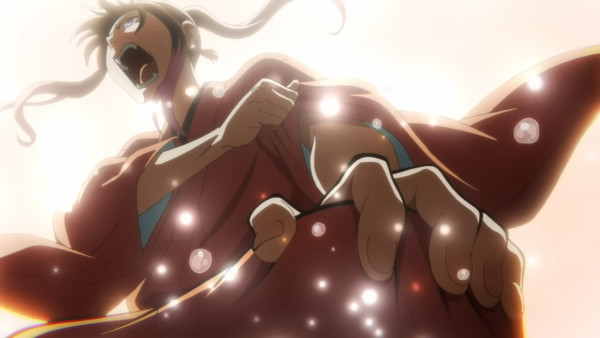
From a young age, it was abundantly clear to all of my friends and loved ones that I had inherited some horrible chimera-curse that doomed me to the life of both a literature-obsessed writer and a perpetual theater-kid who is physically incapable of even crossing the parking lot of a grocery store without busting out a showtune to dance along to. So, you can understand why I find Japan's rich history of theatrical and poetic traditions, including rakugo, exceptionally fascinating. On premise alone, Akane-banashi would be a slam dunk for simply giving viewers a chance to explore such a distinctly Japanese expression of art and storytelling.
What is especially exciting is that Akane-banashi represents a one-two punch of quality that just makes it that much more enticing. Sure, it would have been good enough to get any old adaptation of a popular Shonen Jump manga about a likable and fiery female protagonist who must climb the ranks of the rakugo world to amend her shattered family legacy. So far as I'm concerned, that's a foundation of potential that you'd have to actively sabotage on purpose to completely muck up. This spring is apparently going to be a season of blessings, though, because we aren't getting just any old adaptation of Akane-banashi, but a rather gorgeous-looking showcase of Studio ZEXCS' talent from the director who is also helming the long-awaited Witch Hat Atelier anime coming this season. I don't want to jinx things by getting my hopes up, only to find out this is a case of a director being stretched too thin across multiple projects, but all the preview material for Akane-banashi looks incredibly promising to my eyes.
The vibrant colors and striking character designs seem to be doing justice to the artwork that makes the manga so appealing. We can only hope that the crew at ZEXCS and the cast of voice actors will prove up to the task of making a two-dimensional simulation of a theatrical art form feel vital and thrilling to behold as it would on an actual stage. It's a difficult challenge to meet, admittedly, but I am oh so eager to see Akane-banashi for myself and discover how well the show can rise to the occasion.
—James Beckett
1. Witch Hat Atelier
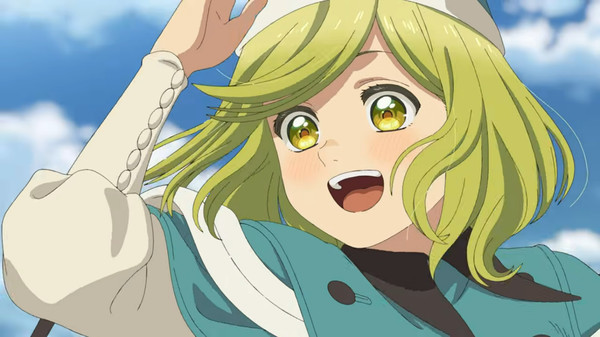
If someone asked you to picture a witch, there's a pretty good chance that you'd immediately picture an old woman in a black pointy hat with a wide brim. Witch Hat Atelier is counting on that – and it forms the backbone of a story about the beauty and dangers of magic and who gets to decide what's truly for the so-called greater good.
In Coco's world, magic exists, but it's only for the witches to use…and you can't just become a witch, you have to be born into a witch family. Preteen Coco has always been fascinated by magic, but since she's not from a magic family, she has no chance to learn it, and she's been told all her life that regular people lack the ability. But when she visits a festival with her mother and is given a strange picture book by a mysterious person in a brimmed, pointed hat, she learns the truth: magic can be used by anyone as long as they have the tools.
This discovery not only sets Coco on the path to witchhood but also begins a much deeper, more intense story than the fairy-tale imagery would suggest. Coco's misuse of magic, no matter how accidental, has real-world consequences, and the witch who saves her, Qifrey, doesn't always appear to be the most trustworthy. But the greater question is who decided that magic was only for certain families and why, and whether that counts as societal control or the deliberate withholding of something that could make human lives better. For every terrible thing that magic can do, it can do at least one positive, as we see when it's used to create prostheses for the paralyzed. It can provide beauty and joy, transportation, and myriad other things that are out of reach for the common folk; one of Coco's early encounters with magic amply demonstrates this when wealthy ladies come to her mother's shop in a flying carriage. Instead of keeping people safe, the story asks, what if it's only keeping them down?
Lest you fear that Witch Hat Atelier is too political, it balances everything out with beautifully realized characters who are never one-dimensional, a fascinating fantasy world, and intricate worldbuilding. The anime adaptation seems to capture Kamome Shirahama's gorgeous art well, and it uses pop-up book imagery to transition between scenes and tell the tale, which absolutely supports the narrative's style. If you've already read the manga, you know why so many of us are looking forward to this series. And if you haven't, prepare yourself. Even if it doesn't do the manga justice, it should be a story that sticks with you for a long time.
—Rebecca Silverman
Disclosure: Kadokawa World Entertainment (KWE), a wholly owned subsidiary of Kadokawa Corporation, is the majority owner of Anime News Network, LLC. One or more of the companies mentioned in this article are part of the Kadokawa Group of Companies.
The views and opinions expressed in this article are solely those of the author(s) and do not necessarily represent the views of Anime News Network, its employees, owners, or sponsors.
discuss this in the forum (13 posts) |

this article has been modified since it was originally posted; see change history